
These blueberry cottage cheese muffins have no added sugar and no butter or oil. Blended cottage cheese and eggs make the batter moist, and the only sweetness comes from fresh blueberries, vanilla and cinnamon. Each of the 12 muffins has about 80 calories and 4.4 g of protein, and they bake in 25 minutes.
These are my blueberry muffins, and every photo here is from my own batch. They’re for anyone who wants a soft, grab-and-go muffin without a bakery muffin’s sugar. They work because the blender turns the cottage cheese into a smooth, creamy base that does the job butter and sugar usually do.
Key takeaways
- One muffin: about 80 calories, 4.4 g protein, 11.9 g carbs and 2.4 g sugar, none of it added (USDA FoodData Central).
- Everything except the blueberries goes in the blender, so there’s one bowl to wash.
- Toss the blueberries in a spoonful of flour so they don’t sink.
- Bake at 375°F for about 25 minutes, until the tops are golden brown.
What Does Cottage Cheese Do to Muffins?
It replaces the butter, oil and most of the liquid. Blended smooth, 1 cup of cottage cheese adds moisture, a little tang and about 23.5 g of protein to the batch, according to USDA FoodData Central’s SR Legacy data (2018). Together with the 2 eggs, it supplies about 68% of the protein in each muffin.
You won’t taste it as cottage cheese. Once it’s blended, it disappears into the crumb, the same trick behind our cottage cheese banana bread and cottage cheese bagels. More ideas are in our cottage cheese recipes.
How Many Calories Are in a Blueberry Cottage Cheese Muffin?
About 80 calories each, with 4.4 g of protein and 2.4 g of sugar, when the batter makes 12 muffins. That sugar is all natural: about half comes from the blueberries and most of the rest from the milk sugar in the dairy. For comparison, USDA lists 31.5 g of sugar per 100 g of store-bought blueberry muffins. The FDA doesn’t count sugars found naturally in milk and fruit as added sugars, so these muffins have 0 g of added sugar.
| Per muffin (1 of 12) | Amount |
|---|---|
| Calories | 80 |
| Protein | 4.4 g |
| Fat | 1.5 g (0.6 g saturated) |
| Carbohydrates | 11.9 g |
| Fiber | 0.7 g |
| Sugar | 2.4 g (none added) |
| Sodium | 182 mg |
Our finding: there’s no butter or oil in the batter at all, so each muffin has just 1.5 g of fat. Most of the calories come from the flour, which supplies about half of them.
How to Make Blueberry Cottage Cheese Muffins
- Blend the wet ingredients. Cottage cheese, eggs, milk and vanilla, until completely smooth.
- Add the dry ingredients. Flour, baking powder, cinnamon and salt go into the blender too. Pulse just until no dry flour is left.
- Coat and fold in the blueberries. Toss them with a tablespoon of flour, then fold them in by hand.
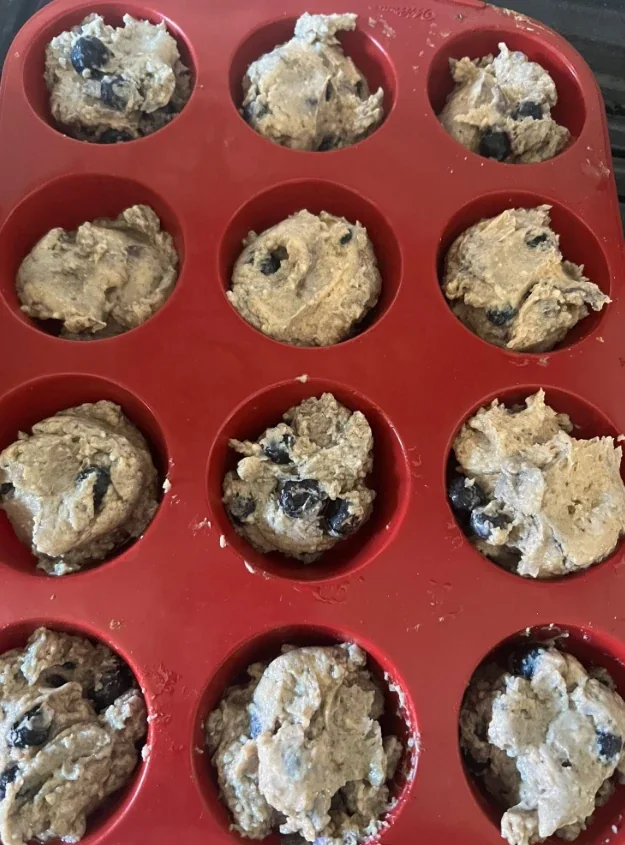
- Scoop and bake. Fill the cups with an ice cream scoop and bake at 375°F for about 25 minutes.
The full amounts and steps are in the recipe card below.
Which Pan, Blender and Cottage Cheese Work Best?
- Pan: a 12-cup silicone muffin pan needs no greasing, and the muffins pop right out. In a metal tin, grease the cups well or use paper liners. With no butter in the batter, these stick more than regular muffins.
- Blender: any blender or food processor works. Blend the wet ingredients first until smooth, then pulse in the dry ones briefly. Long blending after the flour goes in makes the muffins tough.
- Ice cream scoop: a standard scoop (about 3 tablespoons) fills each cup evenly and gives you rounded, bakery-style tops.
- Cottage cheese: 2% or 4% both work. 4% makes a slightly richer, more tender muffin. I counted 2% in the nutrition above.
- Fresh or frozen blueberries: fresh are best. Frozen work too: don’t thaw them, toss them in the flour, and expect purple streaks and a few extra minutes in the oven.
- For little kids: with no added sugar, these suit a toddler breakfast. The CDC lists uncut berries as a choking hazard for young children, so for little ones, halve the blueberries before folding them in and serve the muffin in small pieces.
- Lemon blueberry: blend the zest of 1 lemon in with the wet ingredients for lemon blueberry cottage cheese muffins. The zest adds almost no calories.
- Sweeter muffins: these are only lightly sweet. If you want more, blend in 2 tablespoons of granulated monk fruit, or maple syrup, though maple adds sugar that isn’t counted above.
Kitchen note: Pulse, don’t blend, once the flour is in. A few seconds is enough. Then fold the floured blueberries in by hand so they stay whole.

Blueberry Cottage Cheese Muffins
Ingredients
Method
- Heat the oven to 375°F (190°C). Grease a 12-cup metal muffin tin well, or use a silicone muffin pan, which needs no greasing.
- Blend the cottage cheese, eggs, milk and vanilla in a blender or food processor until completely smooth.
- Add the flour, baking powder, cinnamon and salt. Pulse just until no dry flour is left. Don’t blend longer, or the muffins turn tough.
- Toss the blueberries with 1 tbsp of flour, then fold them into the batter by hand.
- Scoop the batter into the 12 cups with an ice cream scoop.
- Bake for about 25 minutes, until the tops are golden brown and spring back when pressed, and a toothpick comes out clean apart from berry juice.
- Cool in the pan for 10 minutes, then lift the muffins out.
Notes
What to Look For at Each Stage
- Wet ingredients: after blending, smooth and pale, like a thin milkshake, with no curds left.
- Batter: once the flour is in, it turns thick enough to hold its shape on a scoop, more like cookie dough than pancake batter. That’s what you see in my pan photo.
- In the oven: the mounds rise and spread to fill the cups, and the kitchen starts to smell of cinnamon and vanilla.
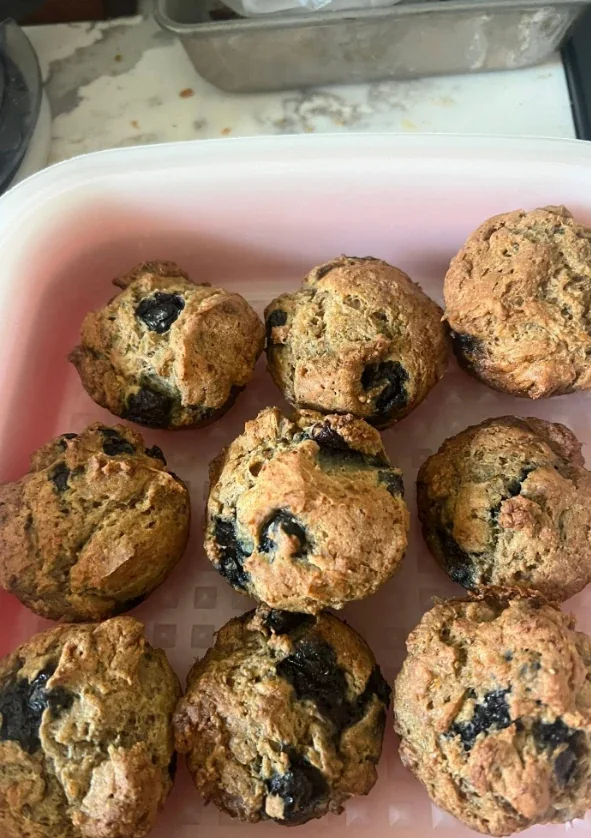
- Done (about 25 minutes): domed, golden brown tops with a few cracks, and blueberries bursting through as dark, jammy spots. The tops spring back when pressed, and a toothpick comes out clean apart from berry juice.
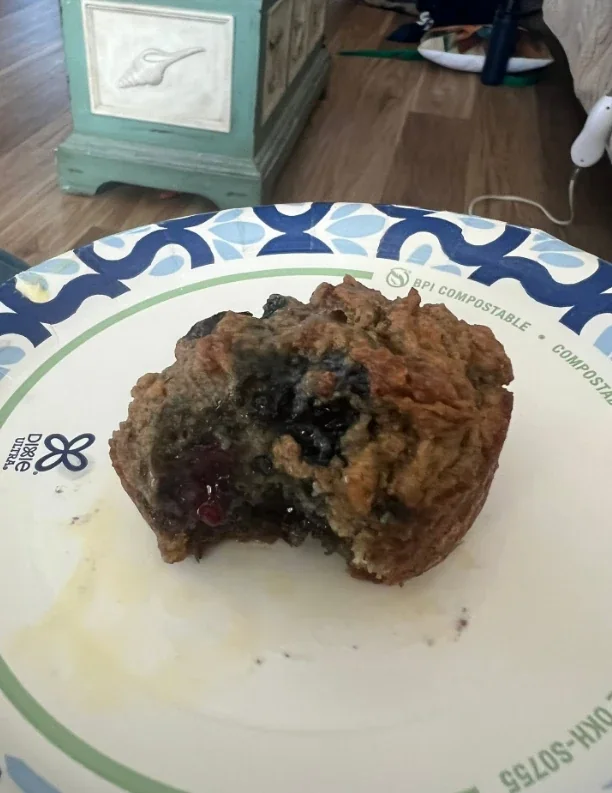
- Inside: moist and soft, a little denser than a bakery muffin, with pockets of juicy blueberry.
Why Are My Muffins Dense, Sticky or Full of Sunken Berries?
- Dense or tough: the batter was blended too long after the flour went in. Pulse it only until combined.
- Gummy center: they needed a few more minutes. Bake until the tops spring back and a toothpick comes out clean.
- Berries sank to the bottom: they weren’t coated in flour, or the batter was too thin. Toss them in flour and keep the batter thick.
- Stuck to the pan: with no butter in the batter, metal tins need a good greasing. A silicone pan avoids the problem.
Looking for our pumpkin muffins? For a fall flavor with the same cottage cheese base, try our crustless cottage cheese pumpkin pie. And for a cold blueberry treat, there’s blueberry cottage cheese ice cream.
Frequently Asked Questions
How do I store blueberry cottage cheese muffins?
Keep them in an airtight container in the fridge and eat them within 3 to 4 days, the USDA’s guideline for leftovers. Warm one for 15 to 20 seconds in the microwave. For longer storage, freeze them in a freezer bag and thaw overnight in the fridge.
Can I make them with oat flour or gluten-free flour?
I make them with all-purpose flour, so that’s the version I can vouch for. A 1:1 gluten-free baking blend is the closest swap. Oat flour makes a denser, moister muffin that may need a few extra minutes.
Are cottage cheese and blueberries healthy together?
They make a good pair. Per 100 g, 2% cottage cheese has 10.4 g of protein and raw blueberries have 2.4 g of fiber, according to USDA FoodData Central. In these muffins, that means about 80 calories each with no added sugar, butter or oil.
Sources
- U.S. Department of Agriculture, FoodData Central, SR Legacy, FDC IDs 172182 (2% cottage cheese), 171287 (egg), 171267 (2% milk), 173471 (vanilla extract), 168894 (all-purpose flour), 172804 (baking powder), 171320 (cinnamon), 173468 (salt), 171711 (blueberries, raw), 172765 (blueberry muffins, commercially prepared), retrieved 2026-11-19, fdc.nal.usda.gov
- U.S. Food and Drug Administration, Added Sugars on the Nutrition Facts Label, retrieved 2026-11-19, fda.gov
- Centers for Disease Control and Prevention, Choking Hazards (Infant and Toddler Nutrition), retrieved 2026-11-19, cdc.gov
- USDA Food Safety and Inspection Service, Leftovers and Food Safety, retrieved 2026-11-19, fsis.usda.gov
