
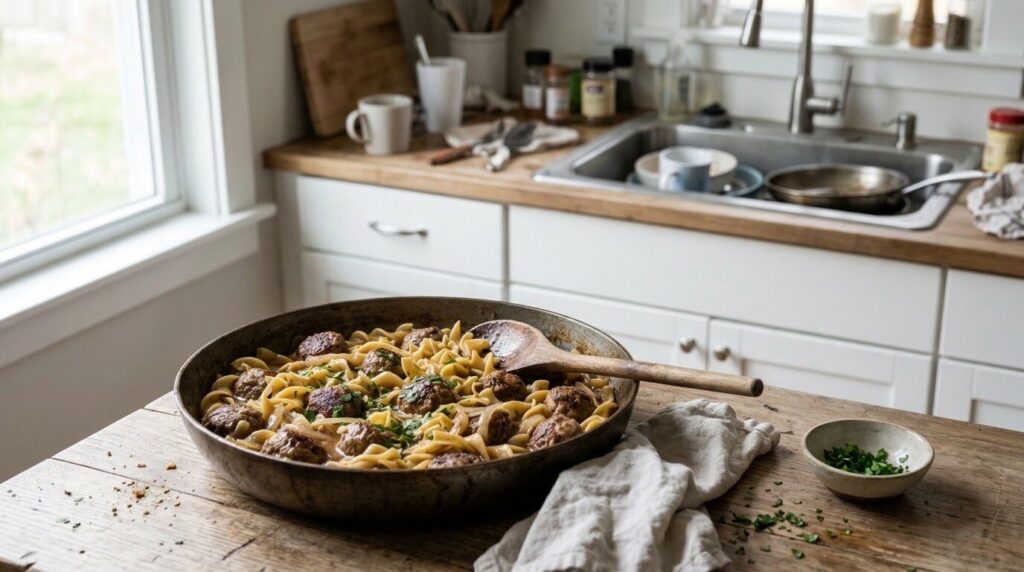
That’s the thing about Amish meatball noodles. It’s not fancy. It’s not trendy. It’s deeply comforting, the kind of dinner that makes everyone go quiet at the table because they’re too busy eating to talk.
Amish meatball noodles is a one-pot comfort dinner with tender homemade meatballs, wide egg noodles, and a rich brown gravy, ready in 30 minutes with simple pantry ingredients. No fancy technique, no hard-to-find ingredients.
It’s a dinner built to feed a hungry table, not to impress one.
I make these meatball noodles on cold weeknights when everyone wants comfort food and I only want to wash one pot. They're for families who want an old-fashioned, filling dinner in 30 minutes with ingredients already in the pantry. They work because a milk-and-breadcrumb panade keeps the 80/20 meatballs tender, and the browned bits left in the pot turn the broth into a rich gravy for the egg noodles.
Why 80/20 Beef and Wide Egg Noodles
Ground beef (80/20): The fat percentage matters here. Lean beef makes dry, dense meatballs that bounce off the plate. 80/20 gives you meatballs that stay juicy through simmering, the fat keeps everything tender and adds to the gravy as they cook.
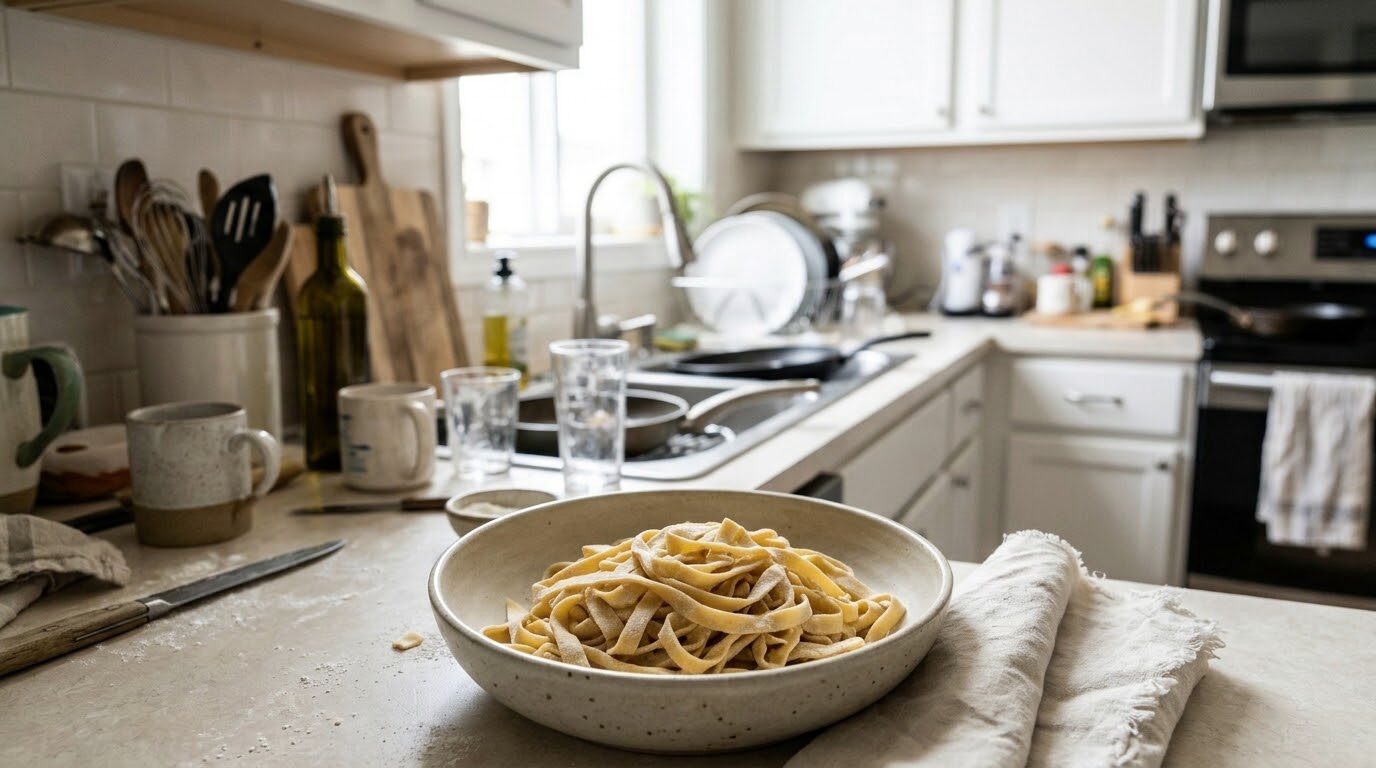
Egg noodles: Wide egg noodles aren’t interchangeable with regular pasta here. They’re thicker, slightly richer, and built to absorb braising liquid without going mushy. Thin pasta dissolves. Egg noodles hold their shape and soak up the gravy in the best possible way.
Breadcrumbs + milk (the panade): Mixing breadcrumbs with milk before adding to the meat creates a paste that traps moisture inside the meatball. Skip this step and you get tough, chewy meatballs. Do it and they stay tender even after simmering in gravy for 20 minutes.
Beef broth over water: Every bit of liquid becomes part of the final sauce. Water gives you nothing. Good beef broth gives you a gravy with depth and body, use the best one you’ve got.
Secret weapon, a splash of Worcestershire sauce: One tablespoon is enough. It adds a savory, slightly tangy undertone that makes people say “what is that?” and go back for seconds without knowing why. Don’t skip it.
Pair it with Air Fryer Roasted Vegetables or Slow Cooker Amish Beef Roast with Apples.
Tools and Ingredient Notes
- Pot: A 5-quart Dutch oven or a deep 12-inch skillet with a lid holds the meatballs in one layer and has room for the noodles and broth.
- Even meatballs: A 1.5-tablespoon cookie scoop portions the meat quickly, so all 18 to 20 meatballs cook at the same rate.
- Wet hands: Keep a small bowl of water nearby and wet your hands before rolling. The meat won't stick, and the meatballs come out smoother.
- Scraping the pot: A flat wooden spoon is the best tool for scraping up the browned bits after the onions go in. Those bits are what give the gravy its flavor.
- Whisk: Use a whisk when you add the broth to the flour. It keeps the gravy from going lumpy.
- Egg noodles: Wide or extra-wide egg noodles hold the gravy best. Thin noodles turn soft quickly in the pot.
- Thermometer: Ground beef meatballs are done at 160°F in the center.
Kitchen note: The noodles drink up broth, so add it gradually and watch them as they cook. Stir now and then so nothing sticks to the bottom.

Amish Meatball Noodles
Ingredients
Method
- Mix breadcrumbs and milk in a large bowl. Let sit 2 minutes, this is your panade, and it’s doing important work. Don’t rush it.
- Add ground beef, egg, garlic powder, onion powder, salt, pepper, and parsley to the bowl. Mix with your hands until just combined, don’t overwork it or the meatballs turn tough.
- Roll into 1½-inch balls. You should get about 18–20. Set aside on a plate.
- Heat a large Dutch oven or deep skillet over medium heat. Add 1 tbsp butter. Once it foams, add meatballs in a single layer, don’t crowd them.
- Brown meatballs on all sides, about 6–8 minutes total. They don’t need to be cooked through yet, just browned. Remove and set aside.
- In the same pot, add remaining butter and sliced onion. Cook over medium heat for 3–4 minutes until softened and slightly golden. Scrape up the brown bits, that’s flavor, not burnt residue.
- Add minced garlic, cook 30 seconds. Sprinkle in flour and stir constantly for 1 minute, this cooks out the raw flour taste.
- Pour in beef broth slowly while whisking. Add Worcestershire sauce and thyme. Bring to a gentle simmer.
- Add meatballs back in. Nestle them into the gravy, cover, and simmer on medium-low for 10 minutes.
- Stir in dry egg noodles. Cover and cook another 8–10 minutes, stirring occasionally, until noodles are tender and have absorbed most of the gravy.
- Taste, adjust salt and pepper, garnish with fresh parsley. Serve immediately, straight from the pot if you’re keeping it Amish.
Notes
- Frozen meatballs: Use about 20 frozen fully cooked meatballs and skip the browning step. Simmer 5 minutes longer.
- Doneness: Homemade meatballs are cooked through at 160°F (71°C).
- Too thick: Noodles keep absorbing liquid as the dish sits. Loosen leftovers with a splash of broth when reheating.
- Gluten-free: Use gluten-free noodles and breadcrumbs, and thicken the gravy with 1 tbsp cornstarch instead of flour.
- Storage: Refrigerate up to 4 days.
What to Look For at Each Stage
- The panade: After 2 minutes, the breadcrumbs have soaked up the milk and look like a soft paste.
- The meat mixture: Just combined, with the seasoning spread evenly. It should feel tacky and hold together when rolled.
- Browning: The butter foams, the meatballs sizzle as they go in, and after a couple of minutes each side has a deep brown crust and releases from the pot when you turn it.
- The onions: Soft and lightly golden after 3 to 4 minutes, with the brown bits from the meatballs lifting off the bottom as they cook.
- The flour: After about a minute it coats the onions, looks pasty and smells lightly toasty.
- The gravy: As the broth simmers, it thickens until it coats the back of a spoon.
- Done: The noodles are tender, the meatballs are cooked through, and the gravy is glossy and clings to the noodles instead of pooling like soup.
| Feature | One-Pot Amish Noodles | Cooking Components Separately |
|---|---|---|
| Pots | One | Multiple (boil noodles, make gravy) |
| Flavor | Noodles soak up the gravy | Milder, sauce added at the end |
| Time | About 30 minutes | Longer |
| Cleanup | Minimal | More dishes |
Rolling Meatballs That Hold Together
- Cold hands roll better meatballs. Run your hands under cold water before rolling, warm hands melt the fat in the meat and make them stick to your palms instead of forming properly.
- I’ve found that letting the meatballs rest in the fridge for 15 minutes before browning holds them together much better during cooking. They firm up slightly and don’t fall apart when you turn them. Worth it if you’ve got the time.
- Don’t stir the noodles too aggressively once they go in. They absorb liquid fast and can break apart if you’re heavy-handed. Gentle stirs every 2–3 minutes is all you need.
- The gravy thickens as it sits. So if you’re serving later, add a splash of broth when reheating, and it loosens right back up.
Brown First, Simmer Second
Why browning the meatballs first matters: The Maillard reaction, the browning that happens when protein hits high heat, creates hundreds of flavor compounds that simply don’t exist in pale, unseared meat. You’re not just browning for color. You’re building an entirely different layer of flavor that carries through the whole dish. Skipping it gives you gray meatballs in bland gravy. Not the same dish.
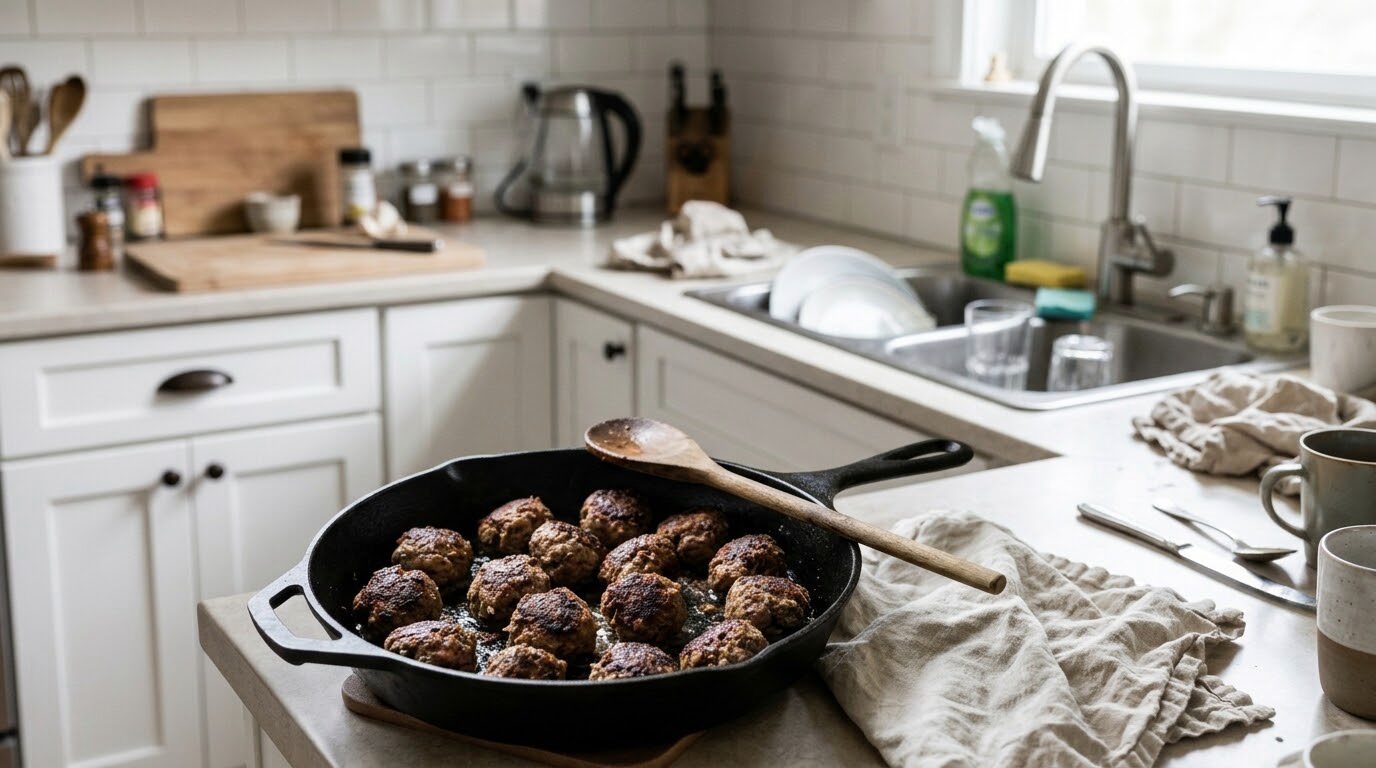
Dutch oven tip: If you’re using a Dutch oven, I recommend you deglaze with a splash of broth right after browning the meatballs, before the onions go in. Those caramelized bits stuck to the bottom are incredibly concentrated flavor. A quick scrape with a wooden spoon lifts them all and folds them into your gravy. Don’t waste them.
Getting the protein and complex carb balance right here means a satisfying meal that supports steady energy and keeps hunger away for hours, because protein and complex carbs digest more slowly than refined carbs (MedlinePlus), not the spike-and-crash you get from fast food.
When Meatballs Fall Apart or the Gravy Stays Thin
“My meatballs fell apart in the gravy” → Overworked the meat mixture or skipped the panade → Mix just until combined, stop the second everything is incorporated. And let those breadcrumbs soak in the milk first. That binding step isn’t optional.
“The gravy is too thin” → Not enough flour or added too much broth → Mix 1 tbsp cornstarch with 2 tbsp cold water and stir it in while the pot simmers. It thickens in about 2 minutes. Alternatively, remove the lid for the last 5 minutes of cooking to let it reduce naturally.
“The noodles soaked up all the liquid and went mushy” → Cooked too long or used thin pasta → Wide egg noodles only, and pull them off heat the moment they’re tender, they keep absorbing liquid even off the stove.
Dairy-Free and Gluten-Free Swaps
- Dairy-free: Swap butter for olive oil and use unsweetened oat milk in the panade, meatballs come out just as tender
- Gluten-free: Use GF breadcrumbs, GF flour for the roux, and GF wide rice noodles, the texture is slightly different but the flavor holds up well
- Lighter version: Use ground turkey instead of beef, still juicy with the panade, noticeably lighter. I actually make this version on weeknights and save the beef for weekends.
- Creative twist: Add a handful of sliced cremini mushrooms with the onions for an earthier, deeper gravy. Or stir in a spoonful of sour cream at the end for a stroganoff-style finish that’s completely over the top in the best way.
Leftovers and Freezing
- Fridge: Airtight container for up to 4 days. The noodles absorb more liquid overnight, add a splash of broth when reheating and stir gently. It comes back together perfectly.
- Freezer: Freeze the meatballs and gravy without the noodles for best results, noodles go mushy when frozen and thawed. Cook fresh noodles when reheating. Keeps up to 3 months.
- Reheat: Stovetop over medium-low with a splash of broth, stirring gently. Microwave works too, cover with a damp paper towel and heat in 90-second intervals. Don’t blast it on high or the meatballs toughen up fast.
Frequently Asked Questions
Can I make Amish meatball noodles ahead of time?
Yes, and honestly I recommend it. Make the meatballs and gravy a day ahead, refrigerate, and cook the noodles fresh when you're ready to serve. The flavors deepen overnight and the whole thing comes together even faster the second day.
Why did my Amish meatball noodles turn out dry?
Either the beef was too lean, the meatballs were overcooked, or not enough broth in the pot. Use 80/20 beef, don't skip the panade, and keep the simmer gentle, not a rolling boil. A boil toughens meatballs fast.
Can I use a different pasta instead of egg noodles in this recipe?
You can, but wide egg noodles are the right call here. Penne or rotini hold up okay. Thin pasta goes mushy fast and doesn't absorb the gravy the same way. If egg noodles aren't available, wide pasta shapes are the next best option.
Is Amish meatball noodle dinner good for meal prep?
It's one of my favorite easy meal prep dinners, makes 6 servings, reheats well, and tastes better the next day. Just store noodles and gravy separately if you're prepping more than 2 days ahead.
Can I make Amish meatball noodles in a slow cooker?
Yes, brown the meatballs first (don't skip this), then transfer everything except the noodles to a slow cooker on low for 4–6 hours. Add cooked egg noodles in the last 20 minutes. The slow cooker version is even more tender, just don't add the noodles too early or they'll dissolve.
What can I serve with Amish meatball noodles?
Honestly, this is a complete meal on its own. But if you want to stretch it, crusty bread for the gravy, a simple green salad, or roasted vegetables on the side. Our Air Fryer Lemon Herb Asparagus takes 5 minutes and pairs perfectly with the richness of the gravy.
Can I use frozen meatballs?
Yes. Use about 1 pound of fully cooked frozen meatballs. Brown them briefly in the butter, then make the gravy and simmer them with the noodles until they're hot in the center. You'll lose some of the homemade flavor, but it's a good shortcut.
How do I know the meatballs are cooked through?
Cut one in half or check it with a thermometer: ground beef meatballs are safe at 160°F, with no pink in the middle. They finish cooking while the noodles simmer, so check them at the end.
Can I make the gravy creamy?
Yes. Stir in 1/2 cup of sour cream or Greek yogurt off the heat at the very end. Don't let it boil after it goes in, or it can curdle.
