
Broccoli chicken casserole is tender chicken, broccoli and pasta folded into a homemade cheddar sauce, topped with more cheddar and parmesan, and baked until bubbling. There’s no canned cream soup, just butter, flour, milk and real cheese. Each of the 8 servings has about 563 calories and 40 g of protein, and it reheats well all week.
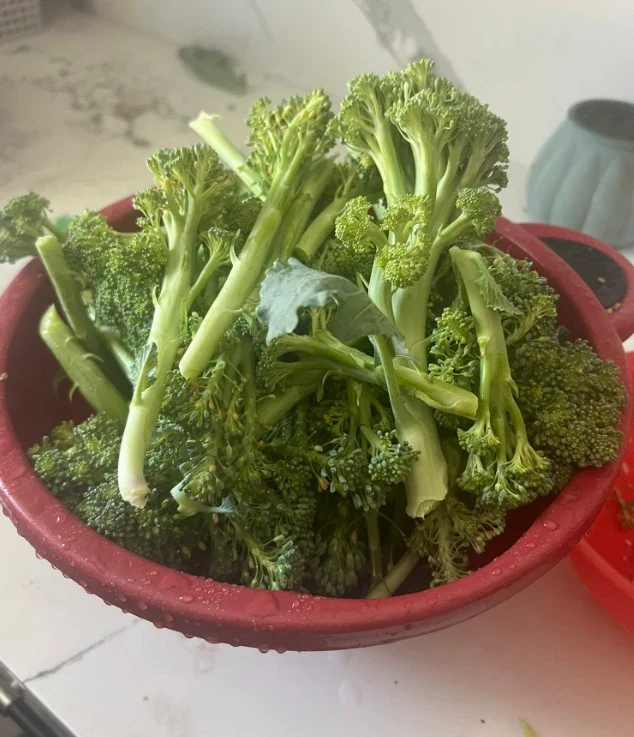
The Hubs’ broccoli harvest has been robust this year, so I whipped up this casserole to use a big colander of it and have lunches ready for the week. It’s for busy weeknights and meal preppers who want a cozy, cheesy dinner that still packs serious protein and a real pile of vegetables. It works because the broccoli cooks right in the pasta pot and the cheese sauce is thick enough to coat everything without drying out in the oven.
Key takeaways
- One serving (1 of 8): about 563 calories, 40 g protein and 45 g carbs, based on USDA FoodData Central.
- A quick homemade cheese sauce replaces canned soup and takes about 10 minutes.
- Undercook the pasta by 2 minutes. It finishes in the oven and won’t turn mushy.
- Use the broccoli stems too. Peeled and sliced thin, they cook as fast as the florets.
What Goes Into Broccoli Chicken Casserole?
Chicken breast, a pound of broccoli, short pasta, a simple cheddar sauce and a cheddar and parmesan topping. Raw broccoli has only 34 calories and 2.6 g of fiber per 100 g, according to USDA FoodData Central (FDC 170379), so a full pound adds bulk and color for very few calories.
- Chicken breast (1 1/2 lb). Cut into 3/4-inch pieces and browned. It supplies about half the protein.
- Broccoli (1 lb). Florets and peeled stems. Fresh from the garden is best, but store-bought works the same.
- Tri-color rotini (12 oz). The spirals trap the sauce. I used the veggie kind for color, but any short pasta works.
- Cheese sauce. Butter, onion, garlic, flour, 2% milk, a cup of broth and sharp cheddar.
- Cheddar and parmesan topping. Cheddar melts into a gooey layer, and parmesan adds a salty, nutty edge.
How Many Calories and How Much Protein Are in It?
One serving, an eighth of the casserole, has about 563 calories and 40 g of protein, based on USDA FoodData Central’s SR Legacy data. Cut it into 6 bigger portions and each one has about 750 calories and 53 g of protein.
| Per serving (1 of 8) | Amount |
|---|---|
| Calories | 563 |
| Protein | 39.8 g |
| Fat | 24.4 g (12.3 g saturated) |
| Carbohydrates | 45.5 g |
| Fiber | 3.1 g |
| Sodium | about 700 mg |
Our finding: the chicken supplies about 48% of the protein and the two cheeses about 25%. A full pound of broccoli adds only about 19 calories per serving. Want it lighter? Swap the 1 cup of cheddar topping for just the parmesan and you save about 57 calories and 5 g of fat per serving.
How to Make Broccoli Chicken Casserole
- Boil the pasta and broccoli. Cook the pasta 2 minutes short, adding the broccoli for the last 2 minutes.
- Brown the chicken. Season it and cook in a deep oven-safe skillet until golden and 165°F.
- Make the cheese sauce. Butter, onion, garlic and flour, then milk and broth, then the cheddar off the heat.
- Combine and top. Fold everything together and cover with cheddar and parmesan.
- Bake. 15 to 20 minutes at 375°F, until bubbling.
The full amounts and times are in the recipe card below.
Which Broccoli, Cheese, Pasta and Pan Work Best?
- Broccoli: garden broccoli and broccolini-style side shoots have thin, sweet stems, so slice them into 1-inch pieces. For thick store-bought stems, peel off the woody outer skin first. Frozen broccoli works too: thaw it and pat it dry, and skip the pasta-pot step.
- Cheddar: sharp cheddar, shredded from a block. Bagged shreds are coated in anti-caking starch and can make the sauce grainy. Mild cheddar works but tastes flat after baking.
- Milk: 2% or whole milk. Skim makes a thin sauce that can break in the oven. Warm it first so the sauce stays smooth.
- Pasta: rotini, penne or shells all hold the sauce. Chickpea or protein pasta adds even more protein, but cook it only to the low end of its time. It goes soft fast.
- Chicken: breast is lean and cubes neatly. Thighs stay juicier after reheating. Leftover rotisserie chicken works too: shred about 4 cups and skip the browning step.
- Pan: a 12-inch deep oven-safe skillet or a 5-quart braiser holds it all, so you bake in the same pan. Otherwise use a 9×13-inch baking dish.
Kitchen note: Always add the cheese with the pan off the heat. If the sauce boils after the cheddar goes in, the proteins tighten and squeeze out fat, and you get a greasy, gritty sauce instead of a silky one.
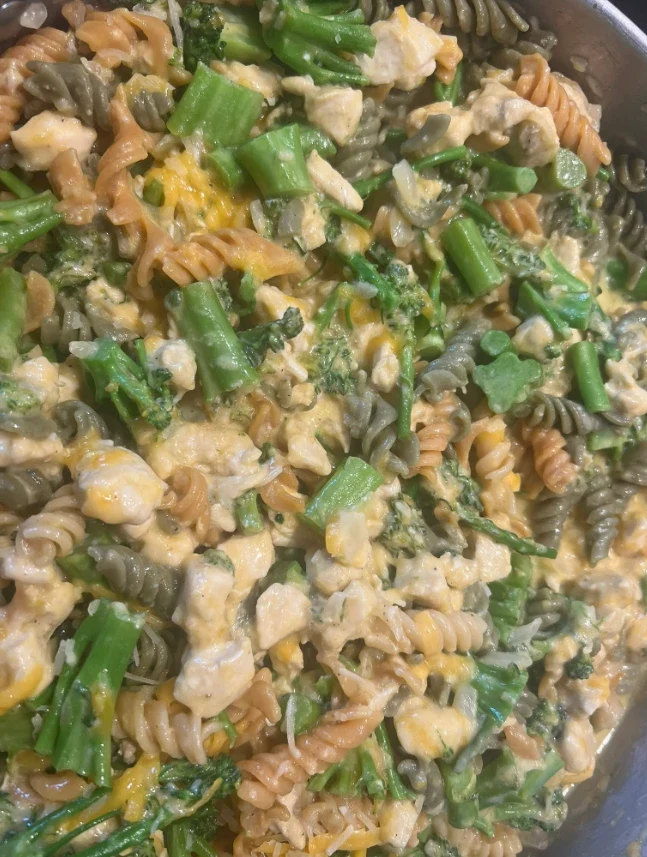
Broccoli Chicken Cheese Casserole
Ingredients
Method
- Heat the oven to 375°F (190°C). Bring a large pot of salted water to a boil and cook the rotini for 2 minutes less than the package says. Add the broccoli for the last 2 minutes, then drain.
- Meanwhile, heat the olive oil in a large, deep oven-safe skillet over medium-high heat. Season the chicken with garlic powder, 1/4 tsp salt and 1/4 tsp pepper. Cook for 6 to 8 minutes, stirring now and then, until lightly golden and 165°F inside. Move it to a plate.
- Lower the heat to medium and melt the butter in the same skillet. Cook the onion for 3 minutes, until soft, then the garlic for 30 seconds. Whisk in the flour and cook for 1 minute.
- Slowly whisk in the warm milk, then the broth. Simmer, whisking, for 3 to 5 minutes, until the sauce coats the back of a spoon.
- Take the skillet off the heat. Stir in 1 1/2 cups cheddar, 1/2 tsp salt, 1/2 tsp pepper and the dry mustard until smooth.
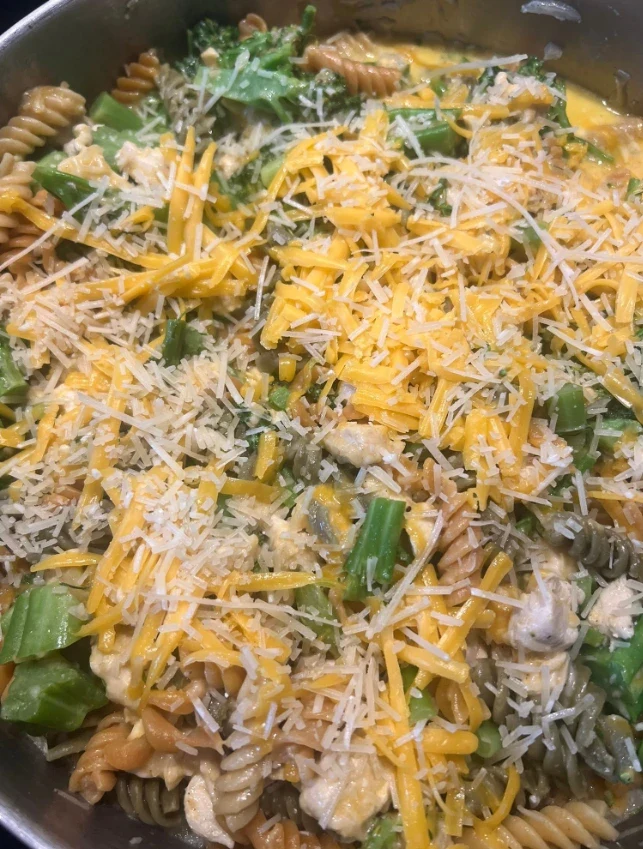
- Fold in the pasta, broccoli and chicken. If your skillet is too small, transfer everything to a 9×13-inch baking dish. Top with 1 cup cheddar and the parmesan.
- Bake for 15 to 20 minutes, until bubbling at the edges and the cheese has melted. For a golden top, broil for 1 to 2 minutes. Rest for 5 minutes before serving.
Notes
What Should It Look and Smell Like at Each Stage?
- Broccoli in the pot: it turns bright, vivid green within a minute or two. Drain it then. Olive green means it’s overcooked and will be mushy after baking.
- Browning the chicken: a steady sizzle, with golden edges on the pieces. It’s done when it’s white all the way through and a thermometer reads 165°F, the USDA’s safe temperature for poultry.
- The roux: after a minute of whisking, the butter and flour turn pale blond, smell like toasted bread and look like wet sand.
- The sauce: it goes from milky and thin to smooth and creamy. Dip a spoon and run a finger across the back. If the line holds, it’s ready for the cheese.
- After the cheese: glossy, pale orange and smooth, with a sharp cheddar smell. No grainy bits or pools of oil.
- Done: the edges bubble, the cheddar has fully melted into the parmesan, and the top has a few golden spots. Let it rest 5 minutes so the sauce sets and doesn’t run.
Why Is My Chicken Broccoli Casserole Dry, Grainy or Mushy?
Pasta keeps soaking up sauce in the oven and the fridge, so most problems come down to timing. Here’s how to fix them.
- Dry casserole: the pasta was fully cooked before baking, or it baked too long. Undercook the pasta by 2 minutes and pull the casserole when the edges first bubble. For leftovers, stir in a splash of milk before reheating.
- Grainy or greasy sauce: the cheese went in over high heat, or it was bagged shredded cheese. Take the pan off the heat before adding cheese, and shred it from a block.
- Mushy broccoli: it boiled too long. Two minutes in the pasta water is enough, since it keeps cooking in the oven.
- Bland: pasta and broccoli soak up salt. Salt the pasta water well, use sharp cheddar and taste the sauce before you add everything else.
Looking for more cozy casseroles? Try our 4-ingredient golden crusted chicken casserole or the cottage cheese lasagna. For more weeknight ideas, see our high-protein chicken recipes and high-protein lunch ideas for work.
Frequently Asked Questions
Can I make broccoli chicken casserole ahead or freeze it?
Yes. Assemble it up to a day ahead, cover and refrigerate, then add 10 minutes to the bake. Leftovers keep 3 to 4 days in the fridge, the USDA’s guideline for leftovers. To freeze, skip the topping and freeze it unbaked for up to 3 months. Thaw overnight in the fridge before baking.
Can I use cream of chicken soup instead of the cheese sauce?
You can. Whisk two 10.5-ounce cans of cream of chicken soup with 1 cup of milk and 1 1/2 cups of cheddar, and skip the butter, flour and broth. It’s faster but saltier and less cheesy. The homemade sauce takes only about 10 minutes and you control the salt.
Can I make it with rice or low-carb?
Yes. Swap the pasta for 4 cups of cooked rice. For low-carb, skip the pasta and use 2 pounds of broccoli or half broccoli and half cauliflower. Use 2 tablespoons of flour in the sauce, or thicken it with cream cheese. Either way, the bake time stays the same.
Sources
- U.S. Department of Agriculture, FoodData Central, SR Legacy, including FDC 170379 (broccoli, raw), 171077 (chicken breast, raw), 169736 (dry enriched pasta), 173410 (butter), 171267 (2% milk), 173414 (cheddar), 171247 (grated parmesan) and 171609 (low-sodium chicken broth), retrieved 2026-11-26, fdc.nal.usda.gov
- USDA Food Safety and Inspection Service, Safe Minimum Internal Temperature Chart, retrieved 2026-11-26, fsis.usda.gov
- USDA Food Safety and Inspection Service, Leftovers and Food Safety, retrieved 2026-11-26, fsis.usda.gov
