No-Bake Chocolate Oatmeal Cookies: The Foolproof Recipe That Sets Every Time
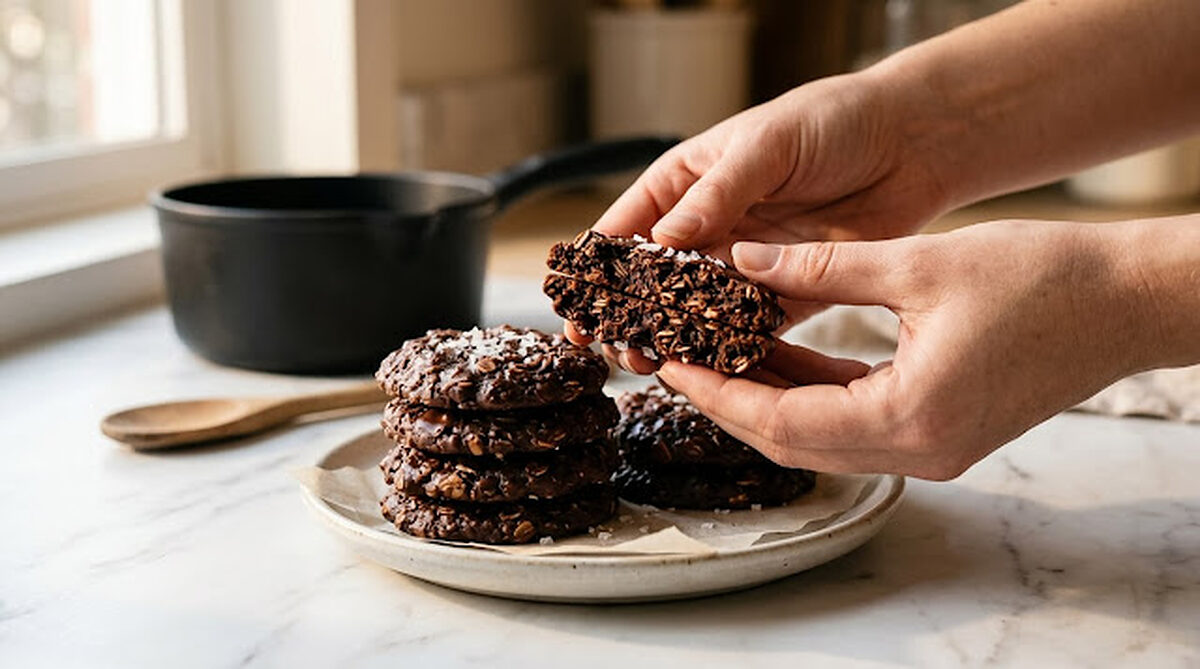
I’ve made these no-bake cookies probably 30 times. And I still messed up a batch last winter, stood over the stove, got distracted by my phone, pulled the pan too early. Chocolate soup. Again.
The thing is, no-bake chocolate oatmeal cookies have exactly one rule you can’t break. Get the boil right, and you’ve got fudgy, chewy, set-perfectly cookies in 15 minutes. Miss it? Puddles.
No oven. 8 pantry ingredients. Ready in 15 minutes. The only trick is nailing the boil, either timing it to exactly 1 minute or hitting 230°F–234°F on a thermometer. That’s it. That’s the whole secret.
So let’s make sure yours actually set this time.
Oats, Cocoa and the Peanut Butter Question
Most recipes just hand you a list. This one explains why, because I genuinely think understanding your ingredients saves you from 90% of kitchen disasters.
Quick oats: They absorb the hot mixture fast and give you a compact, chewy cookie. Rolled oats work too, heartier texture, slightly chunkier bite. Your call.
Butter: Richness and smooth emulsification. Salted butter won’t ruin anything, but you lose control of the salt balance later. I prefer unsalted, always.
Granulated + brown sugar blend: Granulated sugar is what actually makes the cookie set. Brown sugar adds that subtle molasses depth. Use all granulated and they’ll firm up harder. All brown? They might stay tacky longer than you’d like.
Secret weapon, cream of tartar: Nobody talks about this. A tiny ⅛ tsp pinch prevents sugar from re-crystallizing as the mixture cools, which is exactly what causes that gritty, sandy texture that makes you want to throw the whole batch away. Add it. Trust me.
No-Bake Chocolate Oatmeal Cookies
Ingredients
Method
- Line two baking sheets with parchment. Measure everything before touching the stove, this moves fast and waits for no one.
- Combine butter, milk, sugar, cocoa, salt, and cream of tartar in a medium heavy-bottomed saucepan over medium-low heat. Whisk until the butter melts and the sugar fully dissolves. Don’t rush this part, it matters.
- Raise the heat to medium. Bring to a full rolling boil, then hold it for exactly 1 minute (or watch for 230°F–234°F).
- Pull from the heat immediately. Stir in peanut butter and vanilla until smooth and glossy.
- Fold in oats. Now let it sit for 5 minutes, this gives the oats time to absorb moisture and thicken before you scoop. Skip this, and they’ll spread flat.
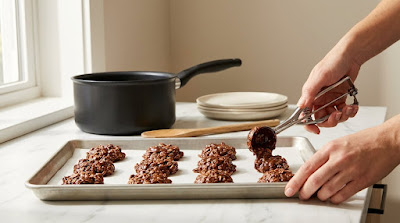
- Drop heaping tablespoons onto parchment fast, it sets as it cools.
- Leave them alone for 30 minutes at room temperature. Walk away. Don’t poke them.
Notes
- If they won’t set: The mixture didn’t boil long enough. Timing starts once it reaches a full rolling boil across the whole surface.
- If they’re dry and crumbly: It boiled too long. Keep it to 60 seconds.
- Old-fashioned oats: Pulse them a few times in a food processor first. Whole rolled oats stay chewy and loose.
- Humidity: On humid days add 10 to 15 seconds to the boil.
- Storage: Keep in an airtight container at room temperature up to 1 week, or freeze up to 3 months.
| The boil | Result |
|---|---|
| Under-boiled (too short) | Won’t set — chocolate soup and puddles |
| Just right (1 minute / 230–234°F) | Fudgy, chewy, sets perfectly |
| Over-boiled (too long) | Dry, crumbly cookies |
Scooping and Timing
- Use a cookie scoop. Consistent size means consistent set time. Uneven scoops mean some cookies are still soft while others have already over-set. Annoying but avoidable.
- I personally found that stirring peanut butter in off the heat, not while the pan’s still on the burner, gives a noticeably smoother, creamier result. When it hits active heat, it can seize slightly and turn the whole mixture grainy. Off the heat. Every time.
- Don’t skip the 5-minute rest before scooping. It feels pointless. It isn’t. The mixture thickens as it cools slightly, and that’s what gives you cookies that hold their shape instead of spreading into flat discs.
- Flaky sea salt on top right after scooping is optional. It’s also not optional. You’ll thank me.
Why the One-Minute Boil Decides Everything
Why the boil is everything: When sugar heats past 230°F, enough water evaporates to create a supersaturated solution. As it cools, the sugar recrystallizes around the oats, that’s what makes the cookie firm up. Too little heat leaves too much water, so cookies stay soft and sticky. Too much heat seizes the sugar hard, giving you a dry, crumbly texture. One-minute window. That’s all you get.
Saucepan tip: I recommend you use a heavy-bottomed stainless steel or enameled cast iron pan. Thin pans create hot spots that scorch sugar before it fully dissolves, and scorched sugar is bitter, not chocolatey. If your pan is thin, keep the heat at medium-low the whole time and stir constantly.
Gooey or Crumbly? How to Fix Both
“They’re gooey and won’t set.” → Didn’t hit a true rolling boil, or pulled too early → Hold the boil a full 60 seconds next time. On rainy or humid days, and I’ve noticed this personally, add 20–30 extra seconds and let cookies sit uncovered overnight.
“They’re dry and crumbly.” → Over-boiled, or heat was too high → Dissolve sugar slowly on medium-low before raising the temp. Use a timer so you don’t overshoot. A thermometer is even better.
“The texture is gritty and sandy.” → Sugar re-crystallized during cooling → Add ⅛ tsp cream of tartar next time and stir constantly during the dissolve stage. This fixes it completely.
Vegan, Gluten-Free and Lower-Sugar Versions
- Vegan: Swap butter for coconut oil, use oat milk or almond milk, cookies set slightly softer but still hold up well
- Gluten-Free: Certified GF quick oats, everything else stays exactly the same
- Sugar-Free: Pure maple syrup (reduce to ¾ cup) or coconut sugar (1:1), both add a deeper, caramel-like flavor I actually prefer
- Creative twist: Shredded coconut + chopped dates stirred in, or a drizzle of peanut butter and flaky sea salt on top. Don’t knock it till you’ve tried it.
Keeping No-Bake Cookies Fresh
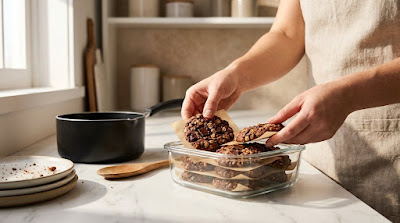
- Countertop: Airtight container with parchment between layers, good for 3–5 days
- Fridge: Up to 2 weeks, they firm up when cold, so let them sit 5 minutes before eating if you like them softer
- Freezer: Freeze in a single layer first, then transfer to a zip-lock bag with parchment between each layer, keeps up to 3 months. Pull one out whenever you need a quick healthy snack in two minutes flat. Honestly, this is my favorite way to store them.
Oats make these a surprisingly good source of fiber. For more options, see our guide to high fiber snacks.
Prefer something cold? Our list of frozen no-bake desserts covers seven treats that skip the oven and the ice cream maker.