
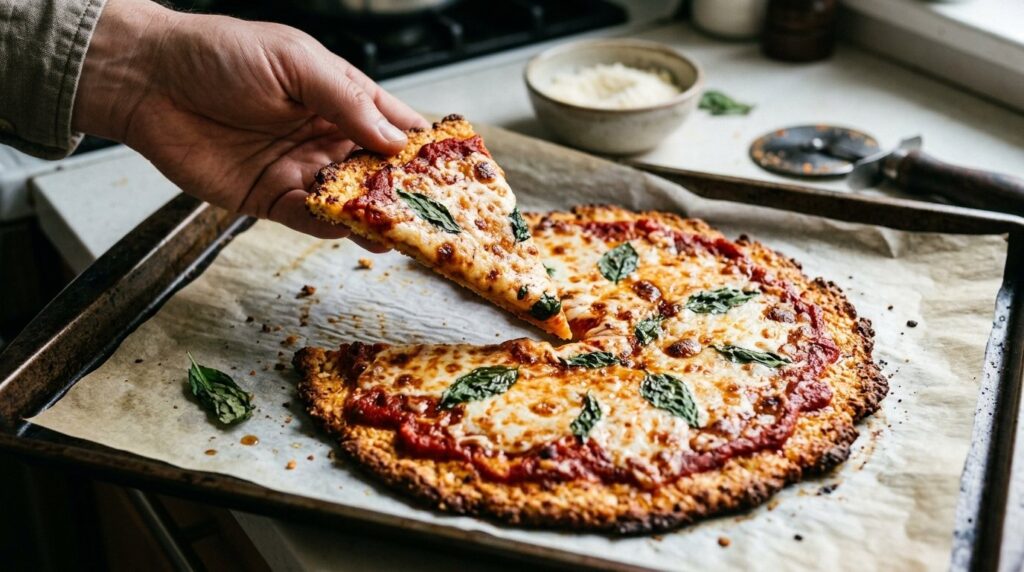
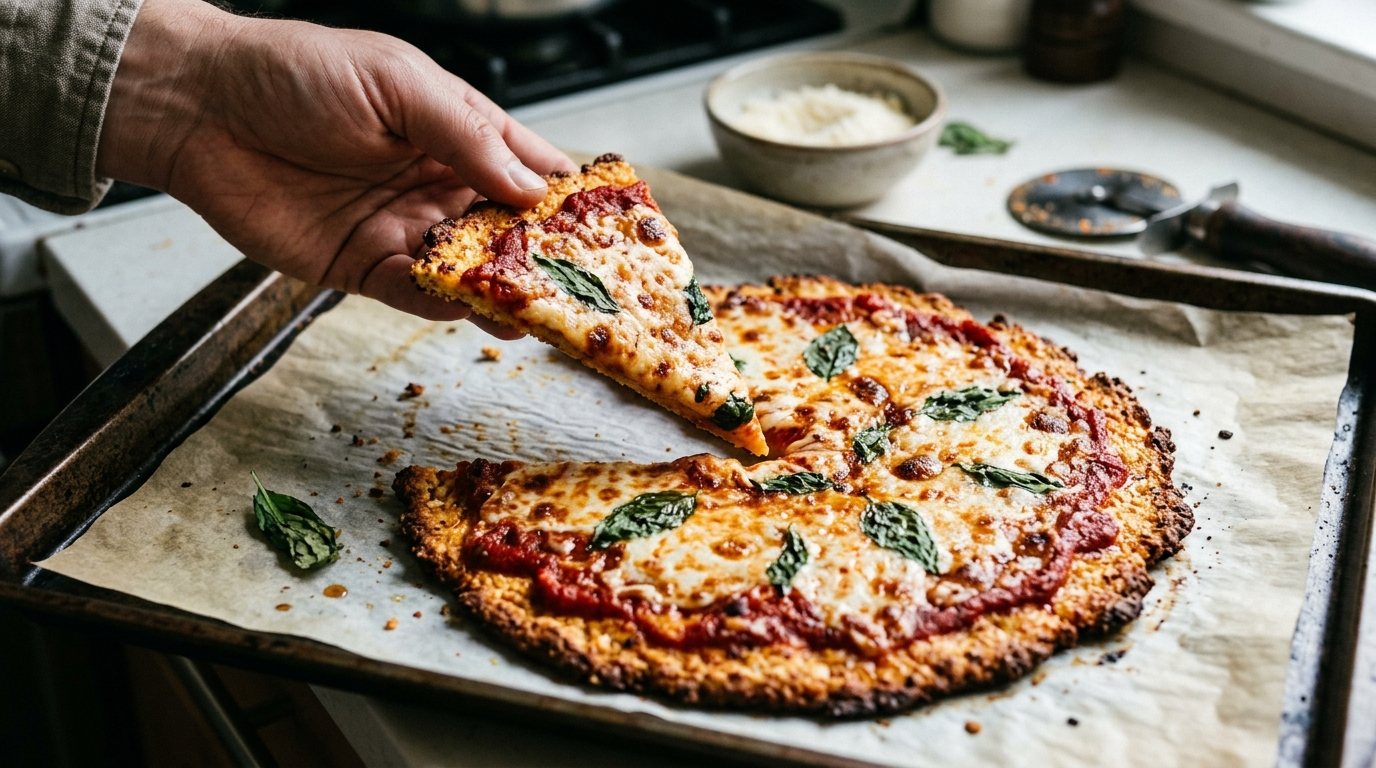
This cottage cheese pizza crust has just two ingredients: cottage cheese and eggs. There’s no flour at all. You blend them smooth, spread the batter thin and bake it, and it comes out crispy enough to hold up as real slices you can pick up. I topped mine like a classic margherita, with sauce, mozzarella and fresh basil.
Below you’ll find the recipe, the rules that make the crust crisp instead of soggy, how it compares to regular pizza on USDA nutrition numbers, and topping ideas. Half the pizza has about 289 calories, 25.6g of protein and 7.7g of carbs. It’s one of our easy cottage cheese recipes.
How Does a Cottage Cheese Pizza Crust Work?
Think of it as a very thin, very well-baked frittata. The eggs bind the blended cottage cheese into a sheet as it bakes. A long bake at 400°F drives off the moisture, so the surface browns and the crust firms up enough to slice. Because there’s no flour, it’s naturally low in carbs and gluten-free.
That also means it won’t taste like bread dough. It’s savory and cheesy, closer to the crisp edges of a baked cheese crisp. If you want a chewy, bread-style crust made with cottage cheese, our cottage cheese bagels use a flour-based dough instead.
What Do You Need for Cottage Cheese Pizza Crust?
- Full-fat cottage cheese (1 cup). The base of the crust. One cup has about 25g of protein, according to USDA FoodData Central (FDC 172179). Full-fat (4%) bakes up firmer than low-fat versions, which hold more water.
- Large eggs (2). They set the batter into a sliceable crust. Two large eggs add about 12.6g of protein (FDC 171287).
- Italian seasoning (½ tsp, optional). Oregano and basil make it taste more like pizza and less like eggs. A pinch of garlic powder helps too.
- Margherita toppings: ¼ cup pizza sauce, ½ cup shredded low-moisture mozzarella and a handful of fresh basil.
You’ll also need a blender, a rimmed baking sheet and parchment paper. The parchment matters more than you’d think. This batter sticks to bare pans and foil.
How Do You Make the Crust Crispy?
Crispness comes down to three things: a smooth batter, a thin layer, and enough time in the oven. Skip any one of them and the middle stays soft.
- Blend until completely smooth. Any curds left in the batter turn into soft, wet spots.
- Spread it thin. Aim for a 10-inch round about ¼ inch thick. A thick crust steams instead of browning.
- Bake until deep golden all over, not just at the edges. A pale center means it needs more time. This usually takes 30 to 35 minutes at 400°F.
- Let it cool for 5 minutes before topping. It firms up as it cools.
- Go light on wet toppings. Too much sauce or fresh mozzarella soaks back into the crust. Low-moisture mozzarella stays crisper.
 Save
Cottage Cheese Pizza Crust
Ingredients
Method
- Heat the oven to 400°F (200°C). Line a rimmed baking sheet with parchment paper and grease it lightly.
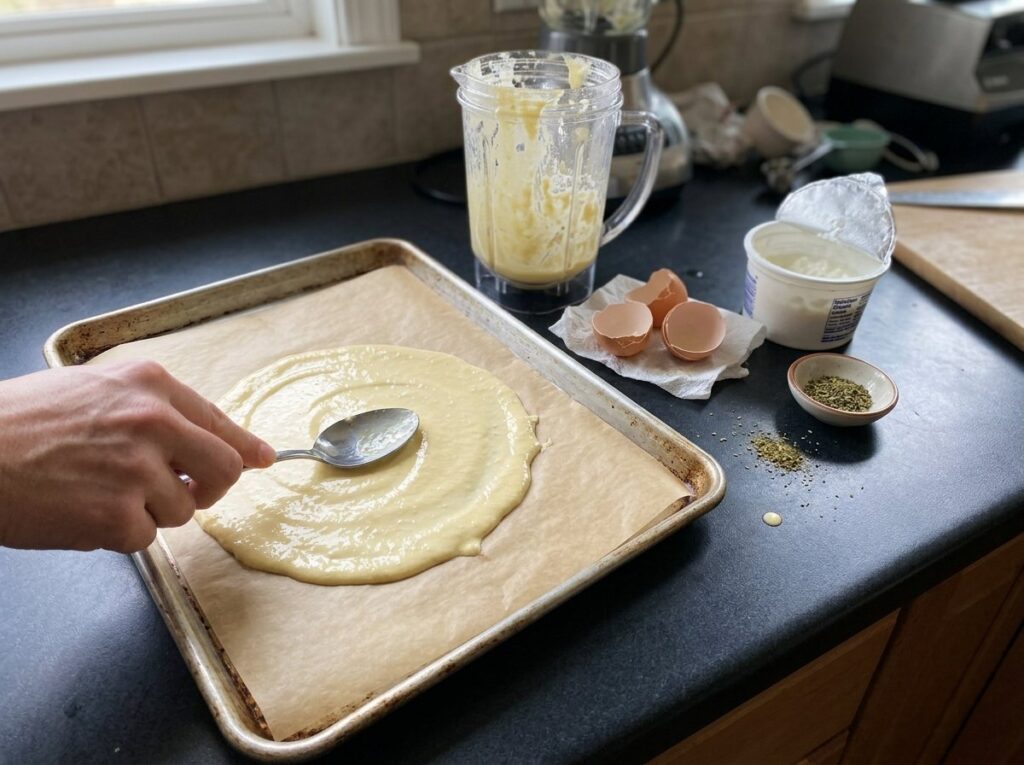
- Blend the cottage cheese, eggs and seasonings for 30 to 60 seconds, until completely smooth with no curds.
- Pour the batter onto the parchment and spread it into a 10-inch round about 1/4 inch thick.
- Bake for 30 to 35 minutes, until the whole surface is deep golden and the center is firm.
- Let the crust cool for 5 minutes. Spread on the pizza sauce and sprinkle the mozzarella over it.
- Bake for 8 to 10 minutes more, until the cheese is melted and bubbly. Top with fresh basil, rest 2 minutes, then slice.
Notes
- Crispier crust: spread it thinner and bake until golden all over, not just at the edges.
- Soggy middle: too thick, underbaked or too much sauce. Use low-moisture mozzarella.
- Less eggy: keep the Italian seasoning and garlic powder, or add 1 tbsp grated parmesan to the batter.
- Make ahead: refrigerate the plain baked crust up to 3 to 4 days, or freeze between parchment. Top and bake at 400°F for 8 to 12 minutes.
- Nutrition is per serving (half the pizza, with the margherita toppings), calculated from USDA FoodData Central (FDC 172179, 171287, 172880, 170846).
How Does It Compare to Regular Pizza?
Half of this margherita pizza has about the same calories as one slice of chain cheese pizza, with twice the protein and about a fifth of the carbs. According to USDA FoodData Central, one slice of a 14-inch chain cheese pizza (107g) has about 285 calories, 12.2g of protein and 35.6g of carbs.
| Per serving (half the pizza) | Amount |
|---|---|
| Calories | 289 |
| Protein | 25.6g |
| Fat | 16.9g (8g saturated) |
| Carbohydrates | 7.7g |
| Sodium | 739mg (32% of the 2,300mg Daily Value) |
| Calcium | 300mg |
Sodium is the trade-off. Cottage cheese, mozzarella and pizza sauce are all salted, so half the pizza carries about 32% of the FDA’s 2,300mg Daily Value. Using a low-sodium cottage cheese and a no-salt-added sauce brings that down noticeably.
Why Is My Cottage Cheese Pizza Crust Soggy?
A soggy crust almost always means it was too thick or underbaked. Here’s how to tell what went wrong.
- Pale or wobbly in the middle: it needed more time. Bake until the whole surface is golden, then top it.
- Soft all the way through: the layer was too thick. Spread it thinner or use a bigger pan.
- Wet patches under the toppings: too much sauce or fresh mozzarella. Use less sauce and low-moisture cheese.
- Tastes eggy: add Italian seasoning and garlic powder to the batter, or a tablespoon of grated parmesan.
- Stuck to the pan: use parchment, and lightly grease it.
Topping Ideas
Margherita is the simplest place to start, but this crust handles most classic toppings as long as you keep the wet ones light.
- Margherita: pizza sauce, mozzarella and fresh basil added after baking.
- Pepperoni: sauce, mozzarella and pepperoni. The fat from the pepperoni helps the edges crisp.
- Veggie: thinly sliced mushrooms, bell pepper and red onion. Sauté the mushrooms first so they don’t release water.
- BBQ chicken: BBQ sauce, shredded cooked chicken, red onion and mozzarella.
Want a dip on the side? Our cottage cheese queso uses the same blend-first trick. For more egg and cottage cheese ideas, try copycat Starbucks egg bites or cottage cheese scrambled eggs.
Can You Make the Crust Ahead?
Yes. Bake the plain crust, let it cool completely, then wrap it and refrigerate it for up to 3 to 4 days, the USDA’s guideline for leftovers. For longer storage, freeze it between sheets of parchment. The USDA notes frozen leftovers keep their best quality for 3 to 4 months.
To use a made-ahead crust, add your toppings and bake at 400°F until the cheese melts and the crust crisps back up, about 8 to 12 minutes. Skip the microwave, which makes it soft.
Want another high-protein Italian dinner? Try our cottage cheese lasagna, made with no-boil noodles and a blended cottage cheese layer.
Frequently Asked Questions
Is cottage cheese pizza crust low carb?
Yes. The whole crust has about 8.4g of carbs, based on USDA FoodData Central values for cottage cheese and eggs. Even with margherita toppings, half the pizza comes to about 7.7g of carbs, compared with about 35.6g in one slice of chain cheese pizza.
Does cottage cheese pizza crust taste like eggs?
It tastes savory and cheesy, with a mild egg flavor if you leave it plain. Italian seasoning and garlic powder in the batter make it taste more like pizza, and baking until deep golden adds a toasty flavor.
Can I use low-fat cottage cheese?
You can, but full-fat (4%) works better. Low-fat and nonfat cottage cheese hold more water, so the crust takes longer to dry out and is more likely to stay soft in the middle. If you use low-fat, spread it thinner and bake a few minutes longer.
Is cottage cheese pizza crust gluten-free?
The crust itself is, since it’s made only from cottage cheese and eggs with no flour. If you need it strictly gluten-free, check the labels on your seasonings, pizza sauce and any toppings.
Sources
- USDA FoodData Central: Cheese, cottage, creamed, large or small curd (FDC 172179); Egg, whole, raw, fresh (FDC 171287); Sauce, pizza, canned, ready-to-serve (FDC 172880); Cheese, mozzarella, whole milk, low moisture (FDC 170846); Fast Food, Pizza Chain, 14″ pizza, cheese topping, regular crust (FDC 173292); retrieved 2026-10-07. fdc.nal.usda.gov
- U.S. Food and Drug Administration, Daily Value on the Nutrition and Supplement Facts Labels (sodium 2,300mg), retrieved 2026-10-07. fda.gov
- USDA Food Safety and Inspection Service, Leftovers and Food Safety, retrieved 2026-10-07. fsis.usda.gov