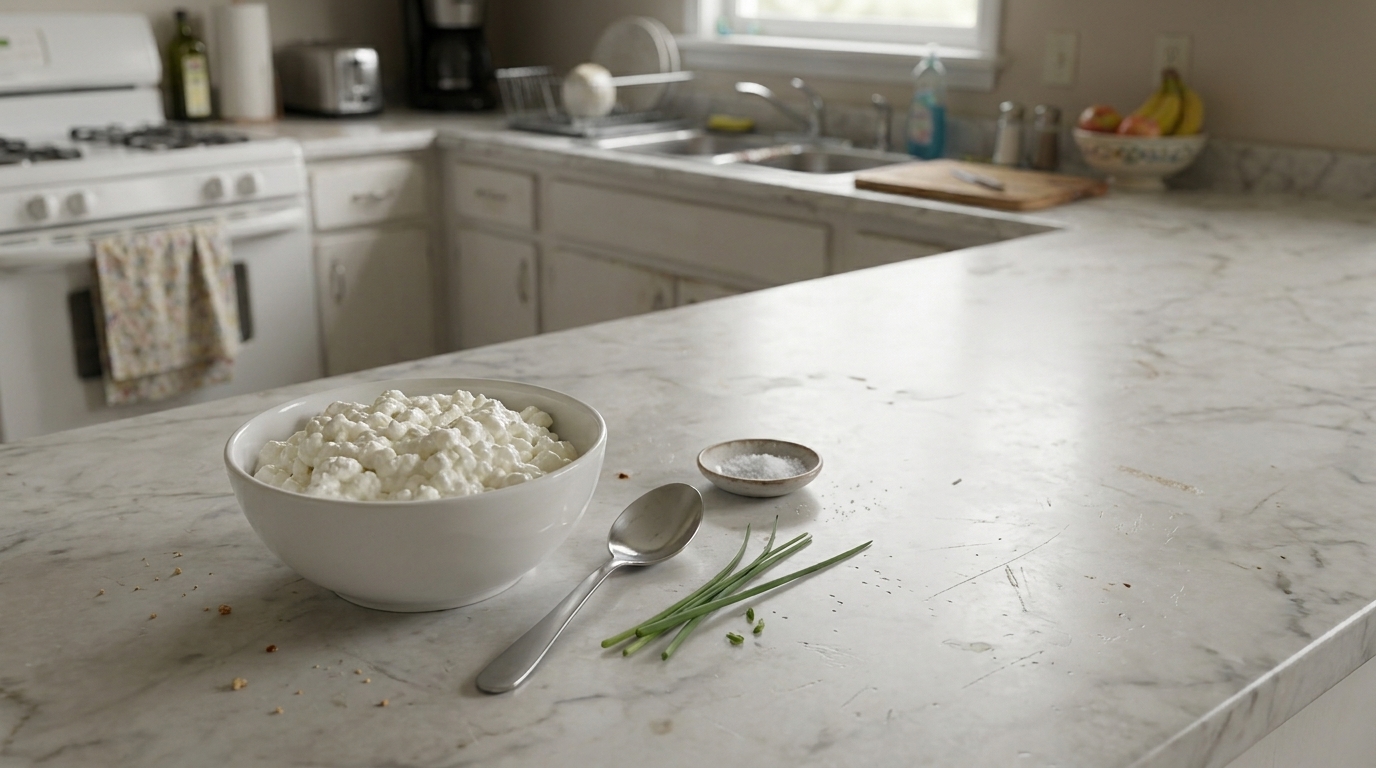
Low Sodium Cottage Cheese: Best Brands + Easy DIY Recipe
Cottage cheese is having a moment. It’s blended into ice cream, baked into chips, and scooped straight from the tub for the protein. But there’s one line on the label almost nobody reads, and it isn’t the protein. It’s the sodium. A single half-cup can carry 350 to 450 milligrams, and if you eat two servings a day, that number climbs fast. The same tub also turns into cottage cheese bagels, where how much sodium you started with matters more than you would expect.
Here’s the good news. You don’t have to give up your favorite high-protein snack. You just have to be smarter about which tub you grab, or make your own. This guide covers the lowest-sodium brands, an easy homemade recipe, and a rinse trick that cuts the salt from what’s already in your fridge.
Key Takeaways
• In 2025, Tasting Table reported regular cottage cheese carries 350-450mg of sodium per 1/2 cup, which adds up quickly if you eat it every day.
• No-salt-added brands like Friendship Dairies drop that to about 45mg per serving.
• A homemade batch made with milk and vinegar lands near 15-30mg while keeping roughly 13g of protein.
• The fix isn’t cutting cottage cheese. It’s choosing the right version.
How much sodium is in cottage cheese?
In 2025, Tasting Table reported that a half-cup of regular cottage cheese contains roughly 350 to 450 milligrams of sodium, and a full cup of the 2% variety can top 900mg (Tasting Table, 2025). That’s a lot for a food most people file under “healthy.” The salt isn’t there by accident. Cottage cheese is high in moisture, so salt gets added as a preservative and for flavor.
The catch is how quietly it stacks up. In 2025, the American Heart Association reaffirmed a cap of 2,300mg of sodium per day, with an ideal target of 1,500mg for most adults (American Heart Association, 2025). Two servings of regular cottage cheese can eat more than half of that ideal budget before you’ve touched anything else.
Most of us are already over the line. As of 2025, the American Heart Association estimates as much as 75% of the sodium Americans eat comes from processed and prepared foods, not the salt shaker. Cottage cheese is exactly the kind of “healthy” processed food hiding in that 75%. So how big is the gap between a regular tub and a low-sodium one? It’s enormous.
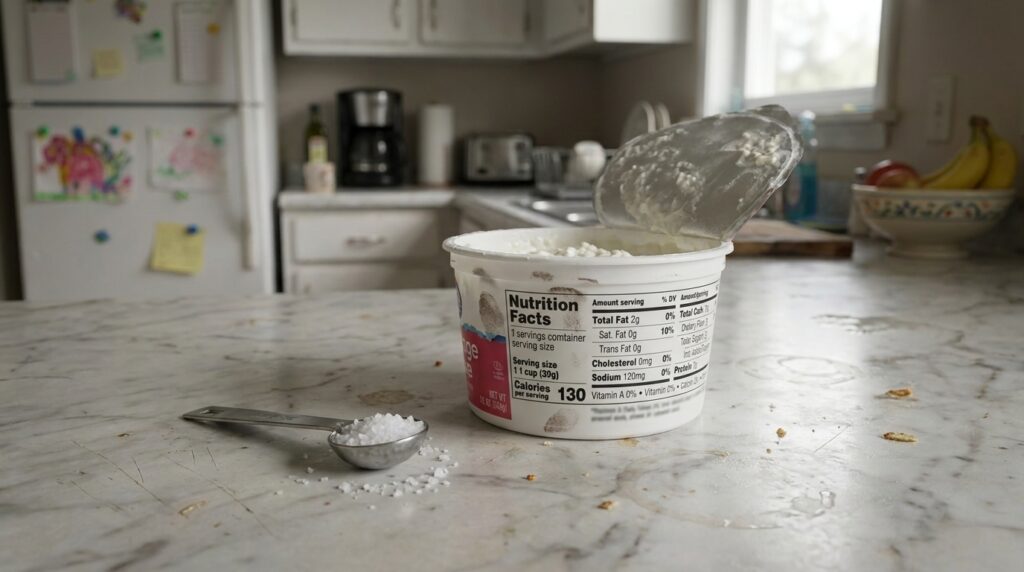
Can cottage cheese fit a lower-sodium diet?
Yes. The sodium comes from salt added during production, not from the dairy itself, so the version you buy makes the difference. A no-salt-added or homemade tub gives you the same protein and calcium with a small fraction of the sodium.
If you are watching your sodium intake, compare the nutrition labels of a few products before you buy, and check the serving size too: some tubs list 1/4 cup instead of 1/2 cup, which makes the sodium look lower than it is. Eating patterns like the DASH eating plan from the National Heart, Lung, and Blood Institute include low-fat dairy and set specific daily sodium levels. If you follow a sodium limit for a medical reason, your doctor or dietitian should set that number, not a recipe site.
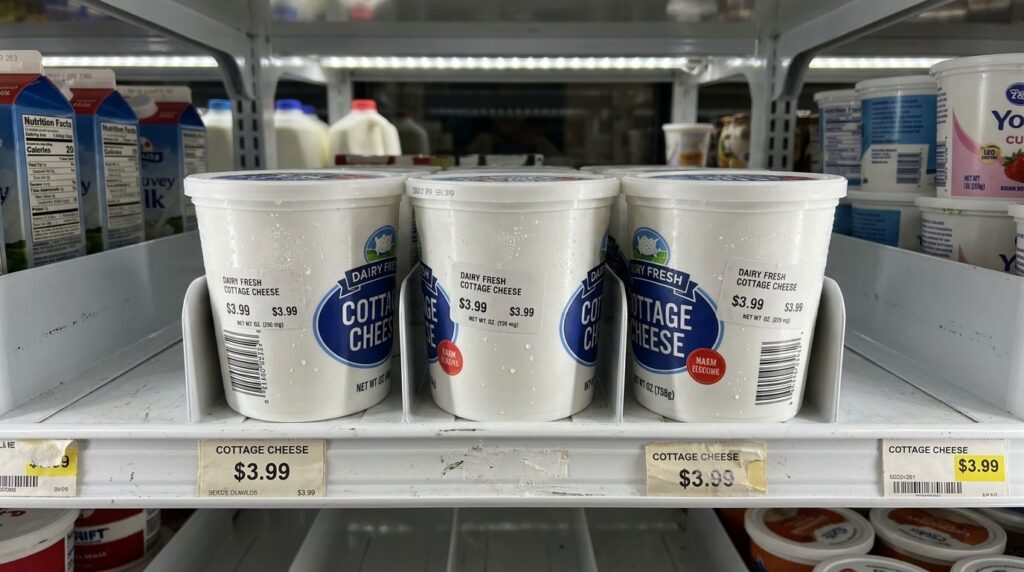
What are the best low sodium cottage cheese brands?
The lowest-sodium option most stores carry is Friendship Dairies No Salt Added, at about 45mg per half-cup, roughly a tenth of a regular tub (Easy & Cozy Recipes, 2026). As of 2025, WellND reports no-salt-added lines in general run anywhere from 15 to 60mg, versus the 350-450mg baseline (WellND, 2025). If your store doesn’t stock one, farmer cheese is a firmer, naturally lower-sodium cousin worth a look.
Here’s how the common options compare. Always confirm against the current package, because brands reformulate and numbers drift.
| Brand / type | Sodium (per 1/2 cup) | Notes |
|---|---|---|
| Generic “no salt added” | ~15mg | Lowest tier; hardest to find |
| 365 Whole Foods Farmer Cheese | ~25mg (per 1/4 cup) | Firmer texture, mild |
| Generic “low sodium” | ~30mg | Label-dependent |
| Friendship Dairies No Salt Added | ~45mg | Widely available |
| Good Culture No Salt Added | ~60mg | Adds live probiotics |
| Regular cottage cheese | 350-450mg | The baseline you’re beating |
What we found on the shelf: When we compared tubs side by side in our kitchen, the no-salt-added versions tasted noticeably milder, closer to fresh milk than to the tangy, salty stuff most people grew up on. That’s not a flaw. It’s a blank canvas, and the flavor section below fixes it in about ten seconds.
How do you make low sodium cottage cheese at home?
You can make cottage cheese with as little as 15 to 30mg of sodium using two ingredients: milk and an acid. No salt goes in unless you add it. The whole thing takes about 45 minutes, most of it hands-off, and it costs less than a name-brand tub. The method is simple curds-and-whey chemistry. You warm milk, add vinegar or lemon juice to separate the curds, drain, and rinse.
That rinse is the secret. It washes away residual whey and any trace saltiness, leaving a clean, creamy curd. In our testing, homemade cottage cheese, drained and rinsed, lands near 15 to 30mg of sodium per half-cup. That’s a 90%-plus reduction from the 350-450mg in a standard store tub, while still delivering the roughly 13g of protein cottage cheese is loved for (Consumer Reports, 2025).
Easy Low-Sodium Cottage Cheese
Yield: about 1.5 cups · Time: 45 minutes · Sodium: ~15-30mg per 1/2 cup
Ingredients
- 4 cups (1 quart) whole milk
- 3 tablespoons white vinegar or fresh lemon juice
- Optional: 1 tablespoon milk or cream, to loosen at the end
Steps
- Warm the milk in a saucepan over medium heat to about 120°F, stirring so it doesn’t scorch.
- Take it off the heat, pour in the vinegar, and stir slowly for 1 to 2 minutes. The curds will separate from the cloudy whey.
- Cover and let it rest at room temperature for 30 minutes.
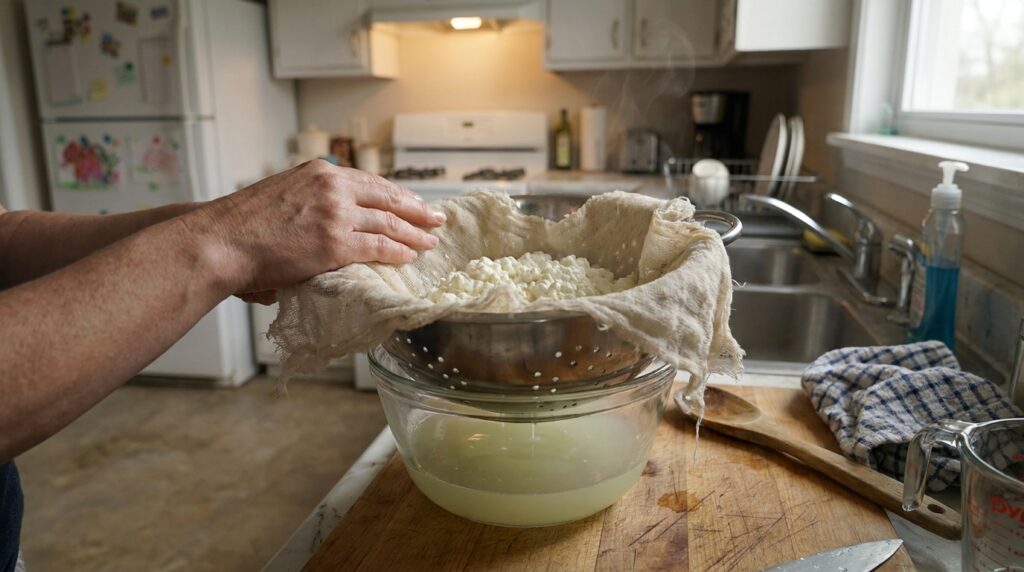
- Line a colander with cheesecloth and pour in the mixture. Let it drain for about 5 minutes.
- Gather the cloth and rinse the curds under cold water for 3 to 5 minutes, gently squeezing, until cooled and clean-tasting.
- Squeeze out the excess liquid. Stir in a splash of milk or cream for a creamier texture if you like.
Store it in an airtight container in the fridge for up to 4 to 5 days. Because there’s no added salt preserving it, homemade won’t last as long as store-bought, so make it in small batches.
Does rinsing store-bought cottage cheese reduce sodium?
Yes. Draining regular cottage cheese in a fine strainer and rinsing it under cold water washes away a chunk of the surface salt sitting in the surrounding liquid. It’s the fastest fix when a no-salt-added brand isn’t on the shelf and you don’t have time to make your own. How much does it cut? Enough to matter, though not as much as making your own from scratch.
The trade-off is texture. You’ll rinse away some of the creamy dressing, so the curds come out drier and a little less rich. Stir a spoonful of plain milk or a dollop of plain Greek yogurt back in and, in our experience, most people can’t tell the difference.
Nobody frames the rinse trick with real numbers, but it’s the most practical option for the average shopper. It won’t get you down to homemade’s 15mg, yet it meaningfully trims the surface sodium off a 400mg tub in under a minute. Think of it as the middle path between grabbing a salty tub and cooking a batch from scratch. A small effort, a real payoff.
How do you add flavor back without salt?
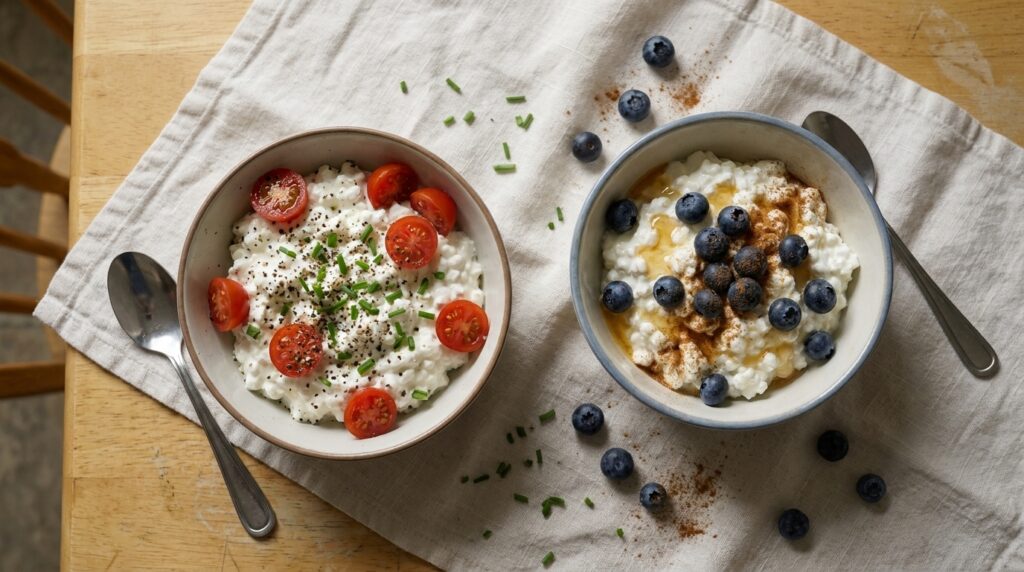
Low-sodium doesn’t have to mean flat. The salt was doing two jobs, seasoning and tang, and you can replace both with ingredients that add zero or almost zero sodium. Acid, herbs, and a good salt-free seasoning blend do the heavy lifting. Want it savory or sweet? Either works, and neither needs the salt.
For savory bowls, reach for cracked black pepper, fresh chives, a squeeze of lemon, everything-bagel seasoning (look for the salt-free version), or a few dashes of hot sauce (check the label, since some are salt bombs). For sweet, the cottage cheese barely needs help. Berries, a drizzle of honey, cinnamon, or a spoon of nut butter turn it into dessert.
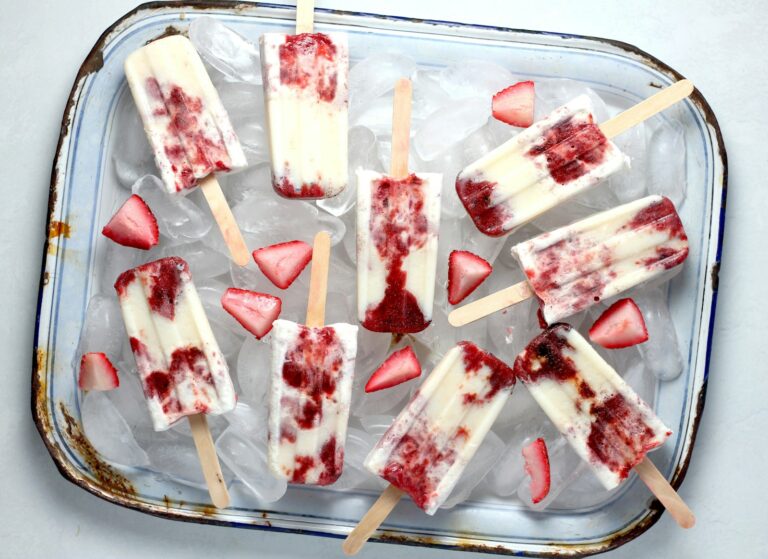
This is exactly the base that makes our creamy 4-ingredient protein pops and crispy cottage cheese chips work so well. A clean, mild curd takes on whatever you give it.
What’s the nutrition in low sodium cottage cheese?
Cutting the sodium keeps everything people actually want from cottage cheese. As of 2025, Consumer Reports notes a half-cup still delivers around 13g of protein, more than 300mg of calcium, and only about 100 calories (Consumer Reports, 2025). The salt was never the nutrition. It was just seasoning.
That protein number is why cottage cheese exploded as a snack in the first place. As of 2025, the American Dairy Association reports 13 to 14g of protein per half-cup depending on fat level, plus about 13% of your daily calcium (American Dairy, 2025). Going low-sodium changes none of that.
Looking for more ways to use the tub? See all of our cottage cheese recipes, from breakfast to dessert.
Frequently Asked Questions
How much sodium is in cottage cheese?
In 2025, Tasting Table reported regular cottage cheese has about 350 to 450mg of sodium per 1/2 cup, and a full cup of 2% can exceed 900mg (Tasting Table, 2025). No-salt-added versions cut that dramatically, to between 15 and 60mg per 1/2 cup depending on the brand.
What is the lowest sodium cottage cheese brand?
No-salt-added lines are lowest, around 15 to 45mg per 1/2 cup. As of 2026, Friendship Dairies No Salt Added (~45mg) is the most widely available (Easy & Cozy Recipes, 2026). Good Culture No Salt Added runs about 60mg and adds probiotics. Farmer cheese is another naturally low-sodium option.
Can you make cottage cheese without salt?
Yes. Warm 4 cups of milk, add 3 tablespoons of vinegar to separate the curds, drain through cheesecloth, and rinse under cold water. In 2025, Consumer Reports confirmed cottage cheese keeps about 13g of protein per half-cup, and with no added salt, homemade lands near 15 to 30mg of sodium (Consumer Reports, 2025).
Does rinsing cottage cheese reduce sodium?
Yes. Draining and rinsing the curds under cold water washes away surface salt in the surrounding liquid. It costs you a little creaminess, which you can restore by stirring in a splash of milk or plain yogurt. It’s the quickest fix when no low-sodium brand is available on the shelf.
Which cottage cheese should I buy if I’m watching sodium?
Look for a tub labeled “no salt added,” then confirm the sodium and the serving size on the nutrition panel, since brands reformulate. If you can’t find one, farmer cheese or the homemade version above are the lowest-sodium options, and rinsing a regular tub trims some of the surface salt.
The bottom line
Cottage cheese earned its comeback for good reason: high protein, high calcium, low calorie. The one weak spot is the sodium, and that’s the easiest part to fix.
- Regular tubs hide 350-450mg of sodium per 1/2 cup.
- No-salt-added brands (Friendship, about 45mg) cut it by roughly 90%.
- Homemade with milk and vinegar gets you to about 15-30mg.
- A quick rinse trims the salt off whatever’s already in your fridge.
- Acid, herbs, and fruit bring the flavor back for free.
Ready to put it to work? Make a batch of the homemade version above, then use it in our 3-ingredient high-protein ice cream or scoop it into more 15g-protein snack ideas.
About the author
Alex is the Founder & Recipe Developer at Flavor Flip, where every recipe is made and tasted in a home kitchen before it’s published, not built in a lab.
Sources
- Tasting Table, “The One Nutritional Fact You Should Pay Attention To When Buying Cottage Cheese,” retrieved 2026-07-24.
- American Heart Association, “Shaking the Salt Habit to Lower High Blood Pressure,” retrieved 2026-07-24.
- National Heart, Lung, and Blood Institute, “DASH Eating Plan,” retrieved 2026-07-24.
- Consumer Reports, “Is Cottage Cheese Good for You?,” retrieved 2026-07-24.
- American Dairy Association, “Cottage Cheese Health Benefits and Nutrition Facts,” retrieved 2026-07-24.
- WellND, “Cottage Cheese Sodium Content,” retrieved 2026-07-24.
- Easy & Cozy Recipes, “Low Sodium Cottage Cheese,” retrieved 2026-07-24.
Brand sodium figures change when products are reformulated, so always check the current package label. This article is general nutrition information, not medical advice.
This swap does the most work in the lunch box where low-sodium cottage cheese matters most.