Chia Seed Water: Easy Recipe, Ratio + What It Really Does
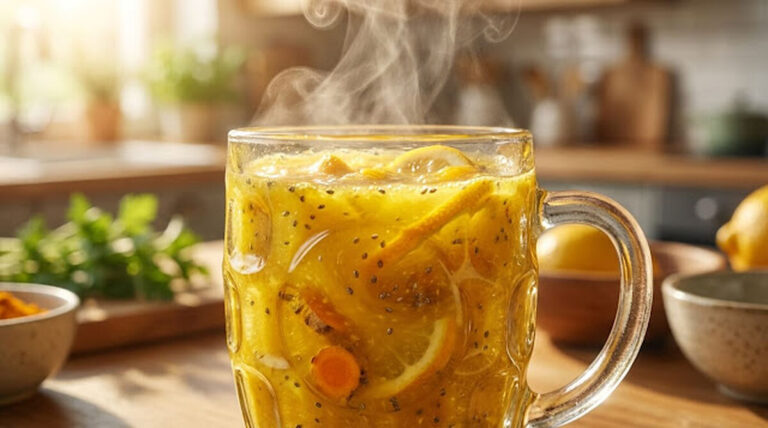
Chia seed water is two ingredients and one habit that decides whether it turns out right: stirring twice. Skip the second stir and half the seeds sink into a rubbery lump at the bottom of the glass. Get it right and you have an evenly thick, lightly lemony drink that goes down easily.
Below you’ll find the ratio that works, how long to soak, what chia seed water actually does (and what it doesn’t), flavor variations, and the nutrition for one glass. You’ll also see it called chia water or a chia seed drink. It’s the same thing.
Quick version
- Ratio: 2 tablespoons chia seeds to 12 ounces cold water, plus half a lemon or lime.
- Method: stir 20 seconds, wait 5 minutes, stir again, then let it sit 10 more minutes.
- Texture: less chia or more water makes it sippable; more chia makes it spoonable.
- Nutrition: about 8 g of fiber and 4 g of protein per glass (USDA FoodData Central).
What Is Chia Seed Water?
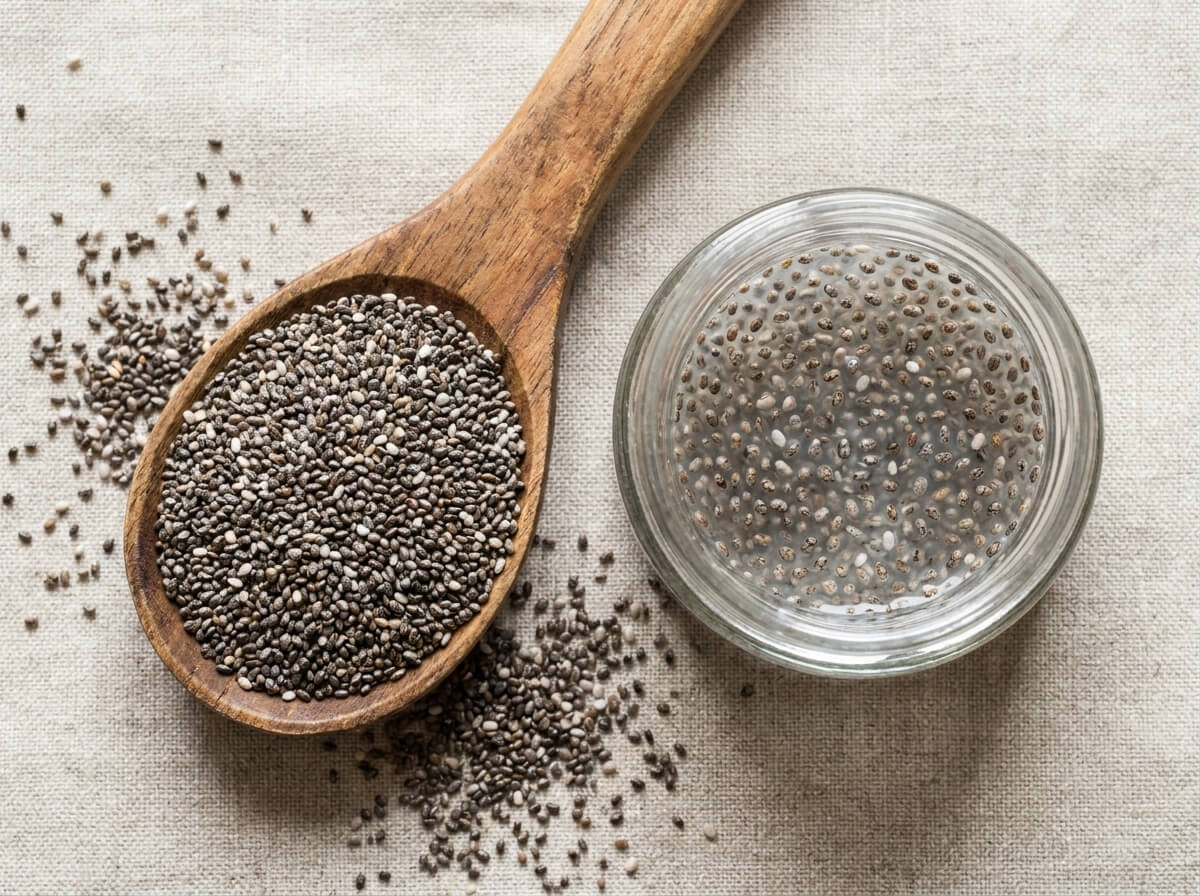
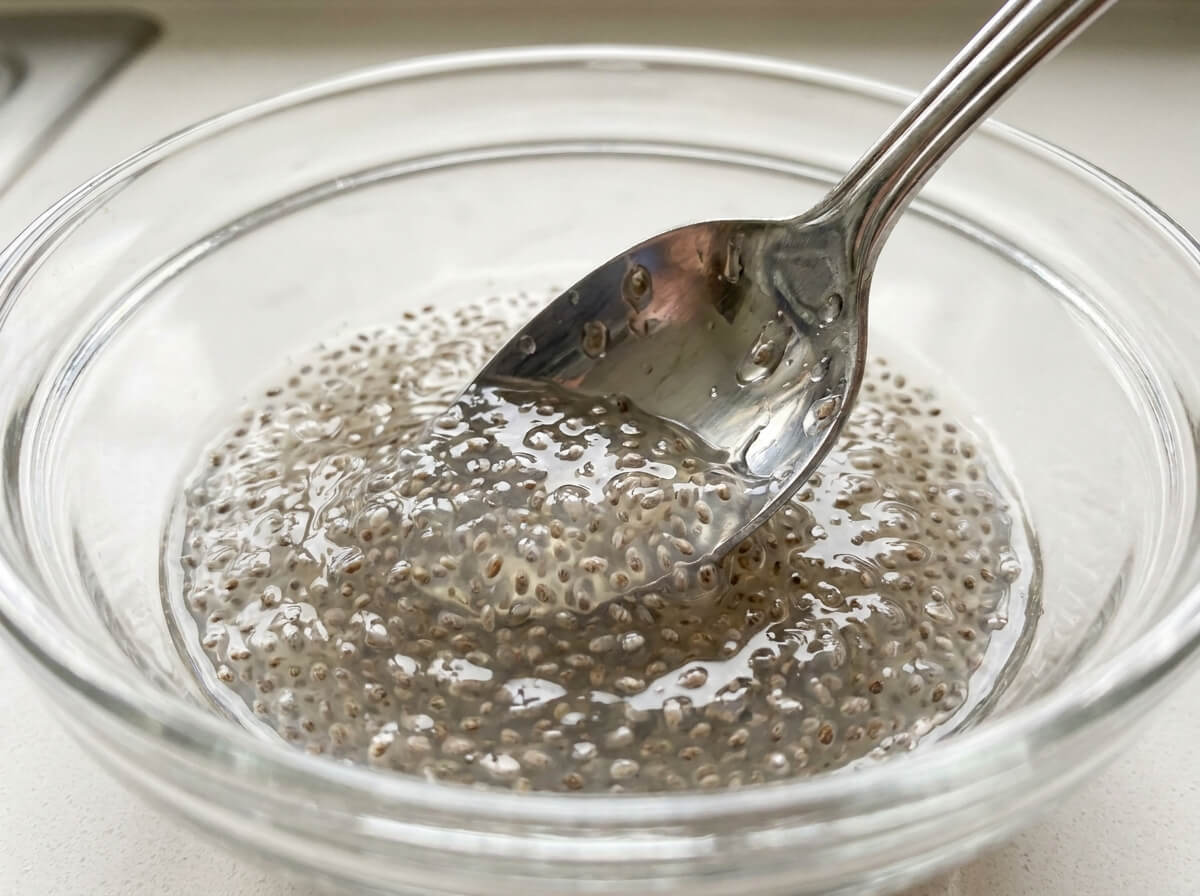
Chia seed water is chia seeds soaked in water until they swell into a soft gel, usually with a squeeze of lemon or lime. The seeds absorb many times their weight in liquid, and the outer coating turns into a clear gel around each seed, so plain water becomes a thick drink with a texture a lot like tapioca.
Two tablespoons of chia contain about 8 grams of fiber and 4 grams of protein (USDA FoodData Central). That fiber is also why it helps to start with a smaller amount if you don’t usually eat much fiber. More on that in the tips below.
What Does Chia Seed Water Actually Do?
Mostly, it gives you fiber and water at the same time. Two tablespoons (24 g) of chia seeds have roughly 117 calories, 8.3g of fiber and 4.0g of protein, according to USDA FoodData Central (FDC 170554). That fiber is the reason people drink it, so here’s what the evidence supports and what it doesn’t.
- It can help you feel full. Harvard’s Nutrition Source explains that chia’s fiber is mainly insoluble, plus a gel-forming mucilage that acts as soluble fiber and can slow digestion.
- It helps keep things moving. Insoluble fiber adds bulk, and a dietitian at Houston Methodist notes that raising fiber without raising water can lead to constipation. Chia water adds both at once.
- It adds plant omega-3s. Harvard calls chia seeds the richest plant source of omega-3 fatty acids (ALA).
- Weight loss is less clear. The fullness is real, but Houston Methodist says whether it leads to actual weight loss is less clear.
- It isn’t a detox. The “internal shower” nickname is social media shorthand; there’s no evidence it removes toxins.
Put simply, a glass of chia seed water is a quick, filling way to add about 8 grams of fiber and some omega-3s to your morning. If you’re building a higher-fiber week, it pairs well with our dense bean salad and these fibermaxxing snacks.
What Is the Best Chia-to-Water Ratio?
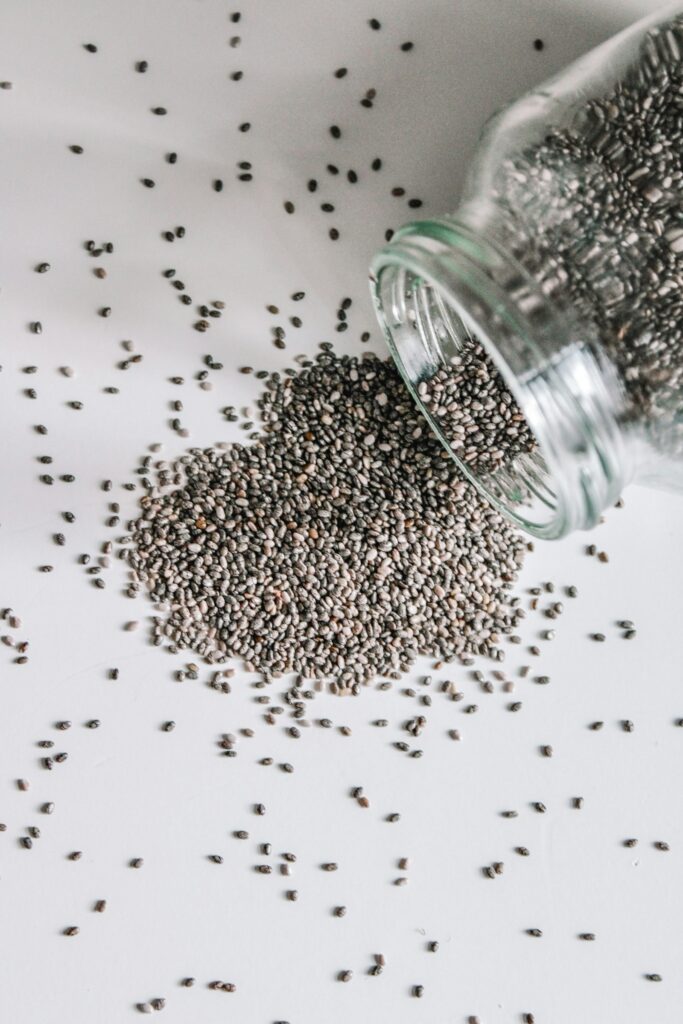
Start with 2 tablespoons of chia seeds per 12 ounces of cold water. After about 15 minutes that gives a thick but drinkable glass. Use less chia if you want to sip it through a straw, or less water if you’d rather eat it with a spoon. Too little water and you get pudding; too much and the seeds float in thin water.
| Chia seeds | Cold water | Texture after 15 minutes | Best for |
|---|---|---|---|
| 1 tablespoon | 12 oz | Thin, easy to sip through a wide straw | First-timers, easing into fiber |
| 1½ tablespoons | 12 oz | Lightly thick, seeds evenly suspended | An everyday glass |
| 2 tablespoons | 12 oz | Thick and drinkable (the recipe below) | A filling morning drink |
| 2 tablespoons | 8 oz | Very thick, closer to a loose pudding | Eating with a spoon |
Two things change the texture as much as the ratio. Cold water gels a little more slowly than room-temperature water, and ground chia thickens almost instantly into a smoother, cloudier drink with no visible seeds.
How Does It Compare to Other Morning Drinks?
A glass of chia seed water has about 8g of fiber, while an 8-ounce glass of orange juice has about 0.5g and coffee or plain water have none, based on USDA FoodData Central. That fiber is the main thing it adds to a morning routine.
| Morning drink (typical serving) | Fiber | Protein | Calories |
|---|---|---|---|
| Chia seed water (2 tbsp chia) | ~8 g | ~4 g | ~117 |
| Orange juice (8 oz) | ~0.5 g | ~2 g | ~110 |
| Black coffee (8 oz) | 0 g | ~0.3 g | ~2 |
| Plain water (8 oz) | 0 g | 0 g | 0 |
If you’re curious how that fits into a whole day, see our guide to how much fiber per day.
How Do You Make Chia Seed Water?
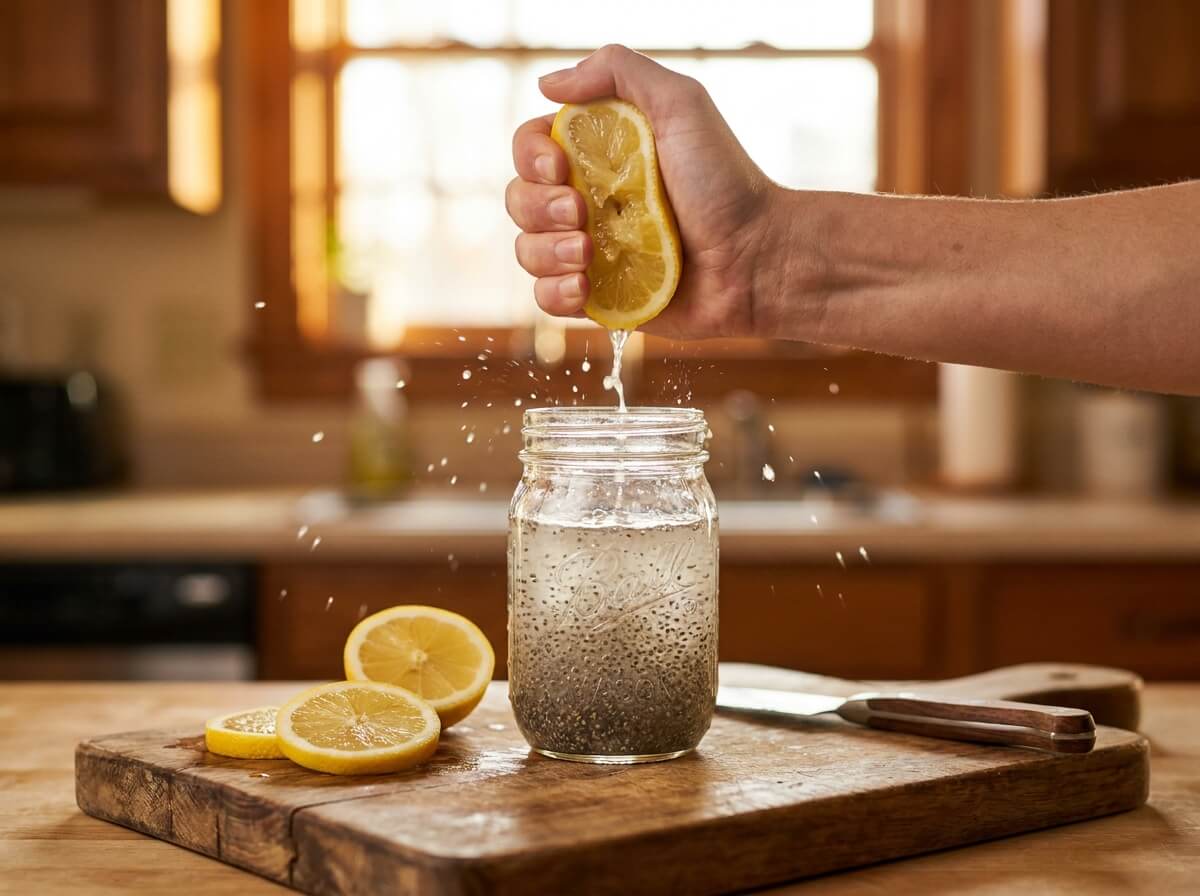
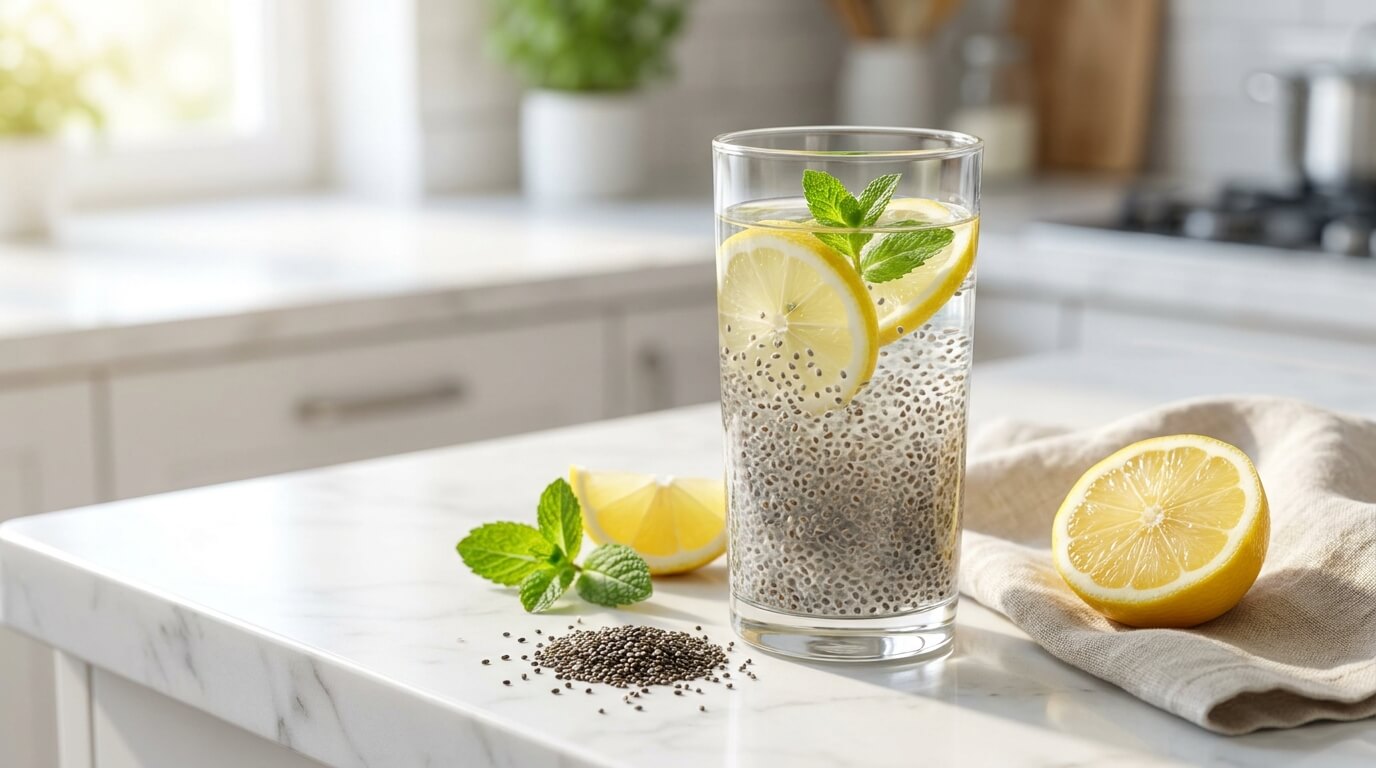
Chia seed water takes two ingredients and about 15 minutes, most of it waiting. The step that matters is stirring twice, once at the start and once after five minutes, so the seeds stay suspended instead of sinking into a clump.
Ingredients (1 serving)
- 2 tablespoons chia seeds
- 12 ounces cold water
- Juice of ½ lemon or lime
- Optional: 1 tsp honey or maple syrup, or a pinch of sea salt
Steps
- Add the chia seeds to a glass or jar with the water and stir well for 15 to 20 seconds.
- Wait 5 minutes, then stir again to break up any clumps. Don’t skip this one.
- Let it sit another 10 minutes (or overnight in the fridge) until the seeds swell into a soft gel.
- Stir in the citrus and optional sweetener, then drink cold.
From our kitchen: The first time we skipped the second stir, half the chia glued itself to the bottom of the jar in one rubbery lump. Two stirs, spaced a few minutes apart, is the whole trick to an even, drinkable gel.
Flavor Variations
- Lemon-ginger: add a few thin slices of fresh ginger with the lemon and let them steep while the chia gels.
- Strawberry: mash 3 or 4 ripe strawberries in the bottom of the glass before adding the water and chia.
- Cucumber-mint: add a few cucumber slices and torn mint leaves; best made in the fridge overnight.
- Orange: swap the lemon for the juice of half an orange; it needs no sweetener.
- Coconut water: use coconut water for half of the water for a slightly sweet, softer flavor.
Storage
Covered in the fridge, chia seed water keeps for up to 3 days. It thickens as it sits, so stir in a splash of water before drinking. Add fresh fruit on the day you drink it, since mashed berries turn soft and dull after a day.
Approximate nutrition per serving (2 tablespoons, about 24 g of chia): ~117 calories, ~8g fiber, ~4g protein, ~7g fat (mostly ALA omega-3), ~10g carbohydrate, nearly all from fiber, based on USDA FoodData Central (FDC 170554).
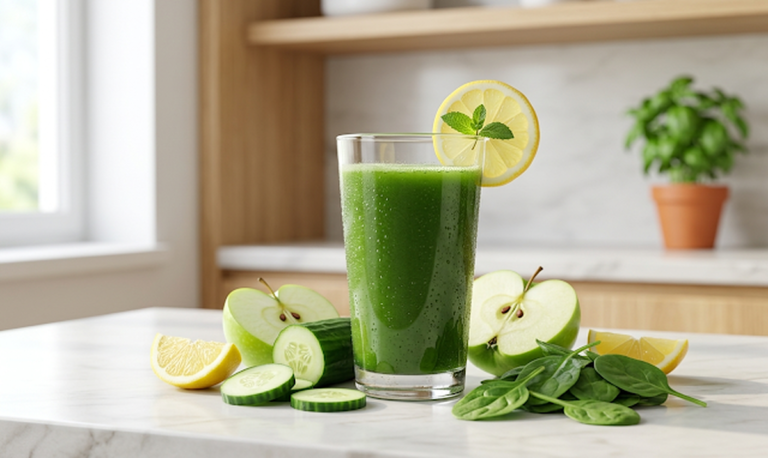
Want another quick morning drink? Try our green juice.
How Do You Drink Chia Seed Water Comfortably?
A 2-tablespoon glass adds about 8 grams of fiber at once, which can mean bloating or gas if you usually eat much less. Start with 1 or 2 teaspoons of chia, build up over a week or two, and drink plenty of water through the day.
Always let the seeds soak until they gel before you drink it. Dry chia swells quickly when it meets liquid, and Harvard’s Nutrition Source describes a reported case where dry seeds followed by a glass of water expanded and blocked a patient’s esophagus. Don’t eat spoonfuls of dry seeds followed by water. If you have trouble swallowing, a digestive condition, or take medication and aren’t sure how a high-fiber food fits in, ask your doctor first.
Ingredients
Method
- Add the chia seeds to a glass or jar with the water, then stir well for 15 to 20 seconds.
- Wait 5 minutes, then stir again to break up any clumps.
- Let it sit another 10 minutes, or overnight in the fridge, until the seeds swell into a soft gel.
- Stir in the citrus juice and optional sweetener, then drink cold.
Notes
Frequently Asked Questions
How much chia seed water should I drink a day?
One glass made with 1 to 2 tablespoons of chia is a common amount, and it adds about 8 grams of fiber at the higher end. If you’re new to it, start with a smaller amount and drink plenty of water, since a sudden jump in fiber can cause bloating.
When is the best time to drink chia seed water?
Any time works. Many people like it in the morning because it’s quick and fairly filling, and it’s easy to make the night before so it’s ready when you wake up.
Does chia seed water really work as an “internal shower”?
“Internal shower” is a social media name for chia water with lemon. It’s a drink with a good amount of fiber and water, not a detox or cleanse, and there’s no evidence it removes toxins. Enjoy it for what it is.
Do you have to soak chia seeds for the water?
Yes. Let the seeds soak for at least 10 to 15 minutes, or overnight, until the mixture turns into a soft gel. Dry chia swells fast once it meets liquid, so it shouldn’t go down dry.
Can I use ground chia seeds?
Yes. Ground chia thickens almost immediately and gives a smoother, cloudier drink with no visible seeds. Use a little less, about 1½ tablespoons per 12 ounces, because it thickens more than whole seeds.
How many calories are in a glass of chia seed water?
About 140 calories for a glass made with 2 tablespoons (about 1 ounce) of chia, plus a few from the lemon, based on USDA FoodData Central. A glass made with 1 tablespoon has about half that.
Is the fiber in chia seeds soluble or insoluble?
Both. Harvard’s Nutrition Source says chia’s fiber is mainly insoluble, plus mucilage, the gel you see when the seeds soak, which acts as a soluble fiber.
Does chia seed water help you lose weight?
It can help you feel full because of its fiber, but whether that leads to actual weight loss is less clear, according to Houston Methodist. Treat it as a filling, high-fiber drink, not a weight-loss tool.
The Bottom Line
Chia seed water is about as simple as a recipe gets: 2 tablespoons of chia, 12 ounces of cold water, citrus, and two stirs five minutes apart. Adjust the ratio until the texture suits you, and change the flavor with fruit, ginger, or mint.
Looking for more easy ways to add fiber? Start with our guide to high-fiber snacks, make a batch of dense bean salad for lunch, or pair your glass with something from our high-protein snacks and breakfasts.
Sources
- Harvard T.H. Chan School of Public Health, The Nutrition Source: Chia Seeds, retrieved 2026-07-22, nutritionsource.hsph.harvard.edu
- U.S. Department of Agriculture, FoodData Central: Seeds, chia seeds, dried (FDC 170554), retrieved 2026-09-30, fdc.nal.usda.gov
- Houston Methodist On Health, Is Chia Seed Water Good for You?, retrieved 2026-07-22, houstonmethodist.org