

Cottage cheese popsicles are what happens when the internet’s favorite high-protein ingredient meets a heat wave. In 2025, US cottage cheese sales passed $2 billion, up 19.2% in a single year, according to Circana data reported by Dairy Foods. In fact, most of that growth came from people blending it into desserts rather than eating it from the tub.
Here’s the problem: store-bought protein pops cost $2–3 each, and most homemade versions freeze into icy, curd-flecked bricks. Luckily, this recipe fixes both. Four ingredients, one blender, and about 7 grams of protein per pop, with a texture closer to frozen cheesecake than anything labeled “diet.”
I make a mold of these every week in summer, when I want a cold treat that also gives me about 7 grams of protein. They're for kids' snacks, post-workout treats, and anyone who's paid $3 for a store-bought protein pop. They work because blending the cottage cheese for a full 2 minutes makes a smooth base that freezes creamy, and 2% or full-fat cottage cheese keeps them from turning icy.
Why Cottage Cheese Makes Creamy Popsicles
One cup of 2% cottage cheese carries about 23.5 grams of protein, per USDA FoodData Central. Specifically, that protein is mostly casein, and casein is the secret. It traps water as it freezes, which keeps the texture creamy instead of crystalline. That’s why blended cottage cheese freezes better than milk or juice ever could.
You’ve probably seen the lineage: cottage cheese ice cream took over TikTok, then flatbreads, then chips. Meanwhile, popsicles are the easiest branch of that family tree. No ice cream machine, no churning, no baking. If you own a blender and a $10 mold, you’re equipped.
A $2 Billion Trend, Three Years Running
Moreover, the trend has real momentum behind it. As of 2026, cottage cheese volume sales have climbed three years straight: 9.4% in 2023, 12.5% in 2024, and 14.3% in 2025, per Circana figures reported by DairyReporter. And in 2025, the IFIC Food & Health Survey found 70% of Americans actively trying to consume more protein, the fifth straight year protein topped the list. A popsicle that sneaks 7 grams in? That’s an easy sell.
According to 2025 Circana data reported by Dairy Foods, cottage cheese became a $2 billion category with 19.2% dollar growth in a single year: the fastest-growing product in the dairy aisle. In particular, frozen desserts like popsicles and blended “ice creams” are the format driving new buyers to it.
We’ve already turned this ingredient into blueberry cottage cheese ice cream and crispy air fryer cottage cheese chips. Popsicles might be the best of the three: nothing to churn, nothing to bake.
Ingredients for Cottage Cheese Popsicles
 Save
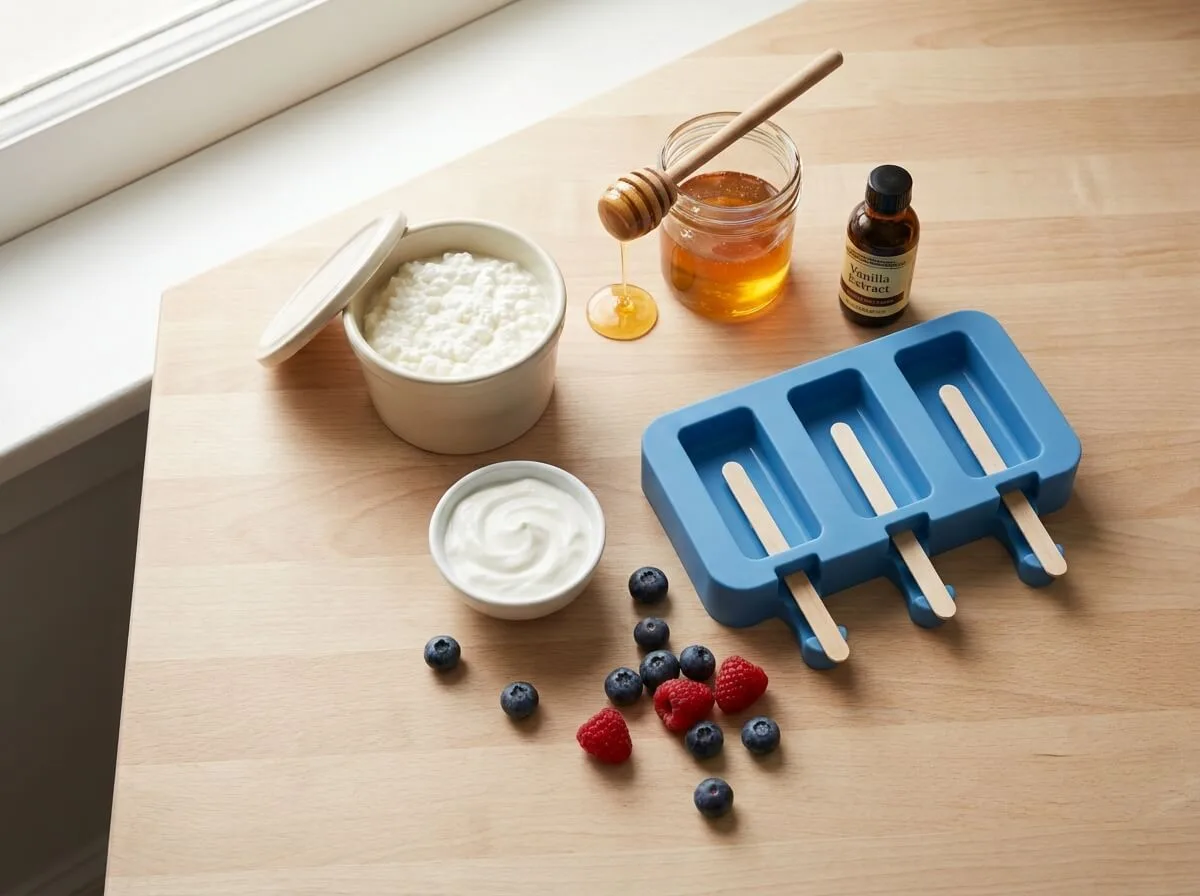
The whole recipe is four ingredients, and the ratio is what gets you to about 7 grams of protein per pop:
- Cottage cheese (2 cups, 2% or full-fat): the protein engine. Don’t use fat-free; fat is what keeps ice crystals small.
- Plain Greek yogurt (½ cup): adds tang and another protein hit while thinning the blend just enough to pour.
- Honey or maple syrup (3 tablespoons): sweetens, but also lowers the freezing point so pops stay soft-bite instead of rock-hard.
- Vanilla extract (1 teaspoon): rounds out the tang into a cheesecake flavor.
Want to push it to 10 grams? A single scoop of unflavored whey blends in cleanly and adds about 3g per pop. Go past one scoop, though, and the texture turns chalky. Most recipes you’ll find online land at 5–6 grams per pop because they dilute the base with a cup of milk and two-plus cups of fruit. Instead, we treat fruit as a flavor swirl, not the base, and that’s the whole trick.
How to Make Cottage Cheese Popsicles
 Save
Start to freezer takes 10 minutes. Per our kitchen test, the freeze itself needs 6 hours: recipes claiming 4 hours released messy, and the 12–24 hours some blogs insist on isn’t necessary.
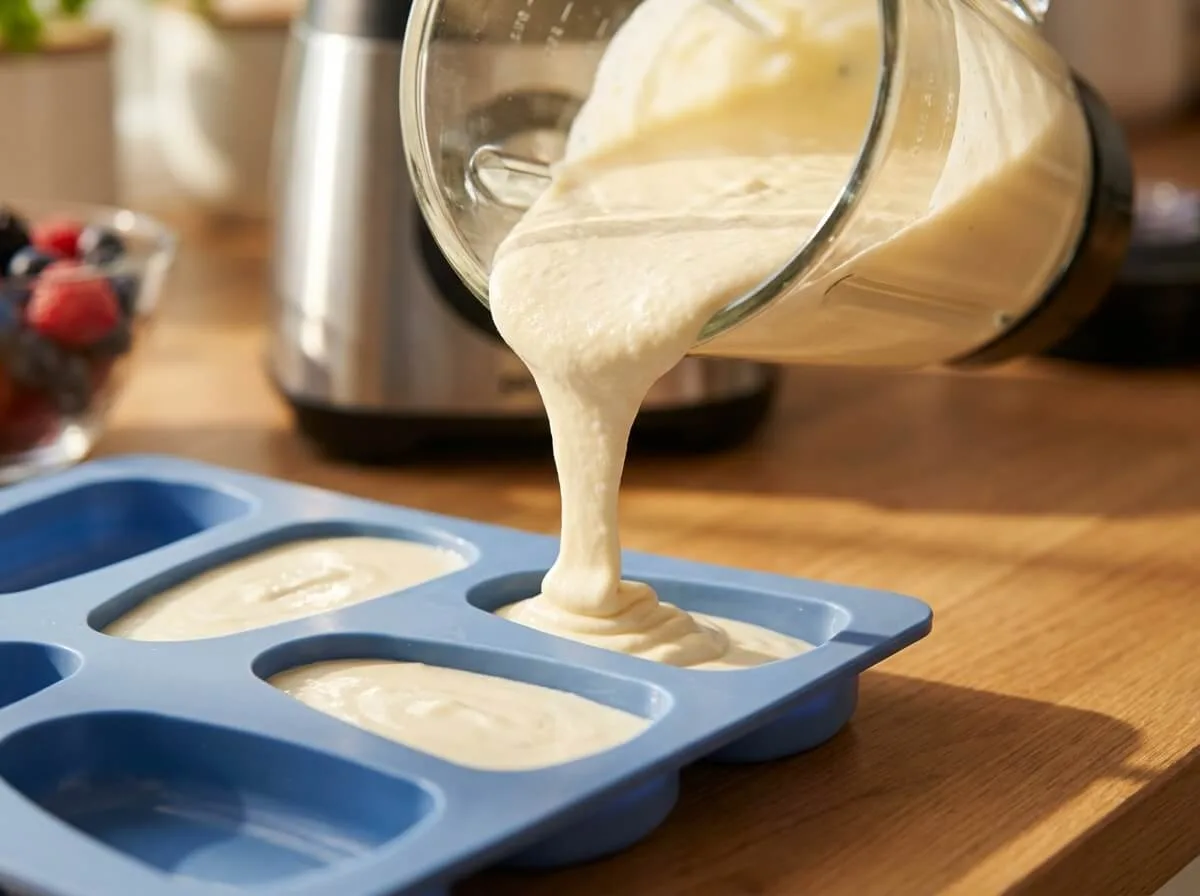
- Blend for 2 full minutes. Add cottage cheese, yogurt, honey, and vanilla to a blender. In fact, run it longer than feels reasonable. Thirty seconds leaves invisible curd bits that freeze into grainy flecks; at 2 minutes the base turns glossy, like cheesecake batter.
- Taste and adjust. Because frozen things taste less sweet once set, add one more teaspoon of honey if it tastes right at room temperature.
- Fill the molds. Pour, then tap the mold on the counter a few times to release air bubbles. Leave ¼ inch at the top: the mix expands.
- Freeze 6 hours. Insert sticks after 30 minutes if your mold doesn’t hold them straight.
- Release with warm water. Run the mold under warm tap water for 10–15 seconds. Pops slide out clean. Yanking them cold is how sticks come out bare.
What Our Freeze-Time Test Showed
We pulled pops from the same batch at 4, 6, and 12 hours. At 4 hours, the cores were still slushy and two pops broke at the stick. By 6 hours, however, we got a clean release and a firm-but-creamy bite. After 12 hours, there was no improvement over 6: just a longer wait. Six hours is the real minimum, whatever the mold box says.
Why Are My Popsicles Icy? (The Fix)
Icy popsicles come from two things: too much water, or too little blending. Water-heavy fruit (watermelon, citrus, more than a cup of berries) freezes into crunchy shards, and under-blended cottage cheese leaves curds that ice around themselves. So keep fruit to a swirl, blend the full 2 minutes, and the casein does the anti-ice work for you.
Beyond that, three more rules keep the texture right:
- Keep some fat. Fat-free cottage cheese makes noticeably icier pops. 2% is the floor; full-fat is the ceiling for creaminess.
- Don’t skip the sweetener. Honey isn’t just flavor: sugar physically interferes with ice crystal formation. So cutting it to nothing makes pops freeze rock-hard.
- Let them sit 2–3 minutes before eating. Straight from the freezer, any pop is solid. However, a short sit brings back the creamy bite.
Short blending leaves tiny curds that freeze as visible white flecks with a grainy chew. Blending for a full 2 minutes breaks them down completely, so the pops freeze smooth. Blend time matters more than any other step.
5 Flavor Variations
The base above is vanilla cheesecake. From there:
- Chocolate fudge pop: add 3 tbsp cocoa powder + 1 extra tbsp honey. Tastes like the fudgesicles of your childhood, with more than three times the protein.
- Strawberry cheesecake: swirl in ⅓ cup strawberry jam and a crushed graham cracker before freezing: the no-bake cousin of our strawberry cheesecake dip.
- Peanut butter banana: blend in half a banana + 2 tbsp peanut butter.
- Blueberry: swirl ⅓ cup mashed blueberries through the base, or go full frozen dessert with our blueberry cottage cheese ice cream.
- Orange creamsicle: 2 tbsp orange juice concentrate + extra vanilla. Concentrate, not juice: remember the water rule.
How do these stack up against what you’d buy or find elsewhere?
| Popsicle | Protein per pop | Calories | Cost per pop |
|---|---|---|---|
| This recipe | 7.3g | 82 | ~$0.40 |
| Typical blog recipe | 5–6g | 58–63 | ~$0.50 |
| Store-bought fudgesicle | ~2g | ~100 | $0.75–1.00 |
| Protein bar (for scale) | ~10g | ~200 | $2–3 |
A Look at the Nutrition
In total, each pop runs about 82 calories, 7 grams of protein, and 9 grams of sugar (most of it from the honey): still more protein per calorie than most protein bars. In 2025, the IFIC Spotlight Survey on protein found 46% of Americans buy dedicated high-protein products like shakes and bars. At roughly $0.40 per pop, these do the same job for a fraction of the price, with four ingredients you can pronounce.
Here’s the framing most recipes miss: protein per pop is a design decision, not luck. Every add-in either concentrates the base (yogurt, whey, nut butter) or dilutes it (milk, juice, watery fruit). Once you see the recipe as a macro budget, you can build any flavor you want and still land around 7 grams. In this recipe, the ½ cup of Greek yogurt supplies about 1.5g of each pop’s 7.3g of protein, according to our roundup of Greek yogurt recipes.
They fit almost any eating pattern, too. A high-protein diet was the most-followed eating approach in America in 2025, at 23% of respondents (IFIC Food & Health Survey), and in the same year, 35% of Americans said they’d increased their protein intake. These pops are also gluten-free, vegetarian, and, unlike most frozen treats, filling. Finally, pair one with a handful of our high-protein frozen yogurt clusters and you’ve got a real snack, not a sugar break. These pops also made our list of high protein recipes, at 8.9g of protein per 100 calories.
Tools and Ingredient Notes
- Blender: Any blender works if it runs the full 2 minutes. A high-speed blender gets the smoothest result.
- Popsicle mold: Silicone molds are easier to unmold than hard plastic. Plastic molds release well after 10 to 15 seconds under warm water.
- Pouring: Pour the mixture into a measuring jug with a spout first. It makes filling narrow molds much cleaner.
- Sticks: Wooden sticks hold better than plastic ones because the frozen mixture grips the wood.
- Cottage cheese: 2% or full-fat, as the card says. Fat-free cottage cheese makes icier pops.
- Storage: Freezer bags with parchment between the pops keep them from sticking together.
Kitchen note: Icy pops usually mean the mix wasn't blended smooth enough. Leave a little space at the top of each mold for expansion.

Cottage Cheese Popsicles
Ingredients
Method
- Add cottage cheese, Greek yogurt, honey, and vanilla to a blender. Blend a full 2 minutes, until completely glossy and smooth, under-blending leaves grainy flecks in the frozen pops.
- Taste the mixture. Frozen desserts taste less sweet, so if it tastes just right now, add 1 more teaspoon of honey.
- Pour into an 8-cavity popsicle mold. Tap the mold on the counter to release air bubbles and leave 1/4 inch of headroom for expansion.
- Freeze at least 6 hours. Insert sticks after 30 minutes if your mold does not hold them upright.
- Run the mold under warm tap water for 10-15 seconds and pull the pops straight out.
Notes
What to Look For at Each Stage
- Blending: After 2 minutes the mixture is glossy and smooth, like a thick milkshake, with no white flecks.
- Tasting: It should taste slightly sweeter than you want, because freezing dulls the sweetness.
- Pouring: Thick and slow, and it settles into the mold on its own.
- Tapping the mold: Small air bubbles rise to the top and pop.
- After 30 minutes: Firm enough on top for a stick to stand straight.
- After 6 hours: Fully solid. After a quick rinse under warm water, the pops slide out with a smooth surface.
- The bite: Creamy and smooth, not icy or crunchy.
Looking for more ways to use the tub? See all of our cottage cheese recipes, from breakfast to dessert.
Frequently Asked Questions
Can you taste the cottage cheese?
Not if you blend long enough. After 2 full minutes, the curds disappear completely and the tang reads as cheesecake, not cottage cheese. If the base is under-blended, the texture gives the cottage cheese away even when the flavor is fine: blend time matters more than any masking ingredient.
How long do cottage cheese popsicles take to freeze?
Six hours, based on our same-batch test at 4, 6, and 12 hours. Four hours left slushy cores that broke on release; 12 hours added nothing over 6. Of course, overnight works fine if that’s easier: there’s no such thing as over-freezing them.
How long do they keep in the freezer?
Up to 2 months in an airtight bag, though flavor and texture are best in the first 2 weeks. After that, freezer air slowly dries the surface. Release all the pops at once, bag them with parchment between layers, and skip the mold-storage problem entirely.
Can I use fat-free cottage cheese?
It works, but expect an icier bite: fat is what keeps ice crystals small as the pops freeze. Stick with 2% or full-fat for the cheesecake texture. If fat-free is what you have, add an extra tablespoon of Greek yogurt and don’t cut the honey.
Can I make cottage cheese popsicles without a mold?
Yes. Use small paper cups. Fill them about three-quarters full, freeze for 30 to 45 minutes, then push in a wooden stick and freeze until solid. Tear the paper off to serve.
Can I use less honey?
You can drop to 2 tablespoons, but the pops will taste less sweet and freeze a little harder. Sugar-free sweeteners make them icier, because sugar is part of what keeps the texture soft.
Are cottage cheese popsicles okay for kids?
Yes, they're a good snack for kids. For babies under 1, use maple syrup instead of honey, because honey isn't safe for infants. For young children, let the pop soften for a few minutes so it's easier to bite.
Bottom Line
- Four ingredients: cottage cheese, Greek yogurt, honey, vanilla
- Blend 2 full minutes: that’s the texture secret
- Freeze 6 hours; release with warm water
- ~82 calories and 7g protein per pop
This is the third member of our cottage cheese family, after the ice cream and the savory chips, and the one we keep restocking the freezer with. Craving more no-freeze options? Our easy no-bake frozen treats roundup has seven more, and the high-protein snack ideas list covers the rest of your day.
Sources
- Dairy Foods, “Cottage cheese sales top $2 Billion,” retrieved 2026-07-20, https://www.dairyfoods.com/articles/99101-cottage-cheese-sales-top-2-billion
- DairyReporter, “How cottage cheese reinvented itself, and found new growth,” retrieved 2026-07-20, https://www.dairyreporter.com/Article/2026/05/09/how-cottage-cheese-reinvented-itself-and-found-new-growth/
- IFIC, 2025 Food & Health Survey (“Protein-Dazed and Still Confused” release), retrieved 2026-07-20, https://ific.org/media/protein-dazed-and-still-confused-new-ific-research-reveals-americas-high-protein-hype-doesnt-match-knowledge/
- IFIC, Spotlight Survey: Americans’ Perceptions of Protein (July 2025), retrieved 2026-07-20, https://ific.org/wp-content/uploads/2025/07/IFIC-Spotlight-Survey-Protein-Perceptions.pdf
- USDA FoodData Central, SR Legacy entries used for the nutrition per pop: cottage cheese, lowfat, 2% milkfat (FDC 172182); Greek yogurt, plain, lowfat (FDC 170903); honey (FDC 169640); vanilla extract (FDC 173471), retrieved 2026-11-05, https://fdc.nal.usda.gov/
Watching sodium as well as protein? Compare the best low-sodium cottage cheese brands.
