Starbucks Egg Bites Recipe: Easy Bacon & Gruyère Copycat
This Starbucks egg bites recipe gets you the velvety Bacon & Gruyère bites at home, with no sous vide machine. I blend 6 eggs with a cup of cottage cheese, fold in Gruyère and bacon, and bake them low in a water bath. They came out close to the Starbucks texture: soft, custardy and smooth all the way through.
Below you’ll find what Starbucks actually puts in theirs, the oven method that copies sous vide, a side-by-side nutrition comparison, and fixes for bites that sink or turn rubbery. One batch makes 12 bites, and each 2-bite serving has about 197 calories and 16.5g of protein.
 Save
SaveWhat Is in Starbucks Egg Bites?
Cottage cheese comes first. The official Starbucks ingredient list for the Bacon & Gruyère Egg Bites starts with cottage cheese, then eggs, Monterey Jack and Gruyère, butter, uncured bacon, rice starch, corn starch, salt, vinegar and hot sauce. Starbucks cooks them sous vide, sealed and held in a water bath at a low, steady temperature.
That list explains the texture. Blended cottage cheese makes the eggs creamy instead of spongy. The starch helps them hold their moisture so they don’t weep. The gentle heat is what keeps them velvety. You can copy all three at home: the blender does the first job, a tablespoon of cornstarch does the second, and a water bath in a low oven does the third.
What Do You Need for Copycat Egg Bites?
- 6 large eggs. They’re the base and bring about 37.7g of protein for the whole batch, according to USDA FoodData Central (FDC 171287).
- 1 cup full-fat cottage cheese. This is the secret ingredient, just like Starbucks. Blended, it disappears into the eggs. Our whipped cottage cheese works too.
- Gruyère. Three ounces, finely shredded. It’s nutty, salty and melts smoothly. Swap part of it for Monterey Jack if you want it even closer to the original blend.
- Bacon. Four slices, cooked crisp and crumbled small so the bits don’t sink to the bottom.
- Cornstarch. Just 1 tablespoon. It plays the same role as the rice and corn starch in the Starbucks version.
- Salt, pepper and hot sauce. Keep the salt light, because the cheese and bacon bring plenty. A dash of hot sauce is in the original too.
How Do You Make Starbucks Egg Bites Without Sous Vide?
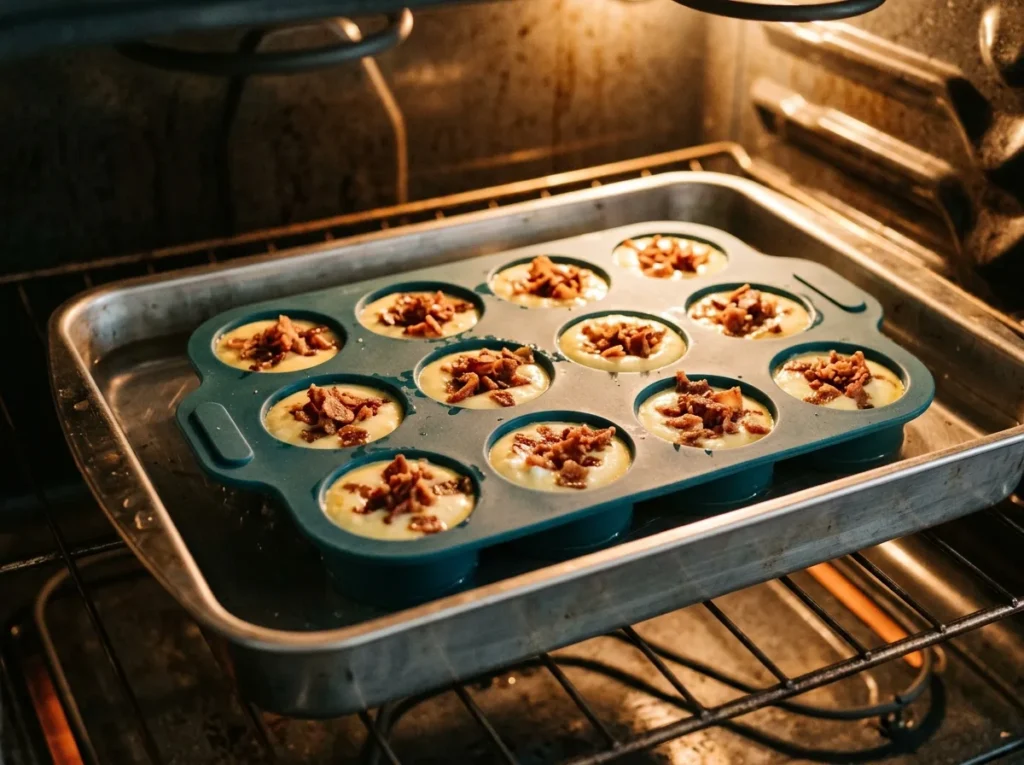
Bake them at 300°F in a water bath. Blend everything except the bacon until smooth, pour it into a silicone egg bite mold or a greased muffin tin, and set that pan inside a larger pan of hot water. The water keeps the heat gentle and even, like a sous vide bath does. The bites are done in 25 to 30 minutes, once the centers reach 160°F.
 Save
Save
Copycat Starbucks Egg Bites (Bacon and Gruyère)
Ingredients
Method
- Heat the oven to 300°F (150°C). Set a silicone egg bite mold or a well-greased 12-cup muffin tin inside a larger baking pan. Boil a kettle of water.
- Blend the eggs, cottage cheese, Gruyère, cornstarch, salt, pepper and hot sauce for 20 to 30 seconds, until completely smooth. Let it sit 1 minute so the foam settles.
- Pour the egg mixture into the 12 cups, filling each about three-quarters full, then sprinkle the crumbled bacon on top.
- Carefully pour hot water into the outer pan until it comes about 1 inch up the sides of the mold or tin.
- Bake 25 to 30 minutes, until the centers are just set with a very slight wobble, or 160°F on an instant-read thermometer.
- Lift the mold out of the water bath and cool 5 minutes, then pop the bites out. Serve warm.
Notes
- No sous vide needed: the water bath and low oven give the same velvety texture. Don’t skip it.
- Muffin tin: bites come out wider and flatter; check them 2 minutes early.
- Bigger bites: make 10 instead of 12 for about 19.8g protein per 2 bites, close to Starbucks.
- Storage: fridge 3 to 4 days, freezer 2 to 3 months. Reheat 2 bites 30 to 45 seconds (60 to 90 from frozen).
- Nutrition is per 2 bites, calculated from USDA FoodData Central (FDC 171287, 172179, 171242, 168322, 169698).
How Do Homemade Egg Bites Compare to Starbucks?
Two homemade bites have about 197 calories and 16.5g of protein, while two Starbucks Bacon & Gruyère Egg Bites have 300 calories and 19g of protein, per Starbucks’ own nutrition info. Ours come out a little smaller, so they’re lighter across the board, with noticeably less sodium and fat.
| Per 2 bites | Homemade (this recipe) | Starbucks Bacon & Gruyère |
|---|---|---|
| Calories | 197 | 300 |
| Protein | 16.5g | 19g |
| Fat | 12.8g | 20g |
| Carbs | 3g | 9g |
| Sodium | 429mg | 680mg |
Want to match their protein? Make 10 bites instead of 12 from the same batch. Each one gets a little bigger, and a 2-bite serving lands at about 19.8g of protein.
Why Did My Egg Bites Sink or Turn Rubbery?
Usually the oven was too hot, or they baked too long. Eggs puff when they cook fast and then collapse as they cool, and overcooked egg proteins tighten into a bouncy, rubbery texture. Keeping the oven at 300°F with a water bath prevents both. Here are the other usual suspects:
- No water bath. Without it, the edges cook far faster than the middle. Use hot tap water, about 1 inch deep.
- Too much air in the batter. Blend just until smooth, then let it rest a minute so the foam settles before you pour.
- Baked past done. Pull them when the centers are just set with a very slight wobble, or at 160°F on a thermometer.
- Watery bites. Skip the cornstarch and they can weep. Also pour off any liquid sitting on top of the cottage cheese.
Silicone Mold or Muffin Tin?
A silicone egg bite mold gives you the tall, round Starbucks shape and pops the bites out cleanly. A standard muffin tin works fine too. Grease it well, fill each cup about three-quarters full, and expect wider, flatter bites that may need a minute or two less. Whichever you use, set it inside a larger baking pan for the water bath.
Can You Make Other Starbucks Flavors?

- Egg white and roasted red pepper: swap the whole eggs for 1½ cups liquid egg whites, use Monterey Jack instead of Gruyère, and fold in chopped roasted red peppers and a handful of spinach instead of bacon.
- Sausage and cheddar: crumble in cooked breakfast sausage and use sharp cheddar.
- Spinach and feta: wilt the spinach first and squeeze it dry so the bites don’t turn watery.
Love the cottage cheese trick? It’s the same idea behind our fluffy cottage cheese scrambled eggs, which are the faster weekday version of this recipe.
How Do You Store and Reheat Egg Bites?
Refrigerate them in an airtight container for 3 to 4 days, or freeze them for 2 to 3 months. Those are the windows FoodSafety.gov gives for baked egg casseroles. They’re ideal for meal prep and pack well into our high-protein adult lunchables.
- From the fridge: microwave 2 bites for 30 to 45 seconds.
- From frozen: microwave 60 to 90 seconds, flipping halfway, or thaw overnight in the fridge first.
- Serve with: a toasted cottage cheese bagel, fruit or a short stack of fluffy protein pancakes for a bigger breakfast.
Looking for more ways to use the tub? See all of our cottage cheese recipes, from breakfast to dessert.
Frequently Asked Questions
Can you make Starbucks egg bites without a sous vide?
Yes. Bake them at 300°F in a pan of hot water for 25 to 30 minutes. The water bath keeps the heat low and even, like sous vide, so the bites stay smooth and custardy instead of puffy and rubbery.
Why is there cottage cheese in egg bites?
It’s the first ingredient in the Starbucks version. Blended cottage cheese gives the eggs their creamy, velvety texture and adds protein. One cup adds about 25g of protein to the batch, according to USDA FoodData Central (FDC 172179).
How much protein is in Starbucks egg bites?
Two Starbucks Bacon & Gruyère Egg Bites have 19g of protein and 300 calories, according to Starbucks. Two bites from this homemade recipe have about 16.5g of protein and 197 calories, or about 19.8g if you make 10 bites instead of 12.
What temperature should egg bites reach?
160°F in the center. That’s the safe minimum FoodSafety.gov lists for egg dishes like frittatas and quiche. At 300°F in a water bath, it usually takes 25 to 30 minutes.
Can you freeze homemade egg bites?
Yes, for 2 to 3 months. Cool them completely, freeze them on a tray, then move them to a freezer bag. Reheat from frozen in the microwave for 60 to 90 seconds.
Sources
- Starbucks, Bacon & Gruyère Egg Bites (ingredients and nutrition), retrieved 2026-09-28. starbucks.com
- USDA FoodData Central: Egg, whole, raw, fresh (FDC 171287); Cheese, cottage, creamed (FDC 172179); Cheese, gruyere (FDC 171242); Pork, cured, bacon, cooked, pan-fried (FDC 168322); Cornstarch (FDC 169698); retrieved 2026-09-28. fdc.nal.usda.gov
- FoodSafety.gov, Safe Minimum Internal Temperature Chart (egg dishes 160°F), retrieved 2026-09-28. foodsafety.gov
- FoodSafety.gov, Cold Food Storage Chart (casseroles with eggs: 3 to 4 days refrigerated, 2 to 3 months frozen), retrieved 2026-09-28. foodsafety.gov