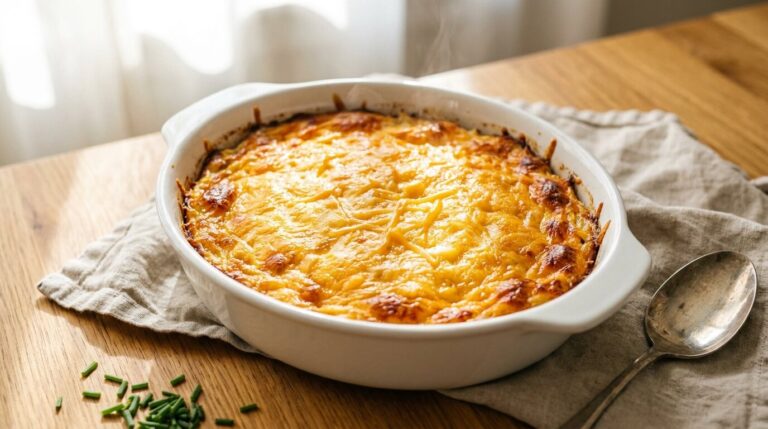
Pumpkin Protein Muffins (No Protein Powder)
A commercially prepared muffin carries 375 calories and 4.49g of protein per 100g (USDA FoodData Central, FDC ID 172765). A bakery one is usually bigger than that. So the appeal of a pumpkin muffin you can eat at 8am without negotiating with yourself is obvious, and every recipe online solves it the same way: buy a tub of protein powder.
You don’t need one. Blended cottage cheese gets you to the same place, and this batch lands at roughly 7g of protein per muffin using nothing but food. That happens to be exactly what the top-ranking powder-based recipe reports.
Key Takeaways
- About 7g protein and 132 calories per muffin, with no protein powder at all.
- Blended cottage cheese is the protein, at roughly 11g per 100g (USDA, FDC ID 328841).
- Pumpkin is a vitamin A food, not a protein food. One cup carries about 1,906µg RAE.
- One bowl, 35 minutes, freezes three months.
What Makes These Pumpkin Protein Muffins High in Protein?
Pumpkin protein muffins are pumpkin muffins built to carry a meaningful amount of protein, usually 6g or more per muffin, rather than the 2g to 3g a standard bakery muffin provides. Most recipes reach that with protein powder. This one uses blended cottage cheese instead, and it does almost all of the work. As of 2026, 2% cottage cheese carries about 11g of protein per 100g (USDA FoodData Central, FDC ID 328841), so the 1½ cups in this batch brings roughly 37g before anything else goes in the bowl. Three eggs add about 19g more (FDC ID 171287).
The rest comes from somewhere people don’t expect. Whole grain oat flour is 13.2g protein and 10.5g fiber per 100g (FDC ID 2261421), which makes it the second biggest protein contributor here after the cottage cheese. Standard white flour would give you noticeably less of both.
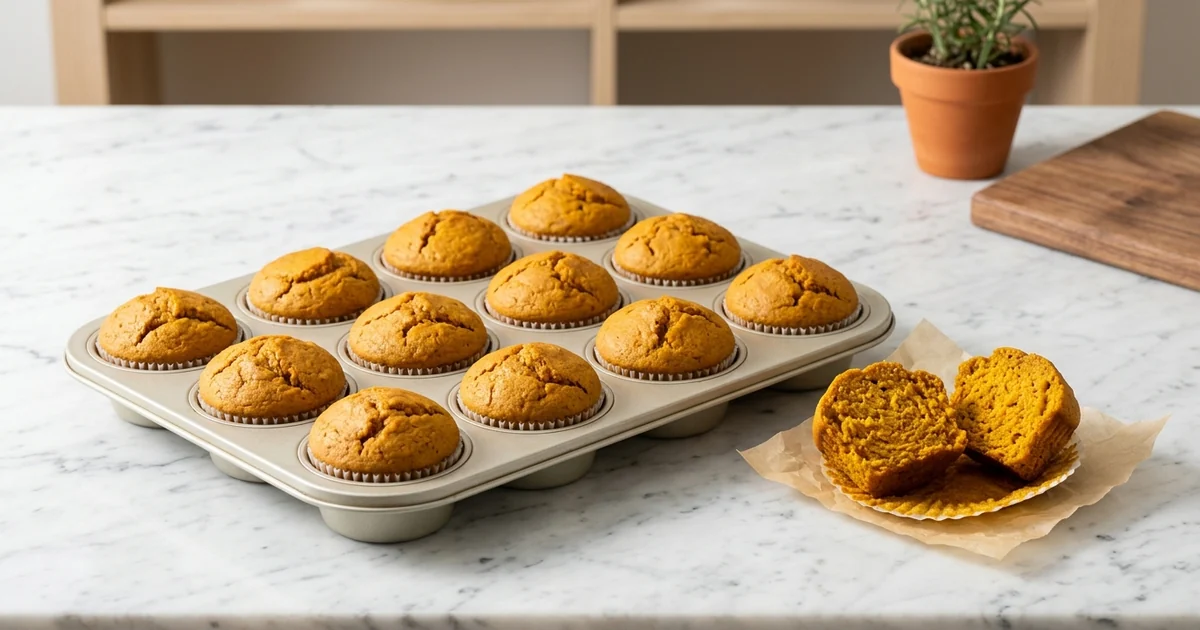
Add it up across twelve muffins and you land near 7g each. Not enormous, but it’s real, and it arrives with fiber and vitamin A attached rather than as an isolated powder.
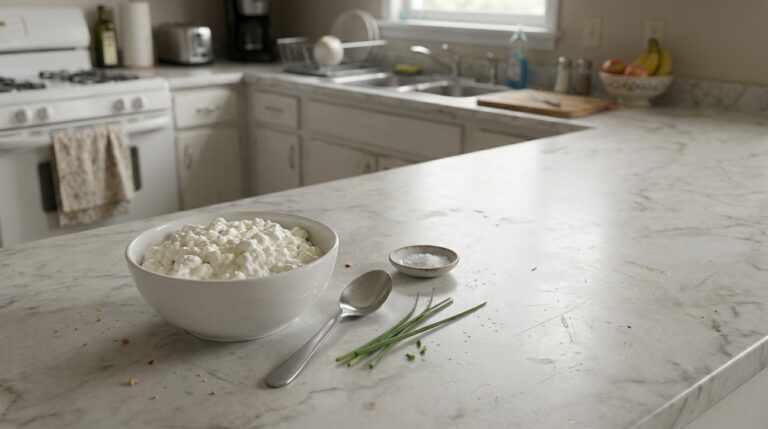
The one thing you can’t skip is blending. Unblended cottage cheese leaves visible curds in the crumb and a slightly weeping texture where the curd sits. Thirty seconds in a blender or food processor turns it into a smooth, thick base that behaves like yogurt. If you already make cottage cheese bagels, it’s the same trick doing the same job.
 Save
SaveDo You Actually Need Protein Powder for Protein Muffins?
No, and the arithmetic behind that is worth seeing. The recipe currently ranking first for this search uses half a cup of protein powder and still reports 7g of protein per muffin (Eat the Gains). That’s the same number this recipe reaches with no powder in it.
Why so little from so much? Because a batch gets divided twelve ways, and the other ingredients dilute it. Pumpkin puree itself is only 1.1g of protein per 100g (FDC ID 168450), so a full cup of it contributes under 3g to the entire batch. The powder is carrying a smaller share of the total than the label on the tub suggests.
| Per muffin | Shop-bought muffin | Top-ranked powder recipe | This recipe |
|---|---|---|---|
| Protein source | none added | ½ cup protein powder | blended cottage cheese |
| Protein | 5.1g | 7g | ~6.9g |
| Calories | 424 | 122 | ~132 |
| Protein powder needed | no | yes | no |
Shop-bought figures: USDA FoodData Central, FDC ID 172765, scaled to a 113g bakery muffin. Powder recipe figures as published by Eat the Gains.
The part nobody prints. Protein powder in a muffin recipe is doing less than it appears. Spread across a dozen muffins, half a cup of it lands you in the same place as a tub of cottage cheese you already have in the fridge. If you like the powder and it’s already in your cupboard, use it. If you were about to spend $30 on one specifically for these, don’t.
There’s a texture argument too. Whey protein tightens and expels moisture as it sets, which is the single most common reason protein muffins come out dry and faintly rubbery. That’s covered further down.
This is the same logic behind most of the whole-food swaps we use, like the fibermaxxing snacks roundup: get the nutrient from the ingredient rather than from a supplement bolted on afterwards.
Are Pumpkin Protein Muffins Actually Healthy?
Against a shop-bought muffin, comfortably. A commercially prepared muffin gives 375 calories, 4.49g of protein and 1.1g of fiber per 100g (USDA FoodData Central, FDC ID 172765), and a bakery muffin typically weighs well over 100g. These run about 132 calories each with roughly 7g of protein.
But here’s the honest framing, and it’s the opposite of how pumpkin usually gets sold. Pumpkin is not a protein food. At 1.1g per 100g it never was. What it genuinely delivers is vitamin A, and the numbers there are striking: canned pumpkin carries 778µg RAE per 100g (FDC ID 168450), so one cup puts roughly 1,906µg into the batch. Adult targets sit at 700µg for women and 900µg for men (NIH Office of Dietary Supplements).
One more caveat worth stating plainly. These are still a sweetened baked good. There’s maple syrup in them, and calling something a protein muffin doesn’t change what sugar is. They’re a genuinely better breakfast than the bakery version, not a health food. If you want the fiber side of the equation handled properly, that’s a different job and we went through it in how much fiber you actually need per day.
What You Need
Makes 12 muffins.
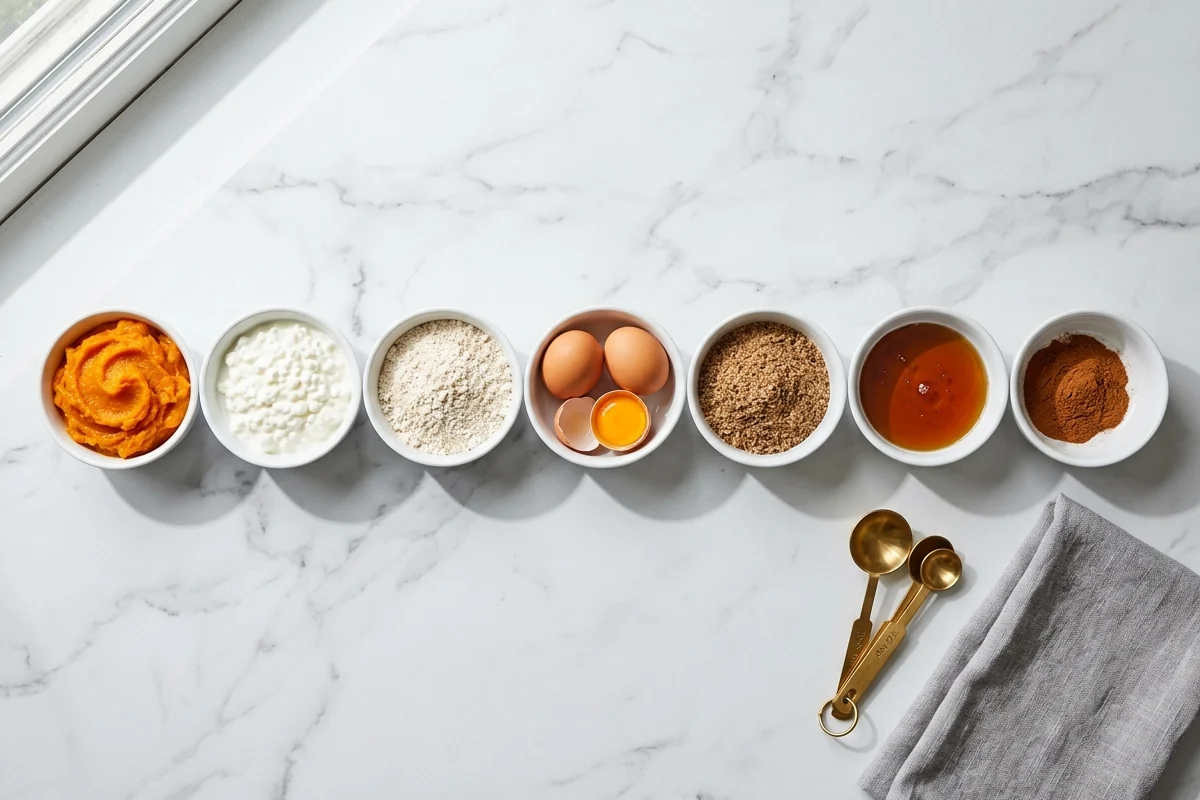
- 1 cup (245g) canned pumpkin puree — puree, not pie filling
- 1½ cups (339g) 2% cottage cheese
- 1½ cups (150g) oat flour
- 3 large eggs
- 3 tbsp (21g) ground flaxseed
- ⅓ cup maple syrup
- 2 tsp pumpkin pie spice, 1 tsp cinnamon
- 2 tsp baking powder, ½ tsp baking soda, ½ tsp salt
 Save
SaveBuy puree, not pie filling. This is the mistake that ruins the batch. Canned pumpkin puree is one ingredient. Pumpkin pie mix is pre-sweetened and pre-spiced, and the USDA lists them as separate foods with very different profiles (FDC ID 169273 for pie mix against 168450 for plain puree). Use pie mix here and you’ll get something cloying with a strange spice balance.
2% cottage cheese is the right choice. Fat-free bakes drier and tighter, and 4% works but tips the calories up without adding protein. If sodium matters to you, it varies a lot by brand, which we covered in choosing a lower-sodium cottage cheese.
Oat flour you can make yourself by blitzing rolled oats until powdery. It costs nothing and it’s the same thing.
How Do You Make Pumpkin Protein Muffins?
Blend the wet ingredients, stir in the dry, rest the batter, then bake. Total time is about 35 minutes and only ten of those are hands-on. Heat the oven to 350°F (175°C) and line a 12-cup muffin tin.
- Blend the cottage cheese with the pumpkin puree, eggs and maple syrup until completely smooth, about 30 seconds. No visible curds.
- Whisk the dry ingredients in a separate bowl: oat flour, flaxseed, spices, baking powder, baking soda and salt.
- Combine. Pour the wet into the dry and fold until just mixed. Stop while it still looks slightly uneven.
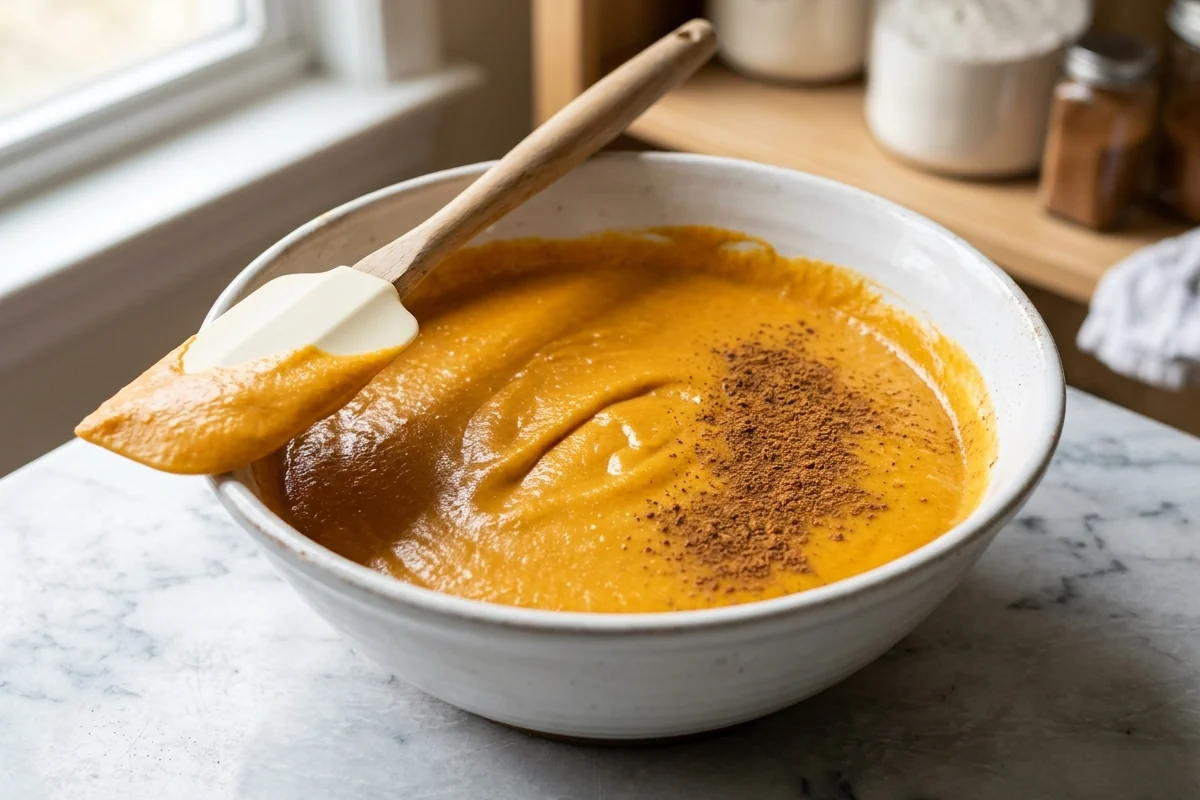
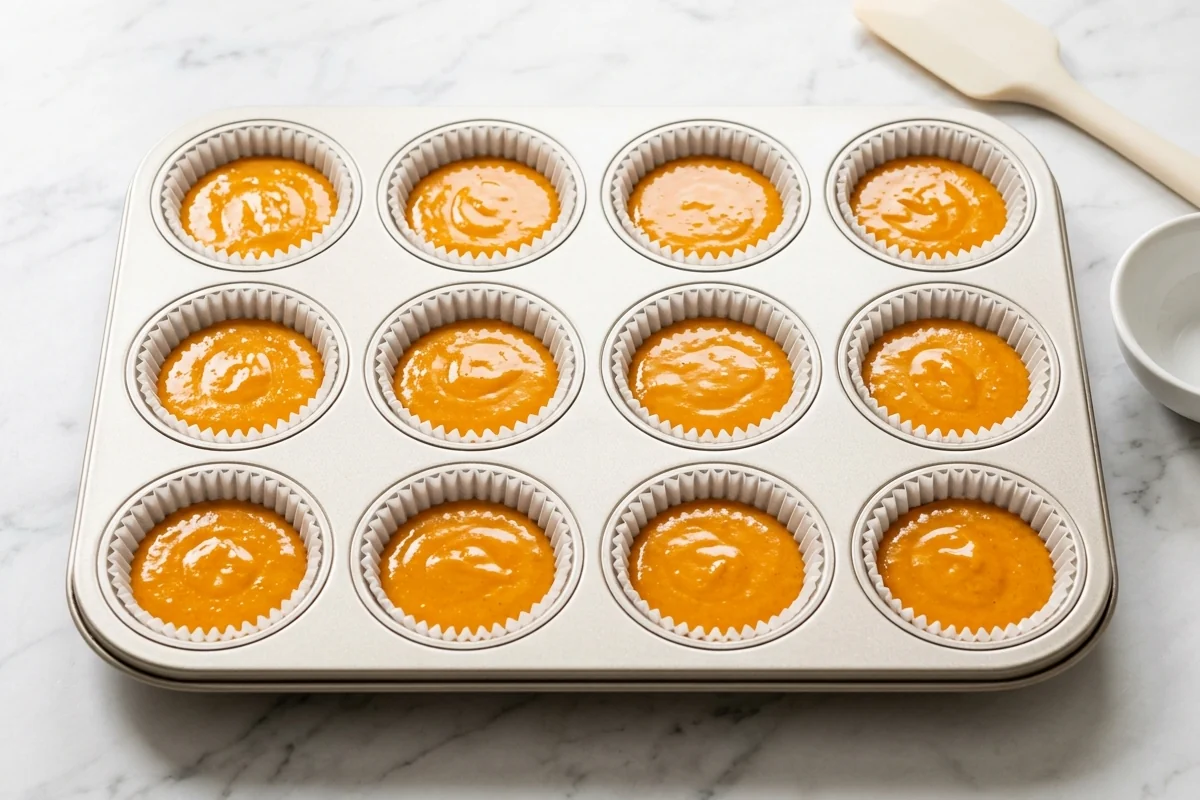
- Rest 5 minutes. The oat flour and flaxseed keep absorbing liquid, and the batter thickens noticeably in that time. It should look loose at first.
- Fill the liners about three-quarters full. This batter doesn’t dome much, so fill higher than you would for a standard muffin.
- Bake 22 to 25 minutes, until a skewer comes out with a few moist crumbs. Pull them at 22 if you’re unsure.
- Cool in the tin for 5 minutes, then move to a rack.
 Save
SaveIngredients
Method
- Heat the oven to 350F (175C) and line a 12-cup muffin tin.
- Blend the cottage cheese with the pumpkin puree, eggs and maple syrup until completely smooth, about 30 seconds. No visible curds.
- Whisk the oat flour, ground flaxseed, spices, baking powder, baking soda and salt together in a separate bowl.
- Pour the wet into the dry and fold until just combined. Stop while it still looks slightly uneven.
- Rest 5 minutes. The oat flour and flaxseed keep absorbing liquid and the batter thickens noticeably. It should look loose at first.
- Fill the liners about three-quarters full. This batter does not dome much, so fill higher than for a standard muffin.
- Bake 22 to 25 minutes, until a skewer comes out with a few moist crumbs. Pull at 22 if unsure.
- Cool in the tin 5 minutes, then move to a rack.
Notes
Why Are My Protein Muffins Dry or Rubbery?
Almost always overbaking, and with powder-based recipes, the powder itself. Whey protein tightens as it heats and squeezes out moisture, which is why so many protein muffins go from underdone to dry inside about three minutes. Using cottage cheese instead of powder removes that failure mode, but it doesn’t make the muffins immune to a hot oven.
Pull them at 22 minutes with a few moist crumbs on the skewer. A clean skewer means you’ve gone too far. They keep cooking in the tin for a few minutes after they come out, which is what the five-minute rest is doing.
The other cause is overmixing. Oat flour has no gluten to develop, but the batter still tightens if you beat it, and the muffins come out dense rather than light. Fold until the flour disappears and then stop.
 Save
SaveIs your batter alarmingly loose at step 3? That’s correct. Give it the five minutes before you decide to add more oat flour, because the flaxseed hasn’t finished working yet.
How Do You Store and Freeze Them?
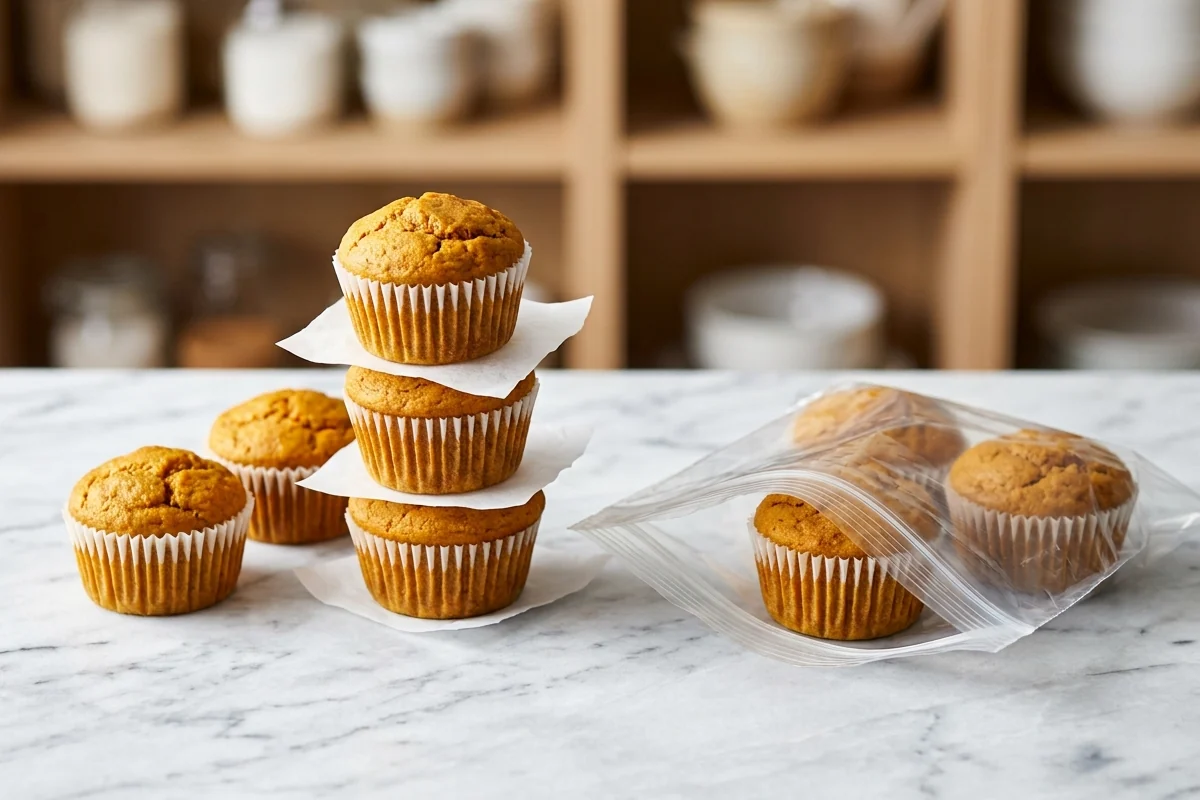
Three days at room temperature in an airtight container, or three months in the freezer. Because these are built on cottage cheese rather than oil or butter, they dry out faster than a conventional muffin, so airtight from day one matters more here than it usually would.
 Save
SaveTo freeze, cool completely first, then bag them individually or with parchment between. Reheat from frozen for 25 to 30 seconds in the microwave, or 4 minutes in a 325°F air fryer if you want the top to firm up again.
A double batch takes barely longer than a single one and covers two weeks of breakfasts. It’s the same batching logic behind our high-protein adult lunchables.
Variations Worth Making
The base recipe takes additions easily. Fold them in at the end of step 3.
- Chocolate chip: ½ cup dark chocolate chips. The most popular version for a reason.
- Walnut or pecan: ½ cup, roughly chopped, plus a few pressed on top.
- Cream cheese swirl: 4oz softened cream cheese beaten with 1 tbsp maple syrup, dropped in teaspoons and swirled with a skewer.
- Mini muffins: same batter, 24 mini cups, 12 to 14 minutes.
- Spiced glaze: skip it. These aren’t sweet enough to carry a glaze without becoming dessert.
Gluten-free? Oat flour is naturally gluten-free, but oats are routinely cross-contaminated in processing, so use a certified gluten-free brand if it matters medically.
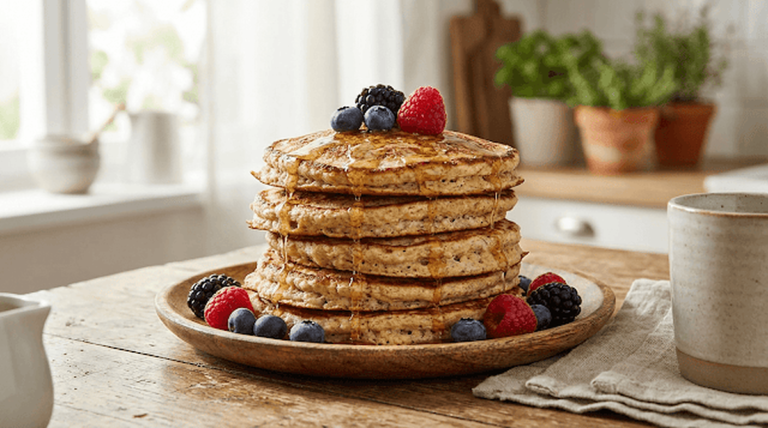
For more of the same approach applied to breakfast, our protein pancakes use a similar blended base.
Frequently Asked Questions
Can you make protein muffins without protein powder?
Yes. Blended cottage cheese, eggs and oat flour together reach about 7g of protein per muffin in this recipe, which matches what the leading powder-based recipe reports. Cottage cheese supplies roughly 11g of protein per 100g (USDA FoodData Central, FDC ID 328841).
How much protein is in these pumpkin protein muffins?
About 7g per muffin across a batch of twelve, alongside roughly 132 calories and 2.4g of fiber. Most of it comes from 1½ cups of blended cottage cheese and three eggs. Recalculate against your own brands, since cottage cheese protein varies.
Can I use fresh pumpkin instead of canned?
You can, but roast and drain it well first. Fresh pumpkin holds much more water than canned puree, and USDA lists raw pumpkin at 0.5g fiber per 100g against 2.9g for canned (FDC ID 168448 and 168450). Wet puree gives you a soggy crumb.
Why are my protein muffins dry?
Usually overbaking. Pull them at 22 minutes when a skewer still shows a few moist crumbs, because they continue cooking in the tin. Whey protein powder makes this worse by expelling moisture as it sets, which is one reason this recipe skips it.
Can I use pumpkin pie filling instead of puree?
No. Pie filling is pre-sweetened and pre-spiced, and USDA treats it as a separate food entirely (FDC ID 169273 against 168450 for plain puree). Using it here makes the muffins cloying and throws the spice balance off. Buy the can that lists pumpkin as the only ingredient.
Can you freeze pumpkin protein muffins?
Up to three months. Cool completely, then freeze individually or with parchment between them. Reheat from frozen in 25 to 30 seconds in the microwave, or about 4 minutes in a 325°F air fryer if you want a firmer top.
The Short Version
- The powder is optional. The top-ranking recipe uses half a cup of it and lands at the same 7g per muffin these do.
- Cottage cheese is the protein. Blend it smooth or you’ll see curds in the crumb.
- Pumpkin’s real strength is vitamin A, not protein. One cup carries roughly 1,906µg RAE.
- Pull them at 22 minutes. A clean skewer means they’re already overdone.
Made these? Rate the recipe below and tell us which variation you went with.
Next, if you’re building out the rest of your breakfast rotation, start with high-protein breakfast ideas.
Sources
- USDA FoodData Central, Muffins, blueberry, commercially prepared, SR Legacy, FDC ID 172765, retrieved 2026-08-25. https://fdc.nal.usda.gov/
- USDA FoodData Central, Pumpkin, canned, without salt, SR Legacy, FDC ID 168450, retrieved 2026-08-25. https://fdc.nal.usda.gov/
- USDA FoodData Central, Pumpkin pie mix, canned, SR Legacy, FDC ID 169273, retrieved 2026-08-25. https://fdc.nal.usda.gov/
- USDA FoodData Central, Pumpkin, raw, SR Legacy, FDC ID 168448, retrieved 2026-08-25. https://fdc.nal.usda.gov/
- USDA FoodData Central, Cheese, cottage, lowfat, 2% milkfat, Foundation Foods, FDC ID 328841, retrieved 2026-08-25. https://fdc.nal.usda.gov/
- USDA FoodData Central, Flour, oat, whole grain, Foundation Foods, FDC ID 2261421, retrieved 2026-08-25. https://fdc.nal.usda.gov/
- USDA FoodData Central, Egg, whole, raw, fresh, SR Legacy, FDC ID 171287, retrieved 2026-08-25. https://fdc.nal.usda.gov/
- NIH Office of Dietary Supplements, Vitamin A and Carotenoids: Fact Sheet for Health Professionals, retrieved 2026-08-25. https://ods.od.nih.gov/factsheets/VitaminA-HealthProfessional/
- Eat the Gains, Pumpkin Chocolate Chip Protein Muffins, retrieved 2026-08-25. https://eatthegains.com/pumpkin-chocolate-chip-protein-muffins/
Nutrition figures for this recipe are calculated estimates summed from USDA FoodData Central component data, not laboratory analysis. Recalculate against the brands you actually use.