

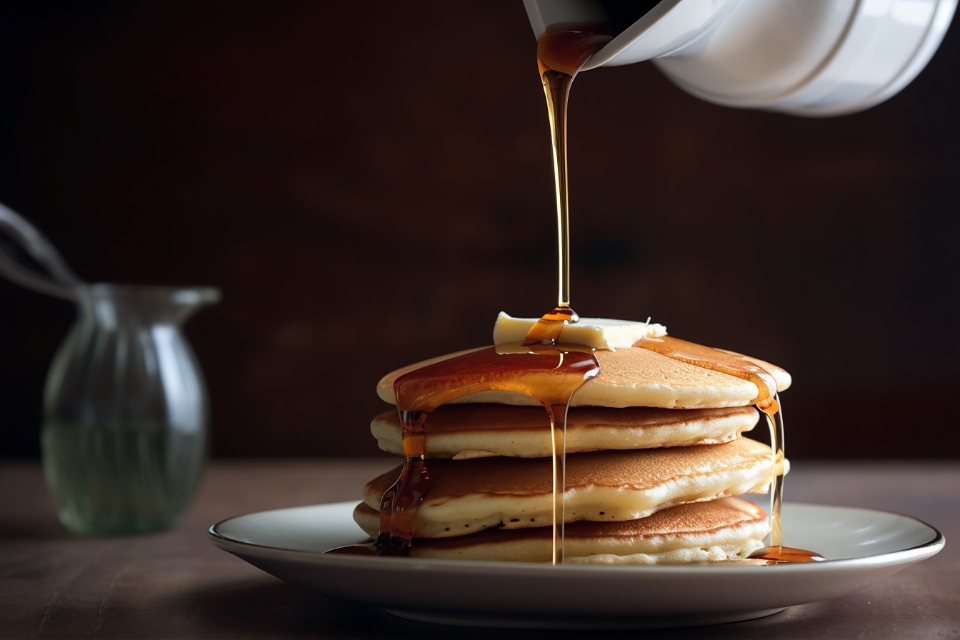
Photo: Altered Reality / StockSnap (CC0)
My first batch came out like rubber frisbees. I followed the recipe exactly and still couldn’t figure out what went wrong.
Turns out, protein pancakes have two enemies that nobody talks about: overmixing and too-high heat. Fix both and you get a stack that is fluffy and golden. Fix neither and the pancakes come out flat and rubbery.
This is my go-to weekday breakfast and my Sunday meal-prep anchor: oat flour, eggs, milk and one scoop of protein powder, ready in about 25 minutes. No protein powder in the cupboard? There is a cottage cheese swap further down.
Quick facts: 4 servings, about 220 calories and roughly 12 to 13g of protein per serving (it depends on your protein powder). The two rules that matter: stir only until the flour disappears, and cook on medium-low.
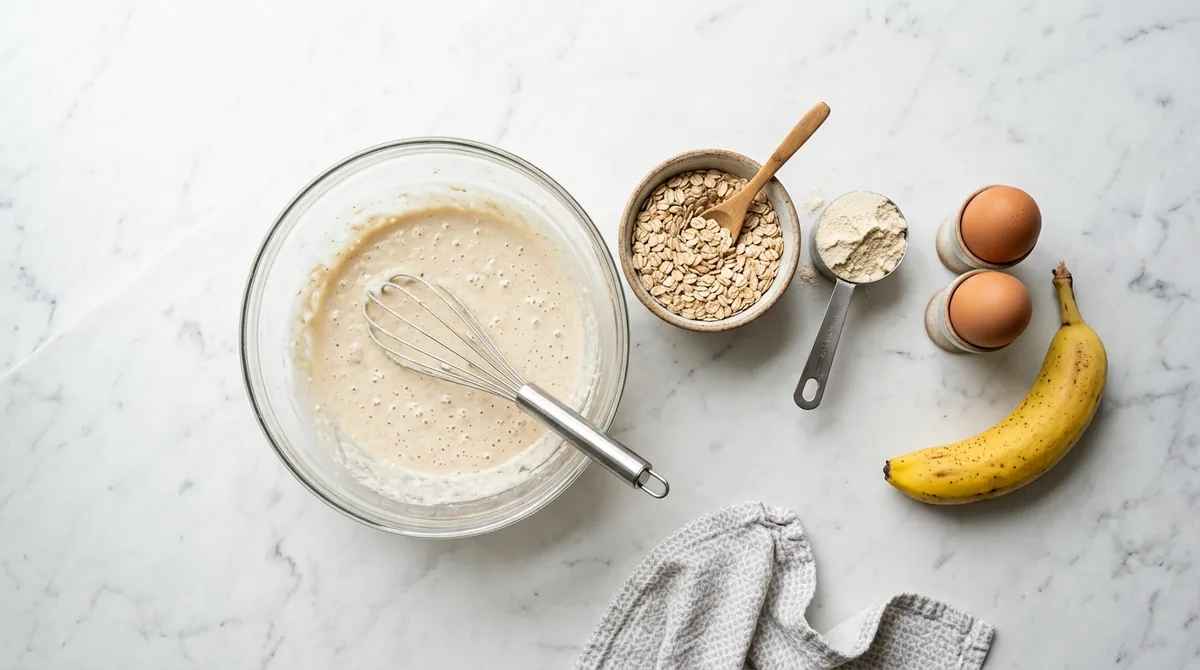
These are the pancakes I make most weekday mornings and the ones I batch-cook on Sunday. They're for anyone who wants a stack that keeps them full until lunch, and for people trying to hit a protein goal early in the day. They work because oat flour and a scoop of protein powder get a 5-minute rest, then cook on medium-low heat so the middle sets before the outside burns.
Ingredients for Protein Pancakes
- Oat flour is the base. Blend rolled oats for about 20 seconds if you don’t have it. All-purpose flour works 1:1 if you prefer.
- Vanilla protein powder adds protein and sweetness. Whey makes lighter pancakes; plant protein soaks up more liquid.
- Baking powder is the only lift, so it has to be fresh (test below).
- Eggs and milk bind and loosen the batter. Any milk works: almond, oat or dairy.
- Honey or maple syrup, vanilla and cinnamon cover the slight chalkiness some powders have.
How to Make Them Fluffy
Whisk the dry ingredients, whisk the wet ingredients, then combine them with 8 to 10 gentle strokes and stop while the batter still looks lumpy. Let it rest 5 minutes, then cook ¼-cup pancakes on medium-low until bubbles cover the surface. Full amounts and timings are in the card.
Tools and Ingredient Notes
- Pan: A nonstick skillet or griddle is easiest. Protein batter sticks to stainless steel unless the pan is very well oiled.
- Electric griddle: If you have one, set it to about 325°F. It holds a steady temperature and you can cook a whole batch at once.
- Measuring: A quarter-cup measure or a large cookie scoop keeps every pancake the same size so they cook at the same rate.
- Spatula: A thin, wide spatula slides under the pancake without folding it.
- Oat flour: Any blender grinds rolled oats into flour in about 20 seconds. Measure the oats after grinding, not before.
- Keeping them warm: Set the cooked pancakes on a rack over a baking sheet in a 200°F oven. Stacked on a plate, they steam and go soft.
- Baking powder: Test it if it's been open a while: a pinch in hot water should fizz right away.
Kitchen note: Dry protein pancakes mean the batter was too thick or they cooked too long. Add milk until it pours easily, and cook over medium heat.

Fluffy Protein Pancakes
Ingredients
Method
- Mix all dry ingredients in a large bowl, oat flour, protein powder, baking powder, cinnamon, and salt. Whisk to combine.
- In a separate smaller bowl, whisk eggs, almond milk, honey, and vanilla extract until smooth.
- Pour wet into dry. Stir gently with a fork, 8 to 10 strokes maximum. Stop when no dry flour is visible. The batter will look lumpy. That’s exactly right.
- Let the batter rest for 5 minutes. Don’t skip this. The oat flour needs time to absorb the liquid, skipping this step gives you thin, flat protein pancakes instead of thick fluffy ones.
- Heat a non-stick skillet or griddle over MEDIUM-LOW heat. Not medium. Not medium-high. Medium-low. Protein powder burns faster than regular flour at high heat, this is the second mistake that ruins most batches.
- Add ½ tsp coconut oil and swirl to coat. The pan is ready when a drop of water dances and evaporates within 3 seconds.
- Pour ¼ cup batter per pancake. Cook for 2–3 minutes until bubbles form across the entire surface and the edges look set and matte, not wet.
- Flip once, cook 1–2 minutes on side two. Press gently with your spatula, if it springs back, it’s done.
- Serve immediately or keep warm in a 200°F oven on a baking sheet while you finish the batch.
Notes
- Protein powder: Whey blends make lighter pancakes. Plant proteins absorb more liquid, so add 2 to 3 tbsp extra milk.
- No oat flour: All-purpose flour works 1:1.
- Freezer: Freeze cooled pancakes in a single layer, then bag. Keep up to 2 months and reheat in the toaster.
- Mix-ins: Scatter blueberries or chocolate chips onto each pancake after pouring, not into the bowl, so they don’t sink.
- No protein powder: leave it out, blend ½ cup full-fat cottage cheese with the wet ingredients and start with ½ cup milk. See the post for details.
What to Look For at Each Stage
- After mixing: Lumpy, with no dry flour showing. Small lumps are fine.
- After the 5-minute rest: The batter thickens to about the texture of thick yogurt, with small bubbles on top. It should pour slowly from the measuring cup.
- The pan: A drop of water should dance and disappear within 3 seconds. If it sizzles away instantly, the pan is too hot.
- First side: After 2 to 3 minutes, bubbles cover the surface and some pop and stay open. The edges look matte and dry. Lift a corner: it should be golden underneath.
- After the flip: The pancake should rise noticeably, about half again as thick, within 30 seconds.
- Done: Golden brown on both sides, not dark. Press the center gently: it should spring back, and the sides should look dry, not wet.
Can You Make Protein Pancakes Without Protein Powder?
Yes. When the protein powder tub runs empty, cottage cheese does the same job, and it’s the same trick behind our cottage cheese bagels and whipped cottage cheese.
When I made them with cottage cheese instead of powder, they came out fluffier and more tender than the original stack. So it’s worth trying even when the tub isn’t empty. Here’s how to switch:
- Skip the scoop of protein powder.
- Blend ½ cup full-fat cottage cheese with the eggs, honey and vanilla until it’s completely smooth. Don’t skip the blender, or you’ll get little curds in every bite.
- Pour in ½ cup milk instead of ¾ cup. Cottage cheese brings its own moisture. If the batter won’t slide off the spoon, add milk a tablespoon at a time.
Then cook them just like the main recipe: medium-low heat, flip when bubbles cover the top, and give the center a gentle press. If it springs back, they’re ready.
Protein Pancakes vs Regular Pancakes
Per serving, these protein pancakes have about 12.6g protein and 3g fiber for 214 calories, calculated from USDA FoodData Central. Our classic buttermilk pancakes have 5.1g protein and 0.6g fiber for 163 calories. The difference comes from the protein powder, the eggs and the oat flour. They also made our list of high protein breakfast recipes, where a serving with a 6 oz cup of plain nonfat Greek yogurt reaches 30.1g of protein for 318 calories.
| Per serving | Protein pancakes (1 of 4) | Buttermilk pancakes (1 of 8) |
|---|---|---|
| Calories | 214 | 163 |
| Protein | 12.6g | 5.1g |
| Fat | 8g | 6.4g |
| Carbohydrates | 23.5g | 21.4g |
| Fiber | 3g | 0.6g |
| Sugar | 5g | 3.4g |
| Sodium | 242mg | 411mg |
| Protein per 100 calories | 5.9g | 3.1g |
Because the servings aren’t the same size, look at the last row: the protein version has almost twice the protein for the same calories. Your exact numbers depend on your protein powder, since a scoop ranges from about 20 to 25g protein, so check the label.
Fixing Rubbery or Flat Pancakes
- The heat is too high. Whey protein firms up quickly when heated, much like egg whites, and the sugars in many powders brown fast. Medium-low lets the pancake set gently instead of seizing into a chewy disc with a raw middle.
- The batter was overmixed. Stop at 8 to 10 strokes. Lumps are fine; a smooth batter makes a tough pancake.
- The batter did not rest. Oat flour contains beta-glucan, a soluble fiber that needs a few minutes to absorb liquid. Cook it straight away and the center stays dense and gummy.
- The baking powder is old. Drop ½ teaspoon into hot water. If it does not bubble hard within a few seconds, replace it.
- They are dry. I found that 1 tablespoon of Greek yogurt in the batter makes them noticeably more tender inside. Plant protein powders also need 2 to 3 extra tablespoons of milk.
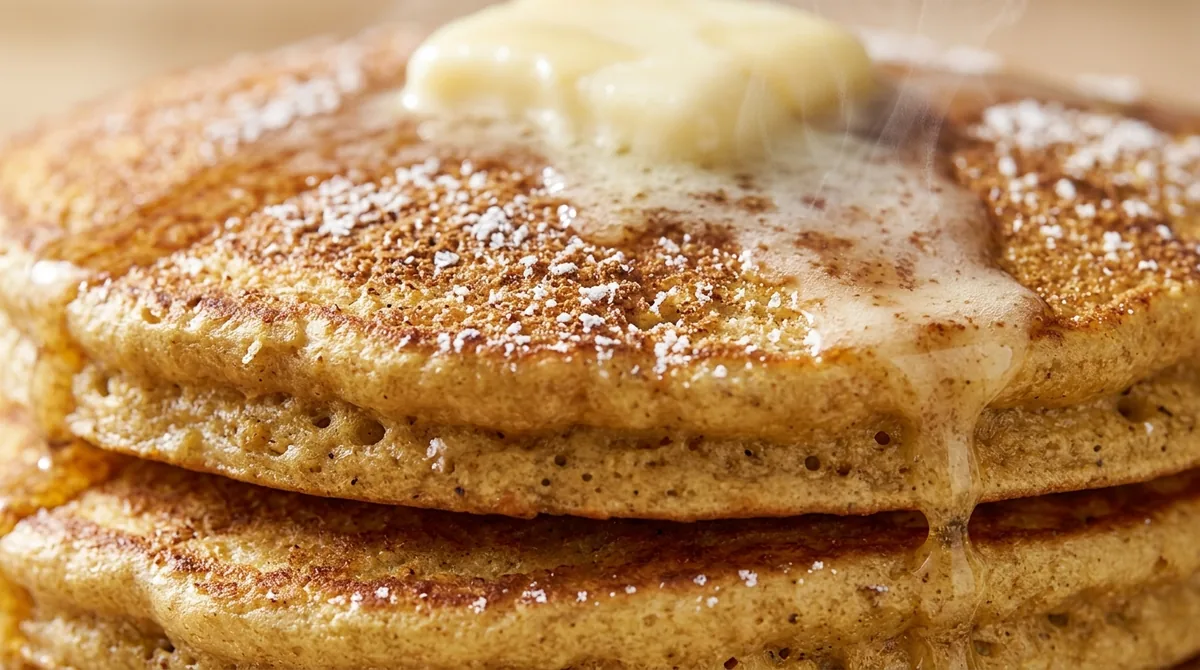
Make-Ahead Protein Pancakes
- Batter: mix it the night before, cover and refrigerate. Give it one gentle stir in the morning and cook it straight from cold.
- Freezer: freeze cooked pancakes flat on a baking sheet, then move them to a bag. They keep up to 2 months.
- Reheat: about 2 minutes in the toaster, so they crisp on the outside and stay soft inside.
- Pan care: use a silicone spatula on non-stick pans; protein residue sticks badly to scratched coatings.
Serving Ideas
Berries and a spoon of whipped cottage cheese add more protein without much sugar. For something sweet and spicy, try a drizzle of homemade hot honey: three ingredients, five minutes, and it cuts through a tall stack better than syrup. Our lemon ginger turmeric drink is an easy pairing while the pancakes cook.
Looking for more ways to use the tub? See all of our cottage cheese recipes, from breakfast to dessert.
Have ripe bananas to use up? Try our cottage cheese banana bread, a moist loaf where blended cottage cheese replaces most of the butter.
Frequently Asked Questions
How much protein is in these protein pancakes?
About 12 to 13g per serving, or roughly 50g for the whole batch of 4 servings. Most comes from the protein powder, the 2 eggs (about 12.6g protein per 100g, USDA FDC 171287) and the oat flour (14.7g per 100g, USDA FDC 169741). Check your powder’s label, since a scoop ranges from about 20 to 25g.
Can I use all-purpose flour instead of oat flour?
Yes, 1:1. The batter needs less resting time because it has no oat fiber to hydrate.
Which protein powder works best?
A vanilla whey or whey blend gives the lightest texture. Plant protein works too, with 2 to 3 extra tablespoons of milk.
Why do protein pancakes burn before the middle cooks?
The pan is too hot. Protein powder browns faster than regular flour, so cook on medium-low and wait for bubbles across the whole surface before flipping.
Can I add blueberries or chocolate chips?
Yes. Pour the batter into the pan, then drop 6 to 8 berries or chips onto each pancake before flipping. Mixing them into the bowl makes the batter streaky, and the berries sink to the bottom.
Can I make protein pancakes in a waffle maker?
Yes. Grease the waffle maker well and use the same batter, letting it rest the full 5 minutes. Cook until the steam slows down, usually 3 to 4 minutes. Protein waffles are a bit firmer and crispier than the pancakes.
Can I make them without eggs?
You can use 2 flax eggs (2 tablespoons ground flaxseed mixed with 5 tablespoons water, rested for 5 minutes). The pancakes come out denser and a little more fragile, so make them smaller and flip gently. They also have less protein without the eggs.
Sources
- USDA FoodData Central (FDC 169640, 169741, 171287, 171412, 172803, 173180, 173468, 173904, 174832)
- Fluffy Buttermilk Pancakes recipe card, for the comparison values
