
The best high protein breakfast recipes give you a lot of protein for the calories, from everyday ingredients. Our cottage cheese scrambled eggs lead this list with 18.8 g of protein in 215 calories. Add a 6 oz cup of plain nonfat Greek yogurt, and that plate reaches 36.3 g for 319 calories.
I put these breakfasts together because toast and coffee never kept me full until lunch, and protein did. This list is for anyone trying to get 20 to 30 g of protein before noon, whether you cook fresh in the morning or meal prep on Sunday. They work because eggs, cottage cheese and Greek yogurt do the heavy lifting, and blending the cottage cheese keeps everything soft and fluffy instead of rubbery.
We ranked seven of our breakfasts by protein per 100 calories, using the numbers on each recipe card. You’ll also see which add-ins boost protein the most, how to reach 30 g at breakfast, and which breakfasts you can make ahead. For lunch and dinner ideas, see our high protein recipes.
Key takeaways
- Our best breakfasts per calorie are scrambled eggs (8.7 g of protein per 100 calories), egg bites (8.4 g) and the egg bake (8.3 g).
- None of the seven reaches 25 g alone. A 6 oz cup of plain nonfat Greek yogurt (17.5 g) gets six of the seven past it. The blueberry muffin needs one more side.
- Egg bites and the egg bake are make-ahead: one batch covers six to eight breakfasts.
- Every number comes from our recipe cards, and the add-ins from USDA FoodData Central.
What counts as a high protein breakfast
There’s no official number for breakfast, but the Dietary Guidelines give a daily one. The 2025-2030 Dietary Guidelines for Americans aim for 1.2 to 1.6 g of protein per kilogram of body weight a day (American Family Physician summary, 2026). For a 150 lb adult, that’s about 82 to 109 g a day, or roughly 27 to 36 g per meal if you split it evenly.
That’s why the chart below marks 25 g, just under that range: it’s an easy minimum to check a breakfast against. Your own needs depend on your size, age and activity. If you have a health condition such as kidney disease, ask your doctor how much protein is right for you.
The 7 high protein breakfasts at a glance
Our cottage cheese scrambled eggs give the most protein per calorie, at 8.7 g per 100 calories. The egg bites and the cottage cheese egg bake come next, at 8.4 g and 8.3 g. The table ranks all seven by that number, so lighter breakfasts aren’t penalized for being small.
| Breakfast | Protein | Calories | Protein per 100 cal | Fiber | Time |
|---|---|---|---|---|---|
| Cottage cheese scrambled eggs | 18.8 g | 215 | 8.7 g | under 1 g | 7 min |
| Egg bites (bacon and Gruyère) | 16.5 g | 197 | 8.4 g | under 1 g | 45 min |
| Cottage cheese egg bake | 16.4 g | 197 | 8.3 g | under 1 g | 50 min |
| Protein pancakes | 12.6 g | 214 | 5.9 g | 3 g | 25 min |
| Blueberry cottage cheese muffins | 4.4 g | 80 | 5.5 g | 0.7 g | 35 min |
| Cottage cheese bagels | 12 g | 226 | 5.3 g | 5 g | 35 min |
| Avocado egg toast | 17.6 g | 424 | 4.2 g | 6.8 g | 10 min |
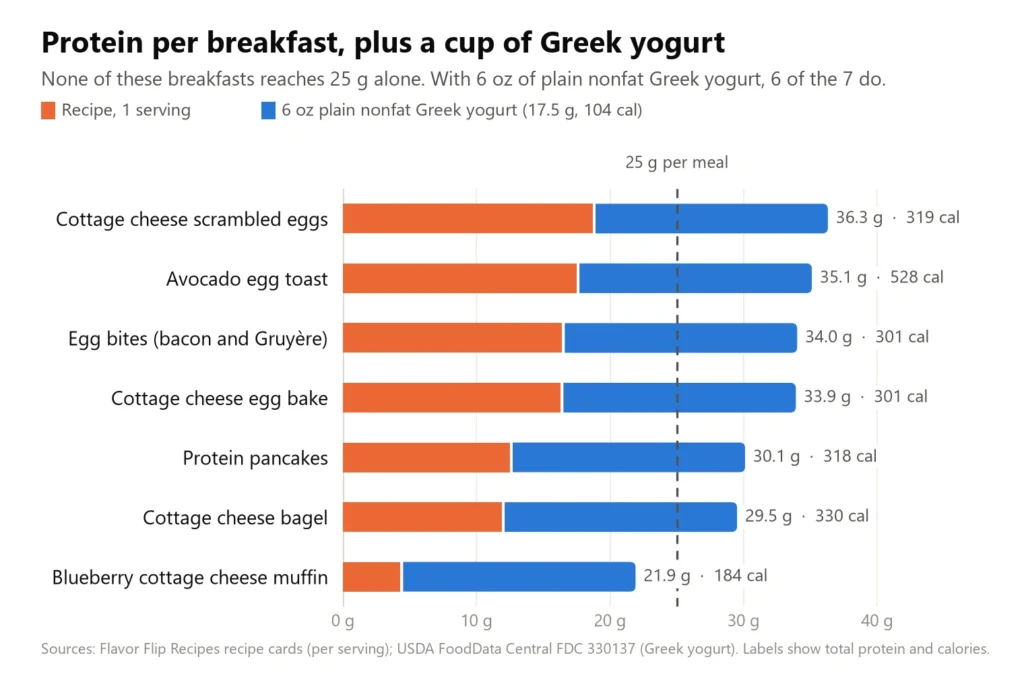
Our finding: none of these seven breakfasts reaches 25 g of protein on its own. The best is 18.8 g. But a 6 oz cup of plain nonfat Greek yogurt adds 17.5 g of protein for 104 calories (USDA). With it, six of the seven pass 25 g, and four of them stay at about 300 to 330 calories. The blueberry muffin reaches 21.9 g, so it needs one more side.
Breakfasts with the most protein per calorie
Cottage cheese scrambled eggs, egg bites and a cottage cheese egg bake do, at 8.3 to 8.7 g of protein per 100 calories. Eggs and cottage cheese carry almost all of it, with no flour or sugar to add calories. Two of them are make-ahead, which helps on busy mornings.
1. Cottage cheese scrambled eggs: 18.8 g protein, 215 calories
 Save
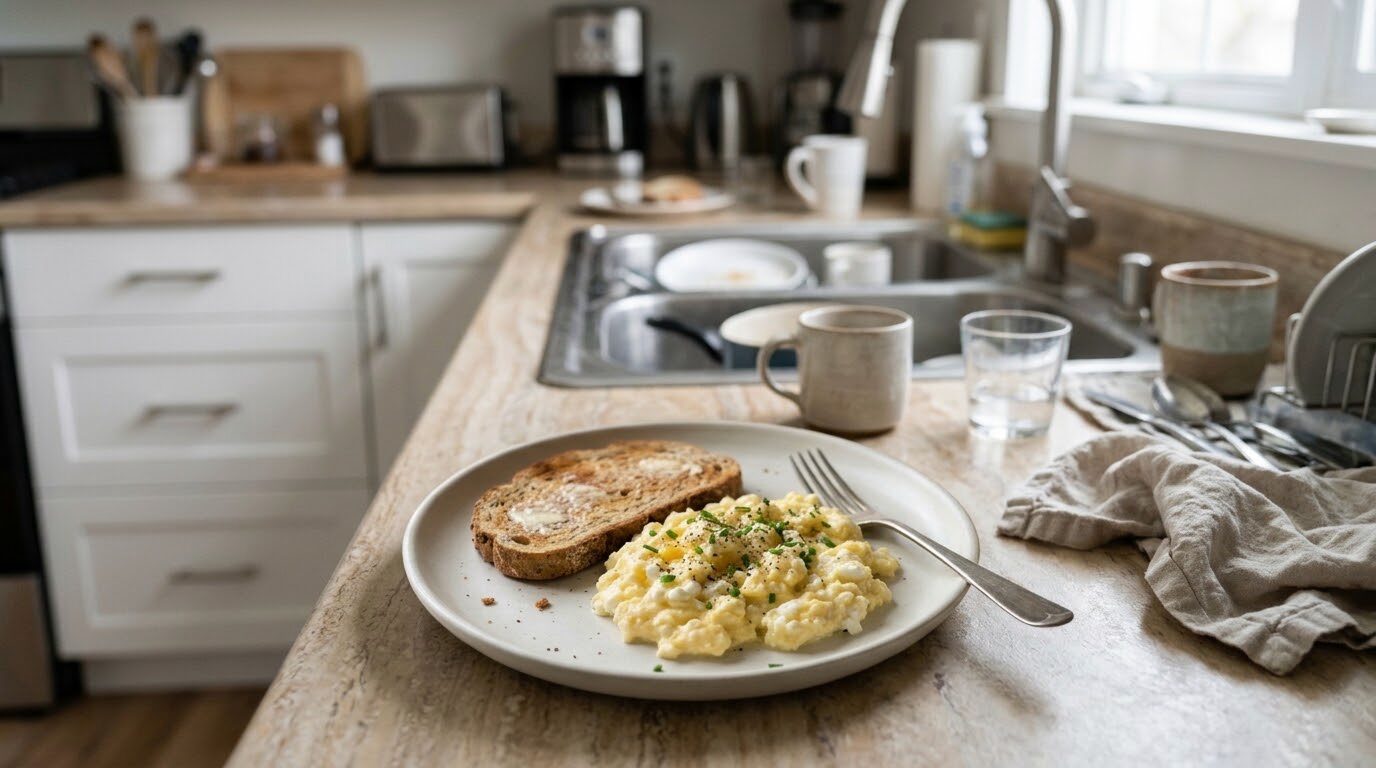
Four eggs and half a cup of full-fat cottage cheese make two servings in about 7 minutes. Blending the cottage cheese with the eggs first makes them extra creamy, with no visible curds and no milk or cream. With a 6 oz cup of Greek yogurt, it’s the highest-protein plate on this list: 36.3 g for 319 calories.
2. Egg bites: 16.5 g protein, 197 calories
 Save
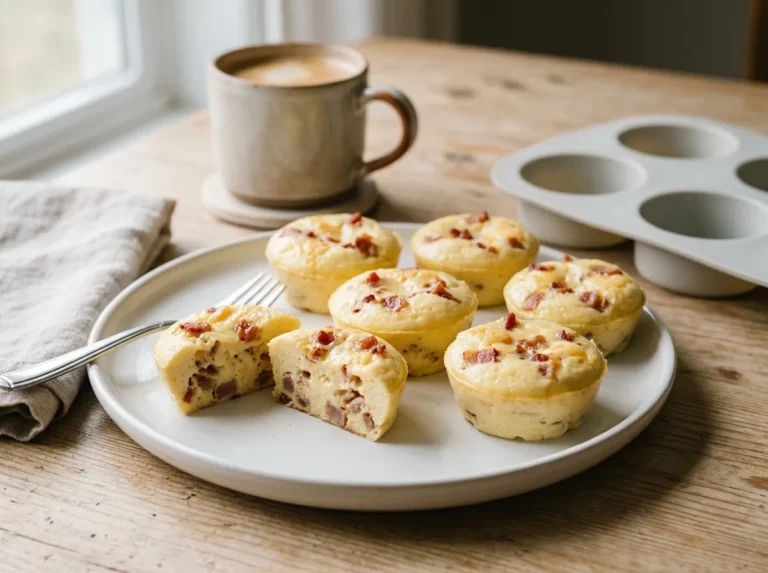
Our copycat Starbucks egg bites blend eggs, cottage cheese and Gruyère, then bake them in a water bath. One batch makes six servings of two bites each, so the week’s breakfasts are done in 45 minutes. Two bites reheat in 30 to 45 seconds.
3. Cottage cheese egg bake: 16.4 g protein, 197 calories
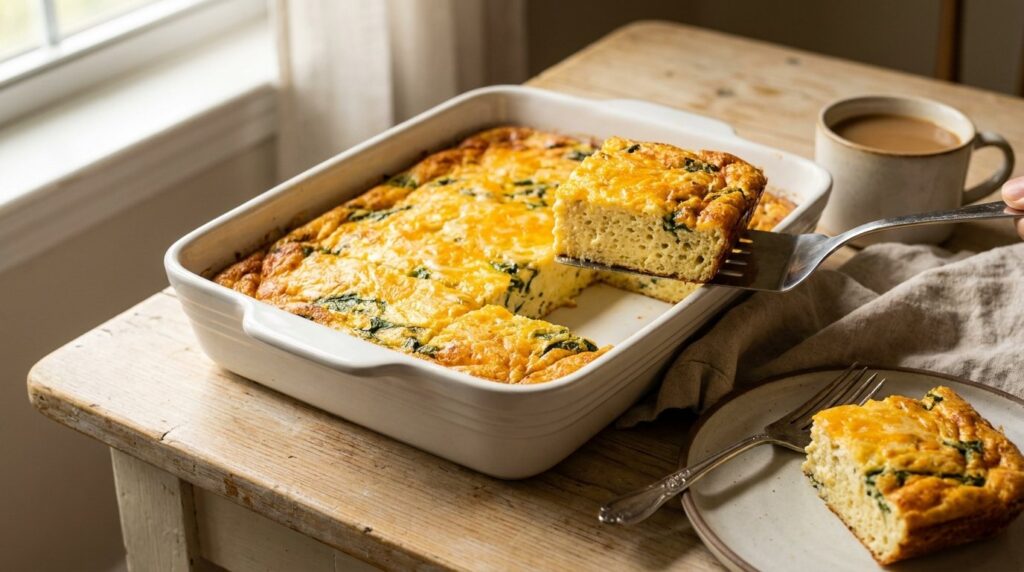
The cottage cheese egg bake uses 12 eggs, a cup of cottage cheese, spinach and cheddar in one dish. It cuts into eight slices that keep in the fridge for 3 to 4 days. If you’d rather have one big pan than a muffin tin, start here.
Breakfasts that need a protein boost
Blueberry cottage cheese muffins, protein pancakes, cottage cheese bagels and avocado egg toast land between 4.4 and 17.6 g of protein per serving. That’s a solid start, but each needs a side to reach 25 g. So what’s the easiest side? Greek yogurt, as the chart above shows. On the plus side, the pancakes, bagels and toast bring 3 to 6.8 g of fiber, which the egg dishes don’t.
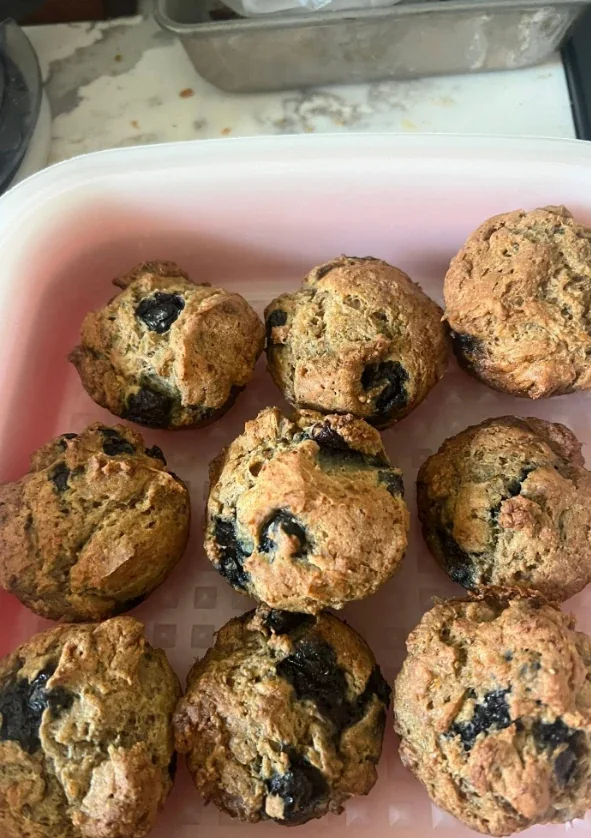
Blueberry cottage cheese muffins: 4.4 g protein, 80 calories
 Save
Our blueberry cottage cheese muffins get their moisture from blended cottage cheese, with no added sugar, butter or oil. At 80 calories, they’re the lightest breakfast here, but with 4.4 g of protein they need help. A 6 oz cup of Greek yogurt brings the plate to 21.9 g for 184 calories, and three scrambled egg whites take it to 32.7 g for 235 calories.
Protein pancakes: 12.6 g protein, 214 calories
Our protein pancakes use oat flour and a scoop of protein powder. That gives 12.6 g per serving, compared with 5.1 g in our classic fluffy pancakes. Top them with Greek yogurt instead of extra syrup, and you’re past 30 g.
Cottage cheese bagels: 12 g protein, 226 calories
These bagels have 12 g of protein and 5 g of fiber each, thanks to whole wheat flour and psyllium. Fill one with our cottage cheese scrambled eggs and the plate reaches 30.8 g for 441 calories.
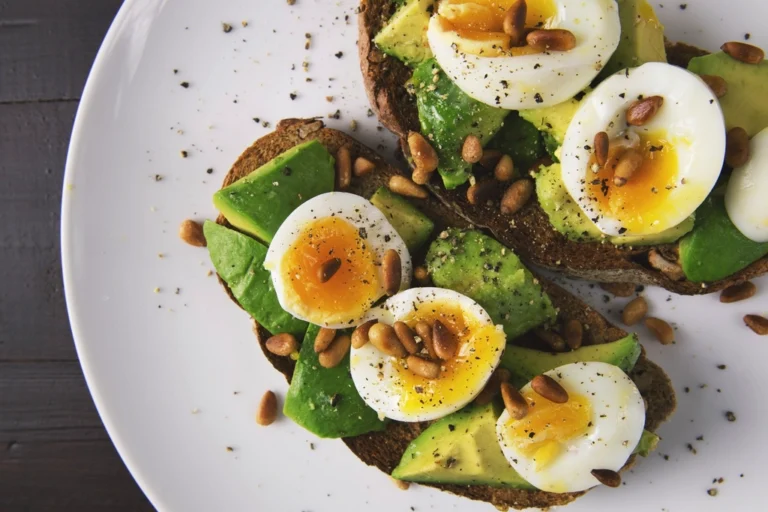
Avocado egg toast: 17.6 g protein, 424 calories
 Save
Our avocado egg toast has about as much protein as the egg dishes, and the most fiber here at 6.8 g. But the avocado and sourdough bring it to 424 calories, so it ranks last per calorie. For a lighter plate, use a quarter of an avocado or a thinner slice of bread.
How do you get 30 g of protein at breakfast?
Add one protein-dense food. Per calorie, egg whites lead, with three large whites giving 10.8 g of protein for 51 calories. Plain nonfat Greek yogurt is close behind, at 17.5 g for 104 calories, according to USDA FoodData Central. Nut butters and seeds add protein too, but with far more calories.
| Add-in | Amount | Protein | Calories | Protein per 100 cal |
|---|---|---|---|---|
| Egg whites | 3 large | 10.8 g | 51 | 21.0 g |
| Plain nonfat Greek yogurt | 6 oz | 17.5 g | 104 | 16.9 g |
| 2% cottage cheese | ½ cup | 11.8 g | 92 | 12.8 g |
| Whole egg | 1 large | 6.3 g | 72 | 8.8 g |
| Hemp seeds, hulled | 3 tbsp | 9.5 g | 166 | 5.7 g |
| Whole milk | 1 cup | 7.7 g | 149 | 5.2 g |
| Peanut butter | 2 tbsp | 7.1 g | 191 | 3.7 g |
| Chia seeds | 1 oz | 4.7 g | 138 | 3.4 g |
A few easy ways to use them:
- Swap two of the four whole eggs in scrambled eggs for three egg whites. Protein stays about the same, and the batch loses about 90 calories.
- Spoon Greek yogurt over protein pancakes or muffins instead of butter or syrup.
- Stir ½ cup of 2% cottage cheese into oatmeal after cooking for about 12 g more protein.
- Sprinkle 3 tablespoons of hemp seeds on avocado toast. It adds 9.5 g of protein, but also 166 calories.
Pairing two of our recipes works too. Scrambled eggs with a cottage cheese bagel give 30.8 g of protein for 441 calories. Egg bites with a blueberry cottage cheese muffin give 20.9 g for 277 calories, so add a cup of Greek yogurt to reach 38.4 g for 381.
Low calorie, high protein breakfasts
There’s no official definition, but a useful one is at least 25 g of protein in about 350 calories or less. Our egg bites or a slice of egg bake with 6 oz of Greek yogurt reach about 34 g of protein in 301 calories. For the lowest calories, a blueberry cottage cheese muffin with 6 oz of Greek yogurt and three egg whites gives 32.7 g in 235 calories.
High protein breakfasts without eggs
A Greek yogurt and cottage cheese bowl. Six ounces of plain nonfat Greek yogurt plus ½ cup of 2% cottage cheese gives 29.3 g of protein for 196 calories (USDA). Add 3 tablespoons of hemp seeds and it climbs to 38.7 g. For a savory version, our whipped cottage cheese has 12.4 g of protein in 95 calories per serving.
Most of our breakfasts include egg. The pancakes and bagels use only a little, though: two eggs per four servings of pancakes and one egg per four bagels. For more egg-free ideas between meals, see our high protein snacks.
Where to start this week
Bake a batch of egg bites or the egg bake on Sunday. That covers six to eight breakfasts at about 16.5 g of protein each. Keep a few 6 oz cups of plain Greek yogurt in the fridge, and every breakfast gets past 25 g. Want more? Our cottage cheese recipes roundup has more ways to add protein. That’s the simplest way to keep a high protein breakfast on hand all week.
What to look for at each stage
- Cottage cheese scrambled eggs: Over low heat the eggs form soft, large curds and should still look slightly glossy when you take them off. They keep cooking on the plate, so pull them a little early.
- Egg bites: They should puff and look set at the edges with a slight wobble in the very center, then firm up as they cool. Big bubbles or a spongy texture mean the oven ran too hot.
- Egg bake: The center should be set and spring back when pressed, with no liquid when you tilt the pan. A knife in the middle should come out clean.
- Protein pancakes: Flip when bubbles pop on the surface and the edges look dry and matte, about 2 minutes. If they brown before the bubbles appear, turn the heat down.
- Muffins and bagels: Muffins are done when a toothpick comes out with a few moist crumbs and the tops spring back. Cottage cheese bagels should be deep golden and sound slightly hollow when tapped underneath.
Tools and ingredient notes
- Blender: For the egg bites and egg bake, blending the cottage cheese with the eggs gives a smooth, custardy texture with no curds.
- 2% or 4% cottage cheese: 4% makes creamier eggs and moister muffins. 2% works fine and saves a few calories, while nonfat can turn watery when cooked.
- Nonstick skillet: Low-heat scrambles and pancakes release cleanly from a good nonstick pan with very little butter.
- Silicone muffin pan: Egg bites and muffins pop out of silicone cleanly. In a metal pan, grease each cup well or use liners.
- Meal prep containers: Egg bites and egg bake squares keep 4 days in the fridge. Store them airtight with a paper towel to soak up moisture.
Quick answers
What is a good high protein breakfast?
One that reaches at least 25 g of protein without a lot of calories. Our cottage cheese scrambled eggs with a 6 oz cup of plain nonfat Greek yogurt give 36.3 g of protein in 319 calories. Egg bites with the same yogurt give 34 g in 301 calories.
How do you get 30 g of protein at breakfast?
Pair a recipe with a protein-dense side. A 6 oz cup of plain nonfat Greek yogurt adds 17.5 g, so protein pancakes with yogurt reach 30.1 g for 318 calories. Scrambled eggs in a cottage cheese bagel give 30.8 g for 441 calories.
What is a low calorie high protein breakfast?
A breakfast with at least 25 g of protein and about 350 calories or less. A blueberry cottage cheese muffin with 6 oz of Greek yogurt and three egg whites gives 32.7 g in 235 calories. The egg whites alone add 10.8 g of protein for about 51 calories.
Which high protein breakfasts can you make ahead?
Egg bites, the cottage cheese egg bake and blueberry cottage cheese muffins. One batch of egg bites makes six servings of two bites, and the egg bake cuts into eight slices that keep in the fridge for 3 to 4 days.
What is a high protein breakfast without eggs?
A Greek yogurt and cottage cheese bowl. Six ounces of plain nonfat Greek yogurt plus ½ cup of 2% cottage cheese gives 29.3 g of protein for 196 calories (USDA). Add 3 tablespoons of hemp seeds and it climbs to 38.7 g.
Sources
- American Family Physician, Dietary Guidelines for 2025-2030: Recommendations From the USDA and HHS, July 2026, retrieved 2026-11-05, aafp.org
- U.S. Department of Agriculture, FoodData Central, FDC IDs 172183 (egg whites), 330137 (plain nonfat greek yogurt), 172182 (2% cottage cheese), 171287 (whole egg), 170148 (hemp seeds, hulled), 171265 (whole milk), 172470 (peanut butter), 170554 (chia seeds), retrieved 2026-11-08, fdc.nal.usda.gov
- Recipe nutrition: each linked recipe’s card on Flavor Flip Recipes, per serving.
- Photos: avocado egg toast by rawpixel (CC0).
