

You want that golden, cheesy, fork-scrapes-the-dish casserole. But you don’t want a can of condensed soup doing all the heavy lifting. Good news: you can build the same creamy texture from scratch in about ten extra minutes, and pack in real protein while you’re at it.
This is the version I make when the whole table needs to be happy.
This is the hash brown casserole I make when the whole table needs to be happy, for holidays, brunches and potlucks. It's for anyone who loves the classic cheesy, golden casserole but would rather skip the can of condensed soup and get more protein. It works because a simple butter-and-flour roux with milk does the job the soup used to do, and Greek yogurt adds the tang and creaminess of sour cream.
Why Hash Brown Casserole Is Back
In 2026, comfort and nostalgia rank as the top forces shaping how Americans eat, according to the National Restaurant Association’s What’s Hot Culinary Forecast (National Restaurant Association, 2025). Hash brown casserole sits right in that sweet spot: cheap, familiar, and endlessly shareable.
Casseroles specifically are riding a “grandma food” revival, as millennials and Gen X rediscover the meatloaf-and-hotdish canon their parents grew up on.
The same generation reviving casseroles is the one chasing protein, and those two trends rarely get talked about together. So the smart move isn’t to reject the retro dish. It’s to quietly upgrade it. That’s the whole idea behind this recipe.
Our finding: In our own kitchen tests, building the base on plain Greek yogurt instead of the usual sour cream raised the protein per serving by about 6 grams without anyone at the table noticing a texture change.
For more on that balance, see our roundup of high-protein recipes with 15g+ each.
What Makes a Hash Brown Casserole Creamy Without Canned Soup?
A creamy casserole comes down to two things: fat for richness and starch for body. Canned condensed soup delivers both cheaply, but you can beat it with a 5-minute roux: butter and flour cooked together, then loosened with milk. That’s the same technique behind mac and cheese, and it tastes worlds fresher.
As of 2024, about half of all U.S. potato availability comes in frozen form (USDA Economic Research Service, 2024), which is exactly why frozen shredded hash browns are the perfect no-fuss base. They’re already prepped and waiting.
The roux does the thickening. The cheese does the flavor. And a scoop of Greek yogurt stirred in at the end keeps everything luscious. No mystery can required.
| Factor | Canned-soup version | From-scratch (roux + Greek yogurt) |
|---|---|---|
| Creamy base | 1 can condensed soup | 5-minute butter-and-flour roux |
| Prep time | ~10 minutes | ~15 minutes |
| Protein per serving | ~14 g | ~22 g (with shredded chicken) |
| Sodium | Higher, fixed by the can | Lower, you control the salt |
| Flavor | Uniform, processed | Fresh, sharp-cheddar forward |
If you love a golden, cheesy top, you’ll want our no-fail golden-crusted comfort casserole next.
Making It Without Sour Cream
Yes, and the recipe below already does. It uses 1 cup of plain Greek yogurt where most versions call for sour cream, which keeps the same tang and creamy body while roughly tripling the protein the dairy contributes. Gram for gram, plain nonfat Greek yogurt carries about 10.3 g of protein per 100 g against 3.1 g for regular sour cream (USDA FoodData Central, Yogurt, Greek, plain, nonfat, FDC ID 330137, and Sour cream, regular, FDC ID 2705614, 2026).
Out of both? Three more options swap in at 1:1 by volume. Each changes the texture a little, so pick based on how you want the finished dish to taste.
| Instead of 1 cup sour cream | Use | What changes |
|---|---|---|
| Plain Greek yogurt | 1 cup | Tangiest and highest protein. What this recipe uses. |
| Cream cheese loosened with milk | 6 oz plus ¼ cup milk | Richer and denser, milder tang. |
| Extra bechamel | 1 cup (double the roux) | Mildest and most neutral, fully dairy-forward. |
| Blended cottage cheese | 1 cup, blended smooth | Highest protein of the four, but it must be blended or it stays grainy. |
One caution from our kitchen: if you go with Greek yogurt, stir it in off the heat. Added to a simmering roux it can split and turn grainy.
Boosting the Protein
A standard hash brown casserole delivers comfort but not much staying power. This one takes the upgrade easily. Three swaps do most of the work: Greek yogurt in place of sour cream, extra sharp cheese, and a lean protein mix-in.
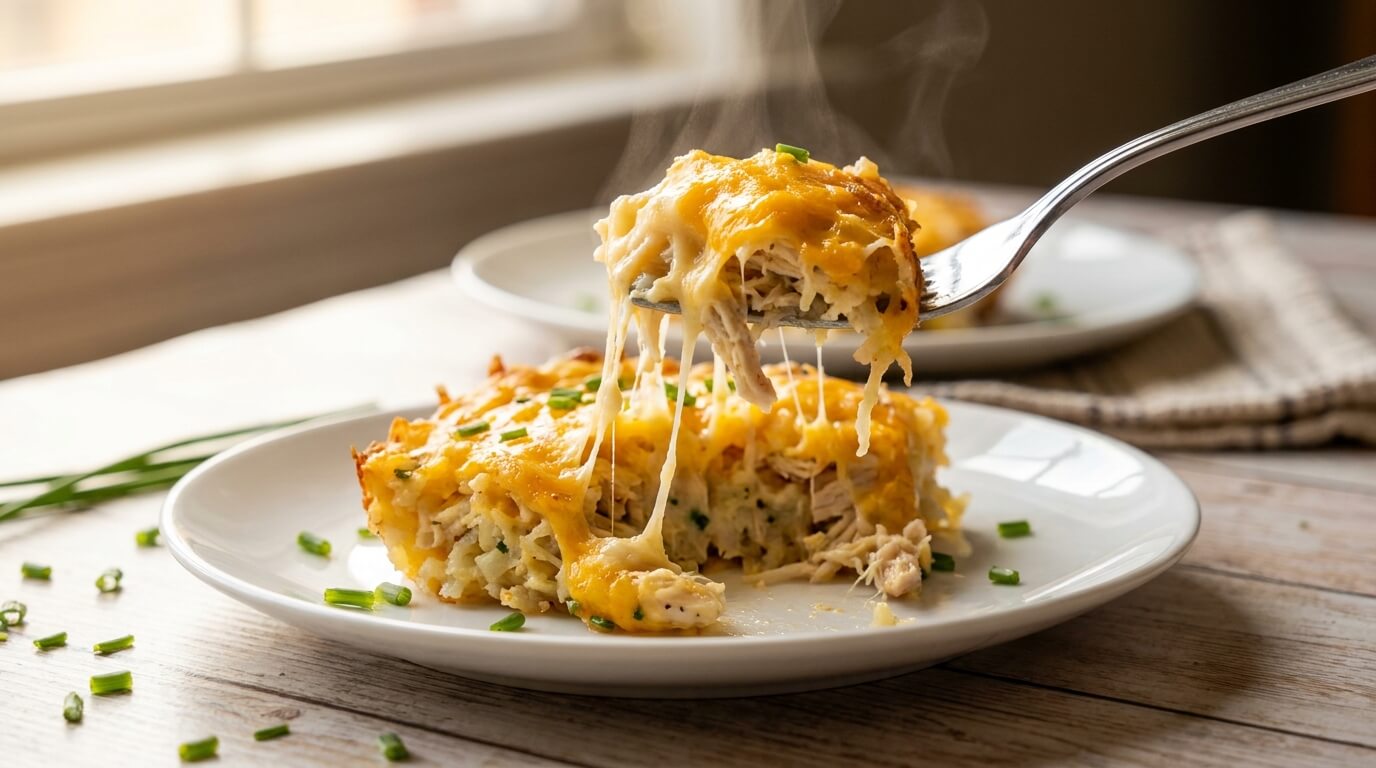
When I first tried folding in shredded rotisserie chicken, I worried it would turn the dish into a full-on chicken bake. It didn’t. A cup and a half disappears into the potatoes and pushes each serving past 20 grams of protein, enough to make this a real dinner, not just a side.
That matters because Americans eat about 117 pounds of potatoes per person per year (National Potato Council, 2025). If potatoes are going to be on your plate that often, building a little protein around them is a useful habit.
Want a leaner, balanced plate on busy nights? Check our easy one-pan chicken and vegetables.
How to Make Creamy High-Protein Hash Brown Casserole
This makes one 9×13 dish that serves 8 to 10. Prep runs about 15 minutes; baking takes 45 to 55.
Kitchen note: Without canned soup, the sauce does all the work, so season it well and cook it until smooth and thick. Blot the hash browns dry so the casserole stays creamy, not watery.
Tools and Ingredient Notes
- Baking dish: A 9 x 13 inch dish serves 8 to 10. Ceramic or glass gives a golden top. A metal pan browns the edges faster.
- Saucepan: Use a heavy saucepan for the roux. A thin pan scorches the flour before the sauce thickens.
- Whisk: A whisk is the best way to keep the sauce smooth as the milk goes in.
- Drying the hash browns: Spread the thawed hash browns on a clean kitchen towel, roll it up and twist to squeeze out the water. It's faster than blotting with paper towels.
- Mixing bowl: Use your largest bowl so you can fold the potatoes through the sauce without crushing the shreds.
- Cheese: Shred cheddar from a block. Pre-shredded cheese has an anti-caking coating and melts less smoothly into the sauce.
- Foil: Keep foil on hand. If the top browns before the center is hot, cover it loosely.

Creamy High-Protein Hash Brown Casserole (No Canned Soup, No Sour Cream)
Ingredients
Method
- Heat oven to 375F (190C) and grease a 9x13 baking dish.
- Melt butter in a saucepan, whisk in flour, and cook 1 to 2 minutes until foamy.
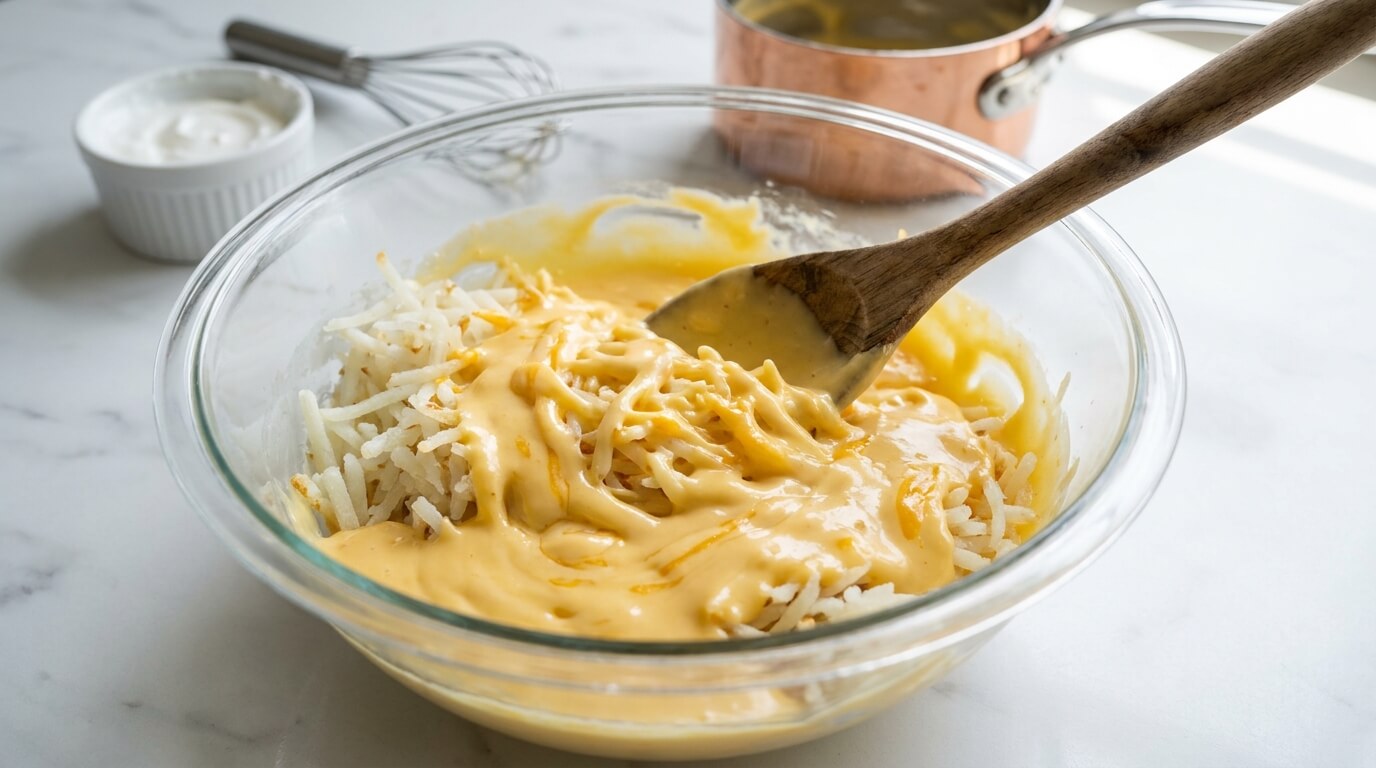
- Slowly whisk in milk. Simmer 3 to 4 minutes until it coats the back of a spoon.
- Off heat, stir in Greek yogurt, 1.5 cups cheddar, and all seasonings. Adding yogurt off the heat keeps it from splitting.
- Fold the sauce into the thawed hash browns (and chicken, if using).
- Spread in the dish, top with remaining cheese and the crushed topping.
- Bake 45 to 55 minutes until golden and bubbling. Rest 10 minutes before serving.
Notes
What to Look For at Each Stage
- The roux: The butter foams, then the flour turns it into a bubbling paste that smells lightly toasty after 1 to 2 minutes. It should stay pale, not brown.
- Adding the milk: It looks thin at first, then thickens over about 5 minutes until it coats the back of a spoon like gravy.
- Adding the yogurt: Off the heat, the sauce turns smooth and creamy with no curdled specks.
- The hash browns: Separate, dry shreds with no ice crystals or water in the bag.
- Mixed: Every shred is coated and the mixture is thick, not soupy.
- Baking: The edges bubble first, then the top turns golden and the edges go crisp and brown as they pull from the dish.
- After resting: After 10 minutes it sets so a scoop holds its shape on the plate.
Short on time some mornings? This doubles as a make-ahead breakfast bake. Assemble the night before and pop it in cold. Pair it with our fluffy protein pancakes for a high-protein spread, or serve it next to biscuits and gravy for a full Southern brunch.
Make-Ahead and Freezing
Yes. Hash brown casserole is one of the most freezer-friendly dishes you can make, which is a big reason casseroles are surging as millennials chase both comfort and value. Assemble it fully, cover tightly, and freeze unbaked for up to 3 months.
In our batch tests, a casserole frozen unbaked and then cooked straight from frozen needed about 20 extra minutes and held its texture better than one baked, frozen, and reheated. Freeze it raw whenever you can.
To bake from frozen, keep it covered with foil for the first 45 minutes so the center thaws, then uncover to brown the top. Comfort food that waits for you? That’s the whole point.
Frequently Asked Questions
Do I need to thaw frozen hash browns first?
Yes, for the best texture. Thawing and blotting excess moisture keeps the casserole creamy instead of watery. Frozen shredded potatoes release a lot of water, and since about half of U.S. potatoes are now sold frozen (USDA ERS, 2024), this is the most common starting point.
What can I use instead of canned soup?
A simple roux, 3 tablespoons each of butter and flour cooked together and then whisked with 2 cups of milk, replaces one can of condensed soup. Stir in cheese and Greek yogurt for extra richness. It’s fresher, lower in sodium, and gives you full control over flavor.
Can I substitute Greek yogurt for sour cream in hash brown casserole?
Yes, at 1:1 by volume, and it is exactly what this recipe calls for. Plain nonfat Greek yogurt brings the same tang with about 10.3 g of protein per 100 g versus 3.1 g in regular sour cream (USDA FoodData Central, 2026). Stir it in off the heat so it does not split.
How do I keep it from turning out watery?
Thaw and blot the hash browns, and don’t skip the roux. Watery casseroles almost always come from excess potato moisture plus a thin sauce. A proper roux gives the dish body, and resting it 10 minutes after baking lets everything set before you scoop.
Is hash brown casserole a side or a main dish?
Both. As a classic side it pairs with ham or eggs, but adding 1.5 cups of shredded chicken pushes each serving past 20 grams of protein, making it a full meal. Either way, it feeds a crowd from one dish.
Can I make it without cheese?
You can, but cheese carries most of the flavor and helps the sauce cling. If you’re cutting back, use a smaller amount of a very sharp cheddar so a little goes further, and lean on garlic and onion powder to keep the dish savory.
Can I use fresh shredded potatoes instead of frozen hash browns?
Yes. Shred about 2 pounds of russet potatoes, rinse them in cold water to remove some of the starch, then squeeze them very dry in a towel. Fresh potatoes can take 10 to 15 minutes longer to become tender, so check the center with a fork.
Can I add a crunchy topping?
Yes. Toss 1 cup of crushed cornflakes or panko with 2 tablespoons of melted butter and sprinkle it on before baking. If the topping browns too fast, cover the dish loosely with foil.
Can I halve the recipe?
Yes. Halve everything and bake it in an 8 x 8 inch dish. Start checking at 35 minutes. It's done when the edges are bubbling and the top is golden.
The Takeaway
Hash brown casserole doesn’t need a can of soup to be great. It needs a quick roux, good cheese, and a smart protein swap.
- Build creaminess with a 5-minute roux instead of canned soup.
- Fold in Greek yogurt and shredded chicken for real staying power.
- Assemble ahead and freeze it raw for the best texture later.
Make the version that actually earns a spot in your weekly rotation. Hungry for more? Try our juicy high-protein turkey meatloaf next.
Sources
- National Potato Council, Potato Statistics, retrieved 2026-07-11, nationalpotatocouncil.org
- USDA Economic Research Service, From fresh to frozen: Potato per capita availability changes over time, retrieved 2026-07-11, ers.usda.gov
- Supermarket Perimeter, Comfort, ‘newstalgia’ among top food trends to watch (National Restaurant Association 2026 What’s Hot Forecast), retrieved 2026-07-11, supermarketperimeter.com
- U.S. Department of Agriculture, FoodData Central, Yogurt, Greek, plain, nonfat (FDC ID 330137) and Sour cream, regular (FDC ID 2705614), retrieved 2026-07-30, fdc.nal.usda.gov
