High Protein Snacks: 25 Easy Ideas for Any Time of Day
High protein snacks are the simplest fix for a day that runs out of protein long before dinner. In 2016 dietary data, U.S. adults ate almost three-quarters of their daily protein at lunch and dinner, leaving breakfast and snacks to fight over the scraps (USDA, What We Eat in America, NHANES, 2016). Fixing that is mostly a matter of having better options within reach.
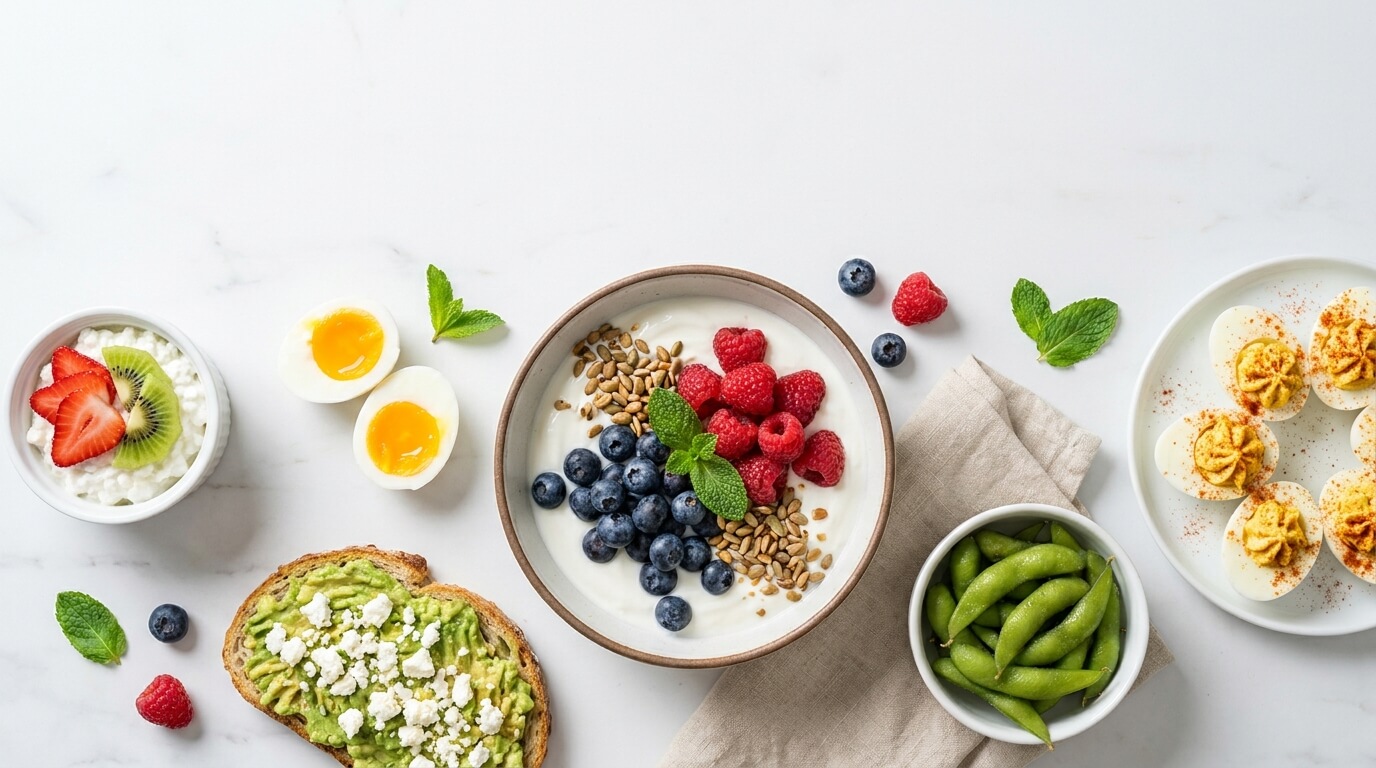
Below are 25 high protein snacks and breakfast ideas, most ready in five minutes or less. Most clear 15g of protein on their own, and the lighter ones carry their gram count so you can pair them. Want something no-bake and make-ahead? That is here too.
Key Takeaways
- U.S. adults eat roughly three-quarters of their daily protein at lunch and dinner, leaving snacks and breakfast the most protein-poor part of the day (USDA, What We Eat in America, NHANES, 2016).
- Protein raises peptide YY and GLP-1 and lowers ghrelin, which is why it holds you longer than the same calories in carbs.
- 25 snack and breakfast ideas below, most ready in five minutes, with the protein per serving on each one.
- Honest caveat: a 2025 review found high-protein meals reliably feel more filling but do not always cut how much you eat at the next meal.
Why Does Protein at Breakfast Matter More Than You Think?
In 2016 federal data, U.S. adults consumed nearly 75% of their daily protein at lunch and dinner, while breakfast delivered the least of any eating occasion (USDA, What We Eat in America, NHANES, 2016). Front-loading protein flips that script—and your body notices within hours.
Protein is the most filling macronutrient, and the reason is hormonal. Eating it raises peptide YY and GLP-1—the signals that tell your brain you’re satisfied—while lowering ghrelin, the hormone that nags you to snack. That’s why two eggs keep you fuller than a bagel with the same calories.
In 2024, a randomized crossover trial found that a dairy-based, protein-rich breakfast improved both satiety and cognitive concentration before lunch in young women (ScienceDaily, February 2024). The right breakfast can steady your focus through the mid-morning slump, not just your appetite.
Here’s the honest caveat. A November 2025 review noted that high-protein breakfasts reliably make people feel fuller, yet didn’t always reduce how much they ate at the next meal (News-Medical, 2025). Protein is a powerful tool, not a magic wand—your overall portions still matter.
According to 2016 NHANES dietary data, U.S. adults eat roughly three-quarters of their protein at lunch and dinner, leaving breakfast as the most protein-poor meal of the day (USDA, What We Eat in America). Shifting even 15–20 grams to the morning helps distribute protein for better fullness and muscle support.
New to cooking with more protein? Start with our reader-favorite fluffy protein pancakes that keep you full until lunch and build from there. Craving fiber too? Our high fiber snacks guide shows how to pair both macros in one bite.
How Much Protein Do You Actually Need in the Morning?
Aim for 20–30 grams of protein at breakfast. That range clears the “leucine threshold”—about 2.5–3 grams of leucine, or roughly 25–30g of quality protein—that maximally switches on muscle protein synthesis (Frontiers in Nutrition, 2024). Older adults may need closer to 35–40g to get the same effect.
Spacing protein out matters as much as the total. In a 2014 University of Texas Medical Branch study, eating 30g of protein at each meal raised 24-hour muscle protein synthesis by 25% compared with a skewed 10g–15g–65g pattern that mirrors how most people actually eat (UTMB, 2014). Breakfast is usually the weakest link in that chain.
People are catching on. In a 2025 IFIC Food & Health Survey, 56% of Americans said they prioritize protein at dinner, but only 44% did so at breakfast—the very meal where most of us come up short (IFIC, 2025).
A 2014 University of Texas Medical Branch trial found that distributing 30 grams of protein evenly across breakfast, lunch, and dinner increased 24-hour muscle protein synthesis by about 25% versus concentrating it at dinner (UTMB). For breakfast, that means targeting 25–30 grams—not 10.
Short on time? Our 5-minute avocado egg toast delivers around 20g of protein with two eggs and a slice of hearty bread—no cooking skill required.
What Are the 10 Best High-Protein Breakfast Recipes?
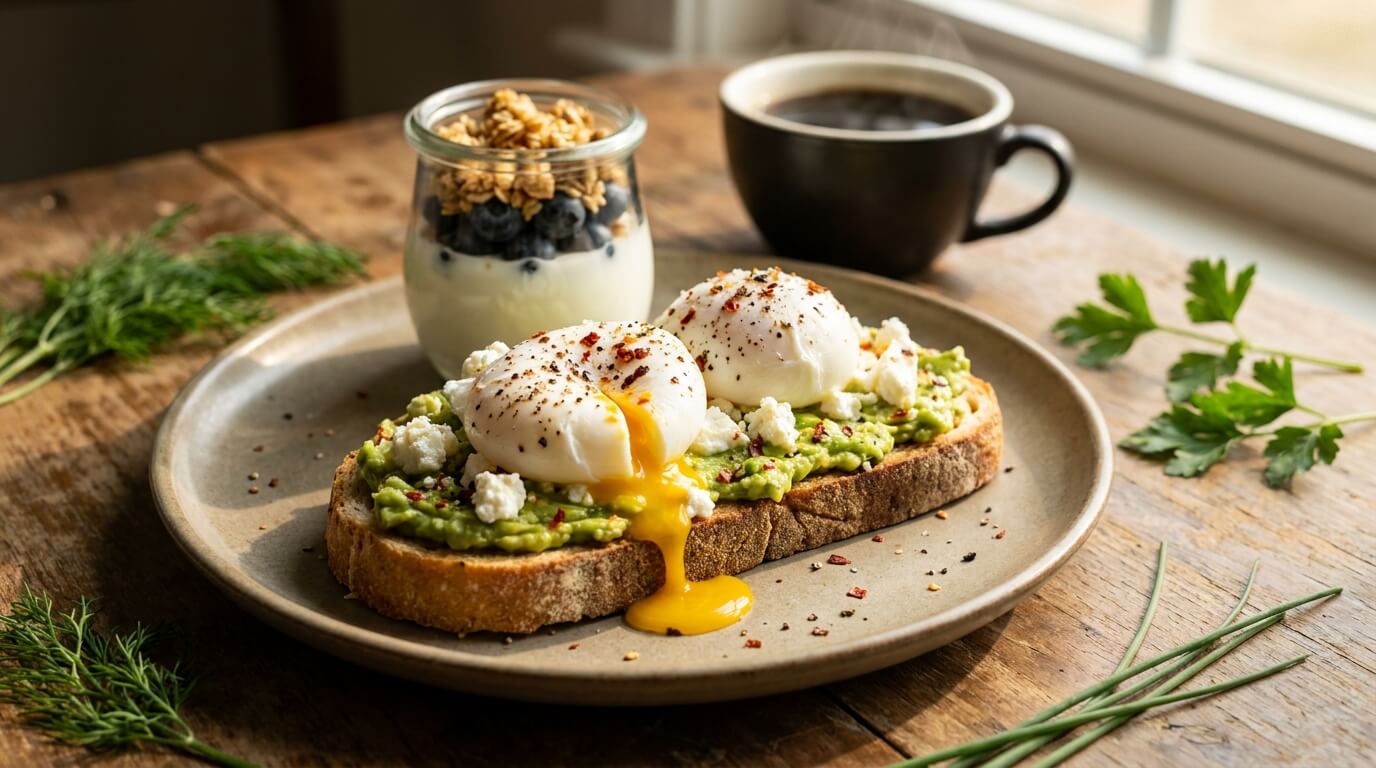
These breakfasts range from 15g to 30g of protein, and none demand a chef’s skill set. Mix cottage cheese, Greek yogurt, and eggs into the rotation, and hitting 25 grams before you leave the house stops feeling like homework.
1. Fluffy Protein Pancakes (~24g)
Stack them high without the sugar crash. Blended oats, egg, and protein powder or Greek yogurt give these pancakes real staying power. Our fluffy protein pancakes recipe lands near 24g per serving and freezes beautifully for busy mornings. Top with berries and a spoon of nut butter for extra protein and crunch.
2. Avocado Egg Toast With Feta (~20g)
Creamy, savory, and done in five minutes. Two eggs plus feta on hearty bread push this classic past 20g of protein. The ultimate avocado egg toast with pickled onions and feta proves “fast” and “filling” aren’t opposites. Use sourdough or a seeded loaf for more fiber alongside the protein.
3. Blueberry Cottage Cheese Ice Cream (~15g)
Dessert for breakfast? When it’s three ingredients of blended cottage cheese, blueberries, and honey, yes. Our blueberry cottage cheese ice cream spoons over granola for a cold, creamy morning bowl with roughly 15g of protein and zero cooking.
4. High-Protein Frozen Yogurt Clusters (~10g)
Meal-prep gold. Freeze Greek yogurt with berries and dark chocolate into bite-size clusters and keep a stash on hand. Our 10g-protein frozen yogurt clusters double as a grab-and-go breakfast when paired with a boiled egg for a fuller 16g start.
5. Savory Egg and Veggie Muffins (~13g for two)
Bake a tray on Sunday, eat all week. Whisk eggs with spinach, bell pepper, and a little cheese, then bake in a muffin tin until set. Two muffins deliver about 13g of protein. They reheat in 30 seconds and travel well in a lunchbox or gym bag.
6. Overnight Protein Oats (~25g)
Stir rolled oats, milk, chia, and a scoop of protein powder or Greek yogurt in a jar tonight; breakfast is ready by morning. This no-cook combo clears 25g of protein and travels straight from fridge to desk. Top with banana or berries just before eating for freshness.
7. Greek Yogurt Power Bowl (~22g)
The two-minute breakfast that never gets old. Start with a cup of plain Greek yogurt (about 18g protein), then layer berries, a sprinkle of nuts, and a drizzle of honey. Add a spoon of hemp seeds to nudge it past 22g. Endlessly swappable, and no dishes to wash.
8. Cottage Cheese Scramble (~30g)
The sleeper hit for protein maxxers. Stir a couple tablespoons of cottage cheese into eggs before scrambling—it melts in and turns them absurdly creamy. Two eggs plus a half cup of cottage cheese pushes this near 30g of protein. Finish with chives and cracked pepper.
9. Chocolate Peanut Butter Protein Smoothie (~30g)
Breakfast you can drink on the way out. Blend milk, a frozen banana, a tablespoon of peanut butter, cocoa, and a scoop of protein powder for a shake that tastes like dessert and hits 30g. It’s the easiest way to load protein when you’re not hungry first thing.
10. Upgraded Fluffy Pancakes (~16g)
Love a classic stack? You can protein-boost it. Our ultimate fluffy pancake guide gets a lift when you swap in Greek yogurt and an extra egg, taking a plain stack to around 16g. Serve with cottage cheese on the side to cross 25g without changing the flavor you love.
What Are the Best High Protein Snacks for Any Time of Day?
Newest addition to the frozen lineup: cottage cheese popsicles — 4 ingredients, about 10g of protein per pop.
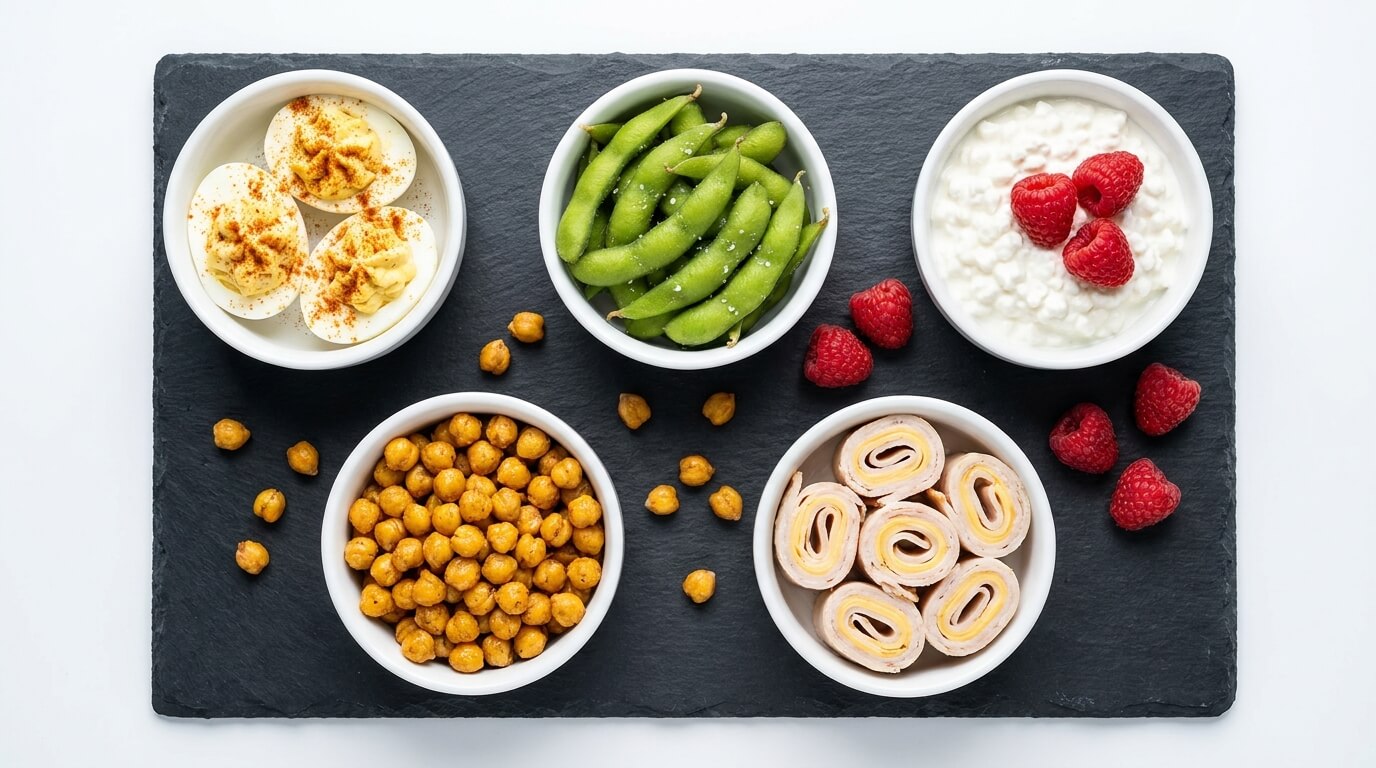
Smart snacks bridge the gap between meals and keep afternoon cravings honest. Each option below brings at least 7g of protein, and most need zero cooking. Keep two or three prepped in the fridge and the 3 p.m. vending-machine trip loses its grip.
1. Classic Deviled Eggs (~12g for two)
Portable, protein-dense, and weirdly satisfying. Two of our creamy deviled eggs deliver about 12g of protein for barely 140 calories. Make a batch on Sunday and they’ll disappear from the fridge by Wednesday.
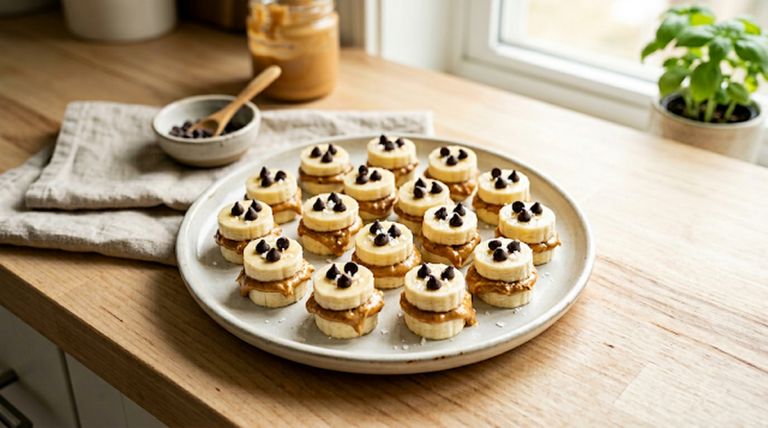
2. Peanut Butter Banana Bites (~7g)
The three-ingredient snack kids and adults fight over. Our peanut butter banana bites pair natural sweetness with about 7g of protein from the peanut butter. Freeze them for a firmer, ice-cream-like treat.
3. Tuna Avocado Salad (~22g)
The highest-protein snack on this list. Our 5-minute tuna avocado salad stacks about 22g of protein into a low-carb, budget-friendly bowl. Scoop it with cucumber rounds or whole-grain crackers for a snack that eats like a small meal.
4. Mediterranean Chickpea Salad (~15g)
Plant-based and packed. Chickpeas, feta, and a lemon dressing make our easy chickpea salad a fiber-and-protein double threat at roughly 15g per serving. It keeps for days and only tastes better on day two.
5. Crispy Air Fryer Zucchini Fries (~6g, pair to boost)
Craving something crunchy and salty? Our air fryer zucchini fries scratch the itch for far less guilt. On their own they’re light on protein, so dunk them in a Greek-yogurt ranch to push the snack past 12g.
6. Strawberry Cheesecake Dip (~10g)
Dessert energy, snack macros. Built on Greek yogurt and cream cheese, our 5-minute no-bake strawberry cheesecake dip delivers about 10g of protein per serving. Scoop it with apple slices or graham crackers for a sweet fix that actually holds you.
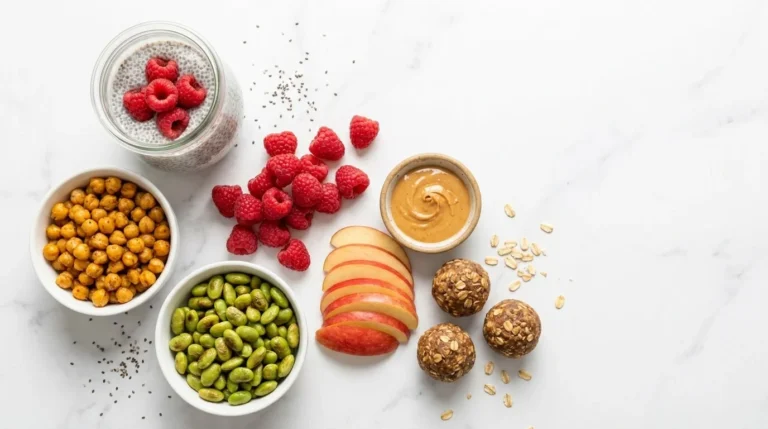
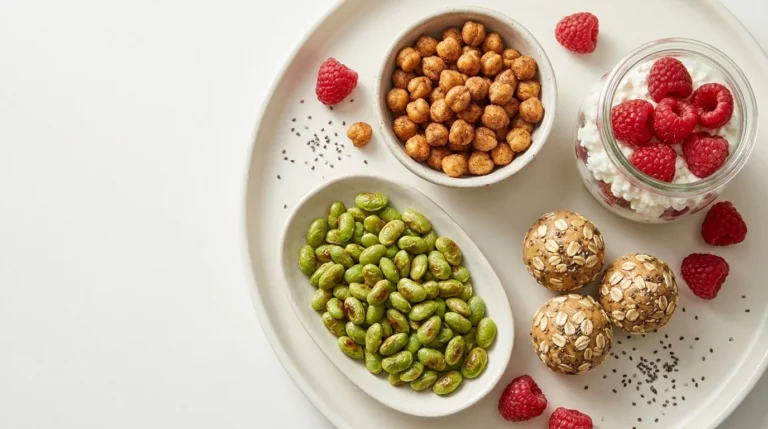
7. Roasted Chickpeas (~10g)
The crunchy, shelf-stable snack that beats chips. Toss canned chickpeas with olive oil and smoked paprika, then roast or air-fry until crisp. A half-cup brings about 10g of protein plus fiber. Batch a big jar and keep it on the counter for mindless-but-smart snacking.
8. Edamame With Sea Salt (~18g per cup)
One of the most protein-rich plant snacks going. A cup of shelled edamame carries around 18g of protein and cooks from frozen in three minutes. A sprinkle of flaky salt and chili flakes is all it needs. Keep a bag in the freezer for instant, no-planning protein.
9. Cottage Cheese and Berries (~14g)
The comeback king of high-protein snacks. A half-cup of cottage cheese topped with berries and a drizzle of honey lands near 14g of protein in under a minute. Prefer savory? Swap the fruit for cherry tomatoes, cracked pepper, and olive oil instead.
10. Turkey and Cheese Roll-Ups (~15g)
No bread, no cooking, no problem. Roll deli turkey around a stick of cheese for a two-ingredient snack with about 15g of protein and almost no carbs. Add a smear of hummus or a few pickle slices inside for extra flavor and crunch.
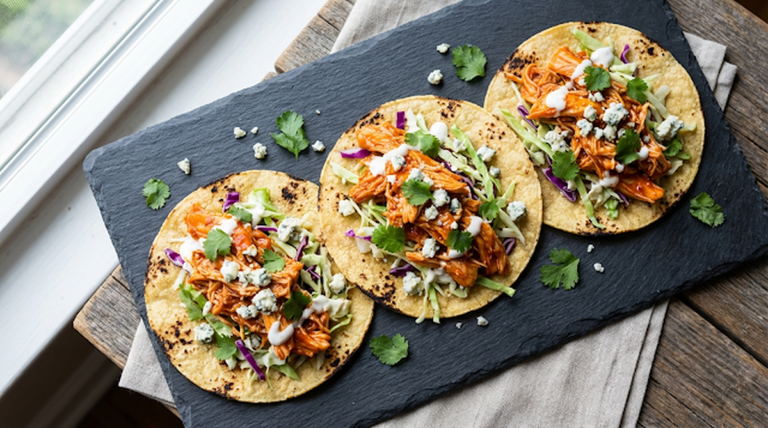
Craving a savory, higher-protein dinner to match these snacks? Our high-protein turkey meatloaf and healthy buffalo chicken tacos both meal-prep beautifully for the week ahead.
What Are the Best No-Bake and Make-Ahead Protein Treats?
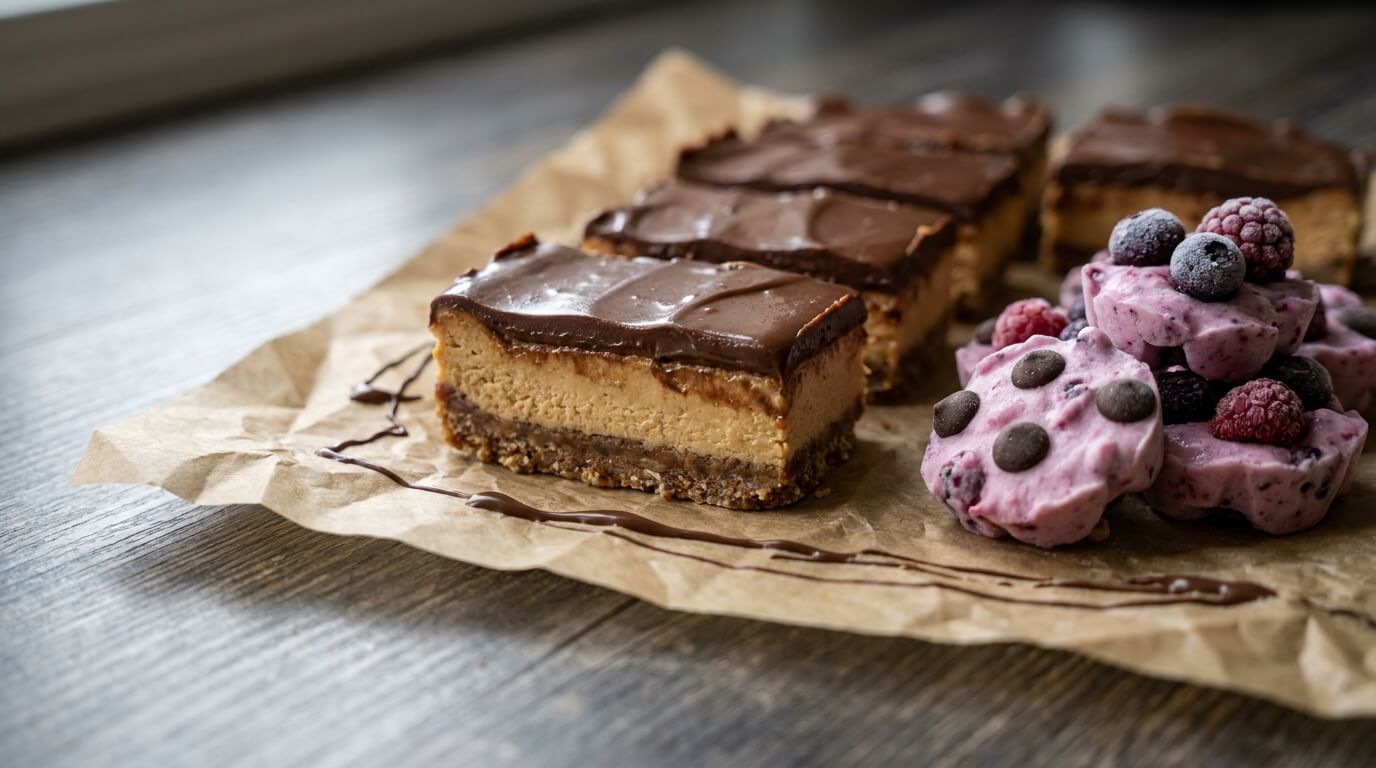
You don’t have to choose between a sweet tooth and your protein goal. No-bake treats built on Greek yogurt, cream cheese, and peanut butter can deliver 8–12g of protein per serving—and they thrive in the fridge, ready whenever the craving hits.
Our no-bake chocolate peanut butter cheesecake bars set overnight and slice into grab-and-go squares with a peanut-butter protein boost. For a nostalgic fix, our foolproof no-bake chocolate oatmeal cookies get a lift from a spoonful of protein powder or extra nut butter in the mix.
Our test-kitchen note: A tray of frozen yogurt clusters plus a batch of egg muffins on Sunday quietly covers five grab-and-go breakfasts. The clusters that survive past Wednesday? Rare. Build a simple prep habit and you’ll never face a protein-less morning again—see our monthly meal planning guide for a full system.
How Do You Build a 20g Protein Breakfast in 5 Minutes?
Hitting 20–30g of protein doesn’t require a recipe—just a formula. Pick one protein base, add a booster, and top it off. In practice, most of these combinations take less time than waiting for a coffee to brew, and they scale up or down with your appetite.
- Pick one protein base — Greek yogurt, cottage cheese, eggs, or a scoop of protein powder.
- Add a booster — hemp seeds, a second egg, a cup of milk, or a spoon of nut butter.
- Top it off — berries, banana, or a drizzle of honey for flavor and fiber.
| Protein base (pick one) | Booster (add one) | Approx. total |
|---|---|---|
| 1 cup Greek yogurt (18g) | + 2 tbsp hemp seeds (7g) | ~25g |
| ½ cup cottage cheese (14g) | + 2 eggs (12g) | ~26g |
| 1 scoop protein powder (25g) | + 1 cup milk (8g) | ~33g |
| 2 eggs (12g) | + 1 oz cheese (7g) | ~19g |
| ¾ cup rolled oats (9g) | + Greek yogurt (12g) | ~21g |
Keep the left column stocked and breakfast solves itself. Once the base-plus-booster habit clicks, you’ll hit your morning protein target without measuring a thing. Which combo will you prep first?
8 High-Protein Staples Worth Keeping Stocked
The single biggest predictor of a high-protein morning isn’t willpower—it’s what’s in your fridge. When quick protein is already on hand, hitting 25 grams takes seconds instead of a grocery run. Keep these eight affordable staples stocked and nearly every recipe in this roundup comes together on autopilot.
- Eggs — about 6g each, endlessly versatile, and cheap. The backbone of scrambles, muffins, and toast.
- Cottage cheese — roughly 14g per half cup; blends into scrambles, ice cream, and dips without a trace.
- Plain Greek yogurt — up to 18g per cup and the base for bowls, overnight oats, and no-bake treats.
- Canned tuna — around 20g per can; a two-minute route to a snack that eats like a meal.
- Protein powder — about 25g per scoop; the fastest way to rescue a low-protein smoothie or oats.
- Frozen edamame — 18g per cup and ready from frozen in three minutes.
- Canned chickpeas — roast them, salad them, or blend them for plant-based protein and fiber.
- Deli turkey and cheese — the no-cook roll-up that saves any mid-afternoon crash.
Notice the pattern? Most are no-cook, shelf-stable or fridge-ready, and cost less per gram of protein than any bar or shake at the store. Build your grocery list around this short list and the recipes above stop feeling like projects.
3 Mistakes That Sabotage a High-Protein Breakfast
Even with good intentions, a few common slip-ups quietly drain the protein from your morning. Most people make at least one of them daily. Here’s what to watch for—and the easy fix for each.
Mistake 1: Leaning on “healthy” carbs alone
Oatmeal, fruit, and whole-grain toast are fine foods, but on their own they barely reach 6g of protein. The fix is simple: always pair a carb with a protein base. Stir Greek yogurt into oats, or add two eggs to that toast, and you double the staying power instantly.
Mistake 2: Trusting the label on protein snacks
Many “protein” bars and granolas deliver more sugar than protein. In a 2025 IFIC survey, most Americans underestimated how much protein they actually need (IFIC, 2025). Flip the package over: if a snack has less than 10g of protein and more grams of sugar, it’s a dessert wearing a gym outfit.
Mistake 3: Saving all your protein for dinner
This is the big one. Since distributing protein evenly beats a dinner-heavy pattern for muscle synthesis by about 25% (UTMB, 2014), a giant steak at night can’t undo a protein-less breakfast. Spread it out. Front-loading even 20 grams in the morning does more than piling it on after dark.
For a crunchy option beyond breakfast, our air fryer cottage cheese chips pack about 6g of protein per serving with a single ingredient.
Frequently Asked Questions
Which high protein snack has the most protein?
Among the snacks here, tuna avocado salad leads at about 22g of protein per serving, followed by edamame at roughly 18g per cup. Both are affordable, need little or no cooking, and eat closer to a small meal than a nibble (USDA FoodData Central, 2024).
Can I hit 30g of protein at breakfast without meat?
Easily. A cottage cheese scramble, a scoop-of-protein smoothie, or overnight oats with Greek yogurt each reach 25–30g without meat. That range clears the leucine threshold that maximally triggers muscle protein synthesis (Frontiers in Nutrition, 2024), so plant-forward and dairy eaters aren’t left behind.
Are high protein snacks good for weight loss?
They can help. Protein is the most filling macronutrient, boosting satiety hormones and curbing hunger between meals. That said, a 2025 review found high-protein breakfasts made people feel fuller without automatically reducing later intake (News-Medical, 2025)—so pair protein with sensible overall portions.
How much protein should I eat at breakfast?
Target 20–30 grams. Research shows spreading protein evenly across meals raised 24-hour muscle protein synthesis by 25% versus a dinner-heavy pattern (University of Texas Medical Branch, 2014). Since breakfast is where most people fall short, it’s the easiest win in your day.
What are the best make-ahead high protein breakfasts?
Overnight protein oats, egg-and-veggie muffins, and frozen yogurt clusters all prep in advance and hold for days. Each delivers 10–25g of protein and reheats or thaws in minutes, making them ideal for busy mornings when cooking isn’t an option.
Start Tomorrow Morning
Better mornings come down to one habit: give breakfast the protein it’s been missing. Pick two recipes from this list—one five-minute breakfast and one make-ahead snack—and prep them this week. Aim for 20–30g before noon, spread protein across your day, and let the satiety and focus benefits stack up.
- Fastest win: a Greek yogurt power bowl (~22g) in two minutes.
- Best meal-prep: egg muffins plus frozen yogurt clusters on Sunday.
- Sweet-tooth fix: no-bake cheesecake bars that hold in the fridge.
- Feeds a crowd: a hash brown casserole made without canned soup or sour cream, past 20g of protein per serving.
Hungry for more high-protein inspiration? Our high-protein frozen yogurt clusters are the perfect make-ahead recipe to add to your weekly rotation.
Sources
- USDA, Protein Intake of Adults — What We Eat in America, NHANES 2015–2016, retrieved 2026-07-08, https://www.ars.usda.gov/ARSUserFiles/80400530/pdf/DBrief/29_Protein_Intake_of_Adults_1516.pdf
- University of Texas Medical Branch, “A full serving of protein at each meal needed for maximum muscle health,” 2014, retrieved 2026-07-08, https://www.eurekalert.org/pub_releases/2014-05/uotm-afs051914.php
- Frontiers in Nutrition, “Impacts of protein quantity and distribution on body composition,” 2024, retrieved 2026-07-08, https://www.frontiersin.org/journals/nutrition/articles/10.3389/fnut.2024.1388986/full
- ScienceDaily, “Protein-rich breakfast boosts satiety and concentration,” February 2024, retrieved 2026-07-08, https://www.sciencedaily.com/releases/2024/02/240215113604.htm
- News-Medical, “High protein breakfasts help you feel fuller but do not change how much you eat later,” November 2025, retrieved 2026-07-08, https://www.news-medical.net/news/20251113/High-protein-breakfasts-help-you-feel-fuller-but-do-not-change-how-much-you-eat-later.aspx
- International Food Information Council, Food & Health Survey, 2025, retrieved 2026-07-08, https://ific.org/wp-content/uploads/2025/07/IFIC-Spotlight-Survey-Protein-Perceptions.pdf
Prepping lunches, not just snacks? Any of these can pack them into a high-protein adult lunchable.