15 High Fiber High Protein Snacks to Keep You Full
By Flavor Flip. Last updated July 12, 2026. Every gram count below is pulled from a published, cited recipe or nutrition source, not estimated.
Reviewed by the Flavor Flip test kitchen. Every protein and fiber figure was cross-checked against USDA FoodData Central and the cited sources on July 12, 2026.
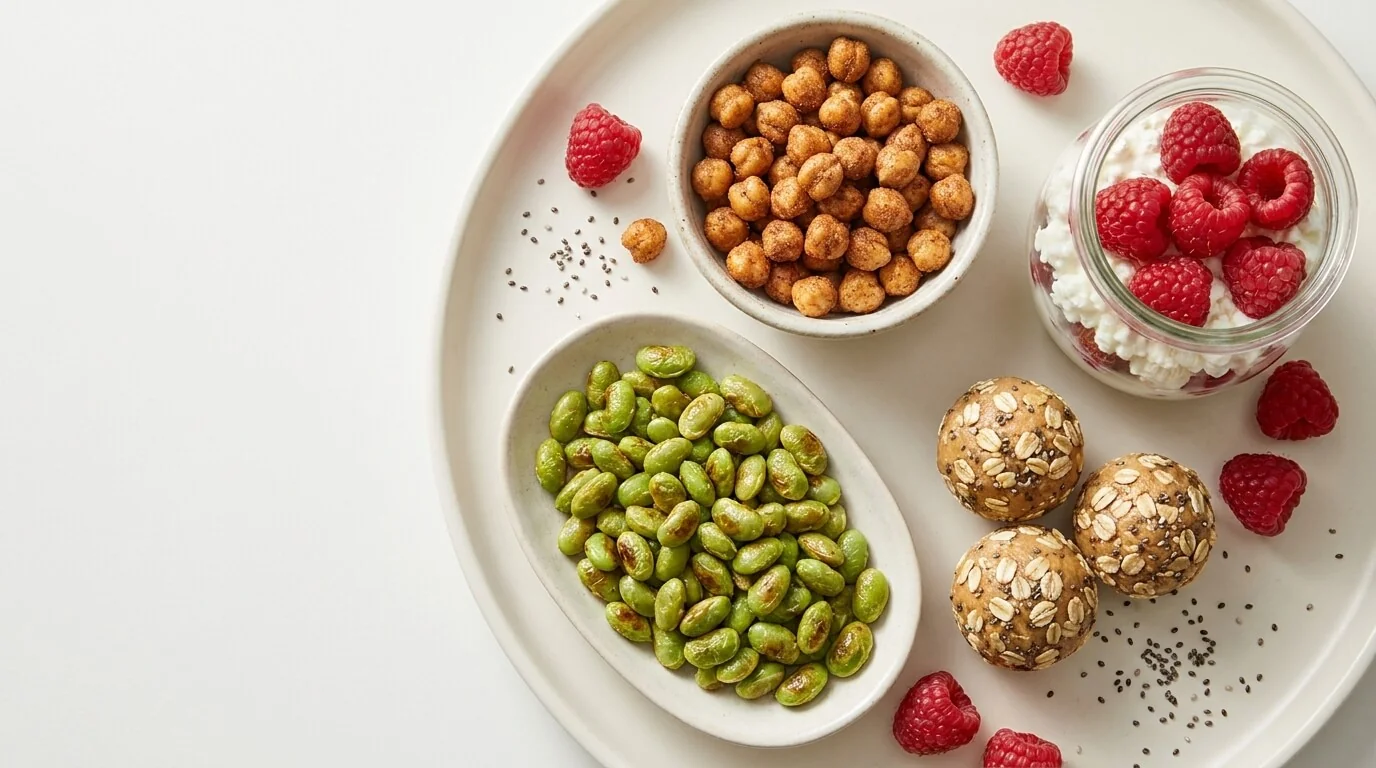
Protein-tracking went mainstream, but most people still eat only about 15 grams of fiber a day against a 25 to 38 gram target. That gap is exactly why high fiber high protein snacks earn a spot in your routine: you can hit your protein goal and still feel snacky an hour later, and the fix is snacks that bring both nutrients at once. The 15 picks below are mostly no-bake, each tagged with real macros, and built to actually keep you full. For the full picture beyond the protein pairing, see our complete guide to high fiber snacks.
Key Takeaways
- A snack that keeps you full needs roughly 7 to 10 g protein plus 3 g or more fiber.
- The two nutrients work together: in one study, 14 g protein plus 5 g fiber curbed appetite about as much as 24 g protein alone.
- Whole-food, homemade picks skip the ultra-processed protein bars entirely.
- Top no-cook winners: roasted chickpeas, roasted edamame, black bean energy balls, and a cottage cheese and chickpea snack jar.
Why do protein and fiber work better together?
Protein and fiber suppress appetite through different mechanisms, and stacking them beats either one alone. In a University of Minnesota study, a snack with 14 g of protein and 5 g of fiber produced appetite responses similar to 24 g of protein by itself. In other words, fiber lets you reach the same fullness with less protein.
The mechanism is straightforward. Fiber slows how fast your stomach empties, so food sticks around longer. Protein triggers the satiety hormones that tell your brain you have eaten enough. Put them in the same snack and the effects compound. Food scientists testing satiating formulas landed on roughly 30% protein and 10% fiber as an optimal blend for reducing appetite.
Fiber can even offset a lower protein count. In a fullness comparison, a bean meal with 17 g protein and 12 g fiber matched a beef meal with 26 g protein and 3 g fiber for satiety over three hours. That is the whole case for plant-forward, fiber-rich snacks: you do not need a mountain of protein if the fiber is there to help.
How much protein and fiber should a snack have?
Aim for at least 7 to 10 g of protein per snack, paired with fiber, and at least 3 g of fiber. Those are the floors that turn a nibble into something that holds you until your next meal.
The daily context makes the case. The 2026-2030 Dietary Guidelines nudged protein up to 1.2 to 1.6 g per kg of body weight, and fiber targets sit at 25 g for women and 38 g for men. Yet the average adult manages only about 15 g of fiber. Snacks are the easiest place to close that gap without overhauling your meals, which is part of why fiber has taken off: fiber-focused articles saw a 9,500% jump in pageviews in a single year, and 60% of Gen Z say they want more of it.
One caution before you go all in on the fibermaxxing trend: ramp up slowly. Add no more than about 5 g of new fiber per week, and drink more water, or you trade hunger for bloating.
What are the 15 best high fiber high protein snacks?
Here are 15 snacks that clear both the protein and fiber bars. Where a published recipe lists exact grams, those numbers are cited. The rest name their protein source and their fiber source so you can build them your way. Each pick also gets a practical tip, a storage note, and a swap so you can adapt it to what is in your kitchen.
Before the details, here is our FlavorFlip Fullness Score: the combined protein and fiber grams per published serving, ranked highest to lowest. It is a fast way to see which snacks deliver the most staying power per portion.
| Rank | Snack | Protein (g) | Fiber (g) | Fullness Score (P+F) | Best for |
|---|---|---|---|---|---|
| 1 | Protein acai bowl | 25 | 9 | 34 | Post-workout refuel |
| 2 | Roasted edamame (½ cup) | 22 | 9 | 31 | Savory, low effort |
| 3 | Breakfast cookies (2) | 20 | 10 | 30 | Sweet tooth, on the go |
| 4 | Roasted chickpeas | 11 | 10 | 21 | Crunch craving |
| 5 | Protein zucchini muffins | 16 | 5 | 21 | Meal prep, freezer |
| 6 | No-bake fiber bars | 6 | 6 | 12 | Grab and go |
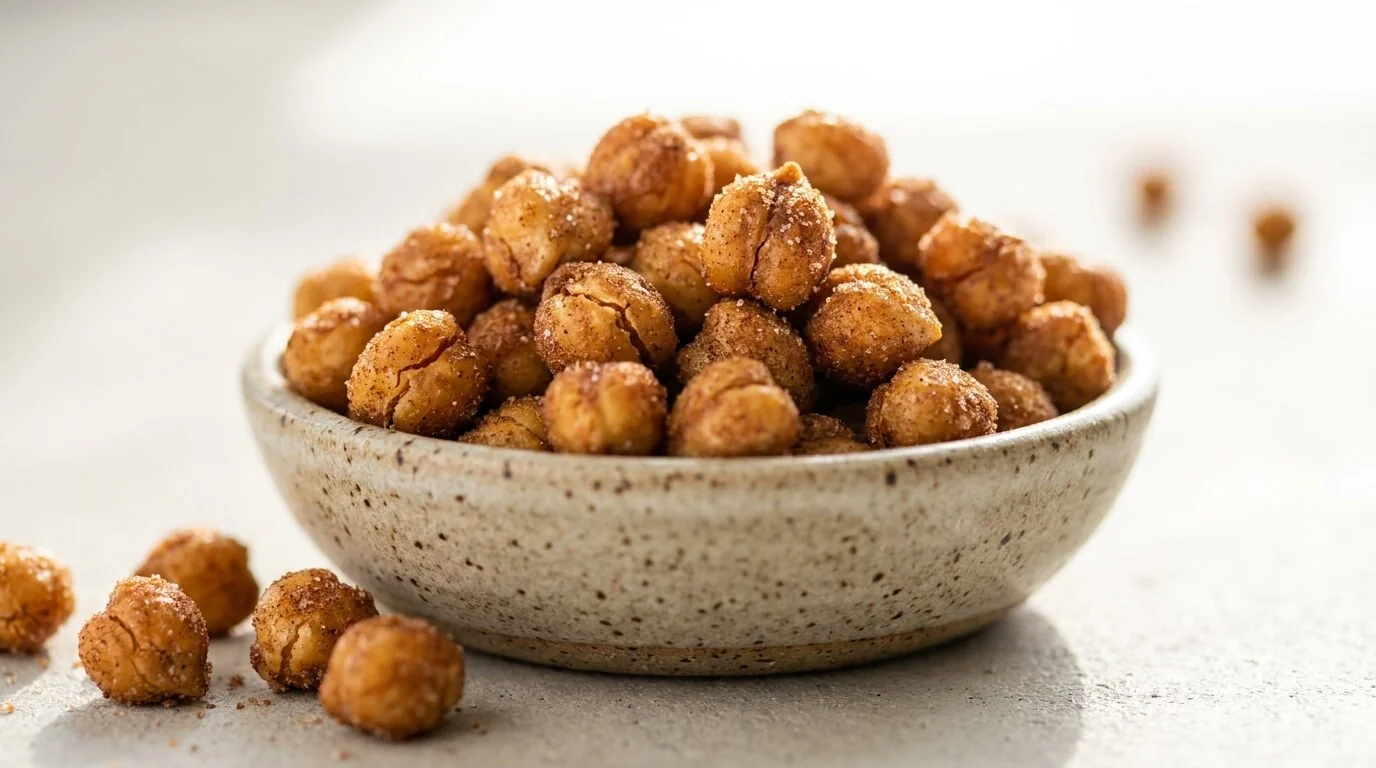
- Cinnamon roasted chickpeas. Crunchy, sweet, and portable, with about 11 g protein and 10 g fiber per serving. Tip: pat the chickpeas bone-dry and roast until they rattle in the pan for maximum crunch. Storage: keep them uncovered at room temperature, since a sealed container traps steam and turns them chewy, and eat within two days. Swap: trade the cinnamon for smoked paprika and cumin when you want savory instead of sweet. They anchor our wider set of high protein snack recipes.
- High-protein breakfast cookies. Two cookies deliver roughly 20 g protein and 10 g fiber, thanks to oats and added protein. Tip: pull them from the oven two minutes early for a chewy center that firms up as it cools. Storage: airtight at room temperature for four days, or freeze for up to three months. Swap: use sunflower seed butter to make them nut-free for school lunchboxes.
- Protein acai bowl. Blended with Greek yogurt, hemp seeds, and peanut butter powder for about 25 g protein and 9 g fiber, the highest Fullness Score on the list. Tip: blend the acai with frozen banana instead of ice so the base stays thick and spoonable. Storage: eat it fresh, because the base separates if it sits. Swap: peanut butter powder keeps it light, or use real nut butter for more staying power.
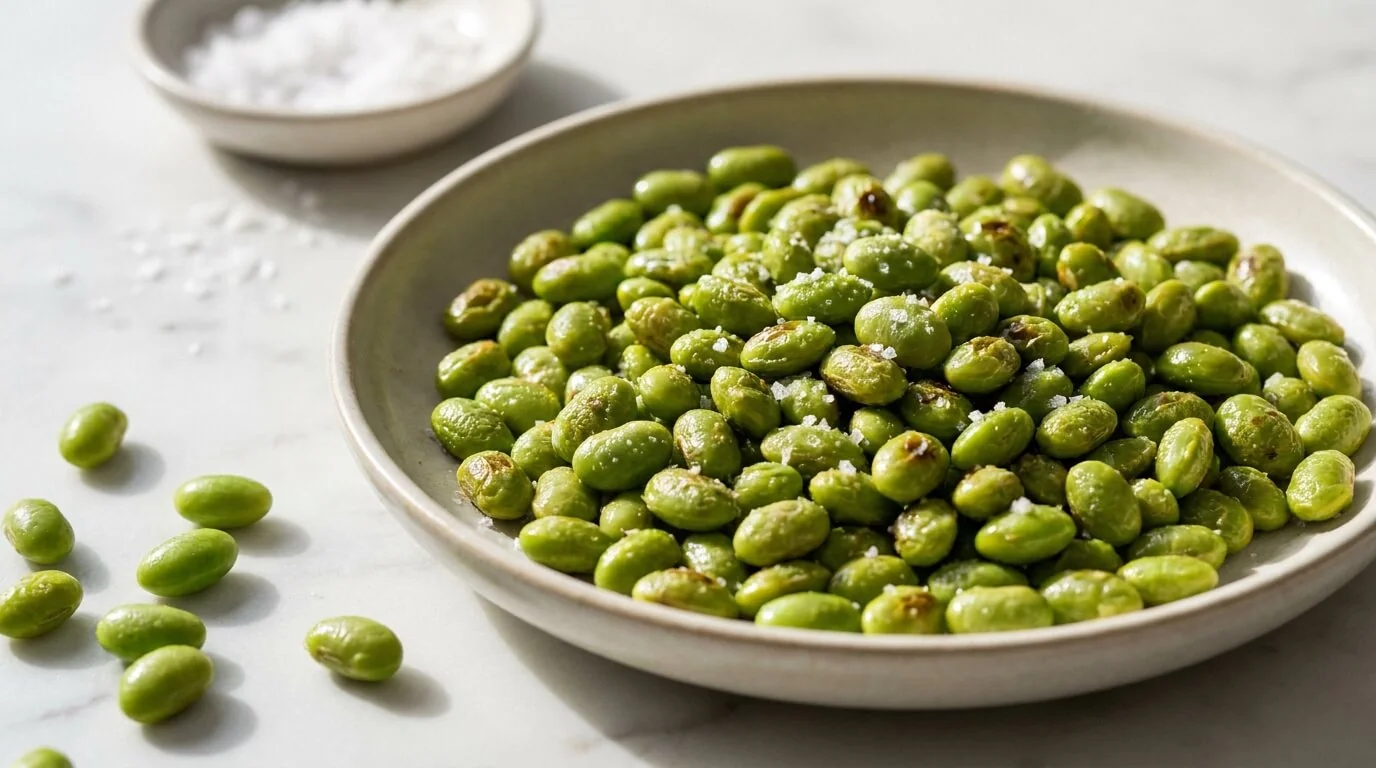
- Roasted edamame. A half cup carries around 22 g protein and 9 g fiber, and it roasts up crispy. Tip: roast straight from frozen with no thawing, then finish with flaky salt. Storage: room temperature in a jar for three days. Swap: toss in chili-lime or everything-bagel seasoning to change the flavor without touching the macros.
- No-bake high fiber protein bars. Mix, press, chill. One bar runs about 6 g protein and 6 g fiber from bran cereal, flax, and nut butter. Tip: press the mixture down hard before chilling so the bars slice cleanly instead of crumbling. Storage: refrigerate in a sealed container for a week, or freeze them individually wrapped. Swap: any bran cereal works, and maple syrup can stand in for honey to keep them vegan.
- Protein zucchini muffins. Chocolate-forward and freezer-friendly, at roughly 16 g protein and 5 g fiber each. Tip: squeeze the grated zucchini dry in a towel first or the crumb turns gummy. Storage: five days in the fridge, and they freeze well for grab-and-go mornings. Swap: use cocoa and raisins for a non-chocolate batch.
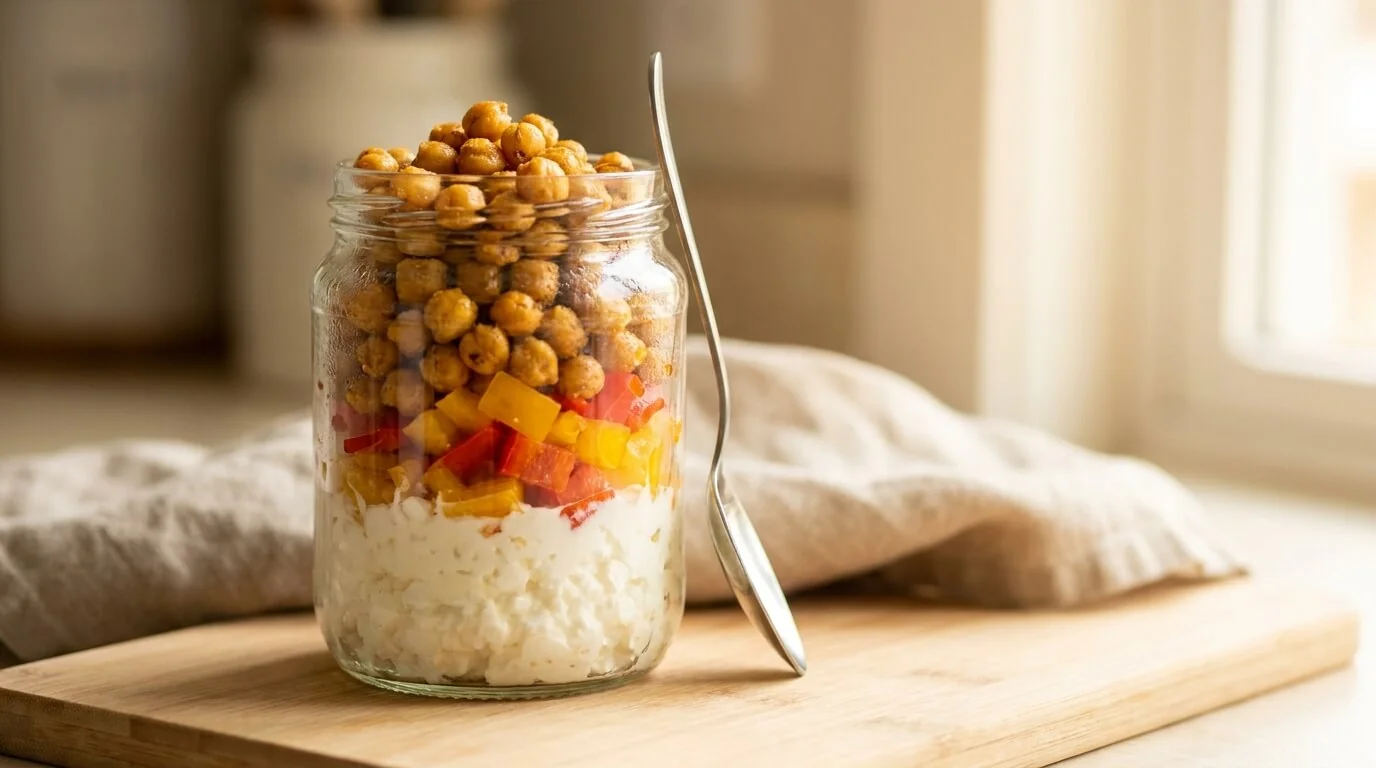
- Cottage cheese and chickpea snack jar. Cottage cheese brings about 12 g protein per half cup for only 90 calories, and crispy chickpeas layer in the fiber. Tip: keep the wet layer on the bottom and the crispy chickpeas on top so nothing goes soggy until you stir. Storage: assemble up to a day ahead, but add the chickpeas just before eating. Swap: whipped cottage cheese if the curds are not your thing. Craving a sweet cottage cheese treat instead? Try our blueberry cottage cheese ice cream.
- Greek yogurt with chia and raspberries. Greek yogurt handles protein while raspberries add about 8 g of fiber per cup and chia piles on more. Tip: stir in the chia and let it sit ten minutes so it thickens into a pudding texture. Storage: build overnight jars that keep for three days. Swap: frozen raspberries work and thaw into a natural sauce.
- Black bean trail-mix energy balls. No-bake, with black beans doubling as protein, fiber, and the binder, plus dates and apricots for sweetness. Black beans anchor the macros at about 7.5 g protein and 7.5 g fiber per half cup. Tip: rinse and dry the beans well, then mash them smooth before mixing. Storage: a week in the fridge or three months in the freezer. Swap: chickpeas or white beans behave the same way. They sit right alongside our no-bake protein bars.
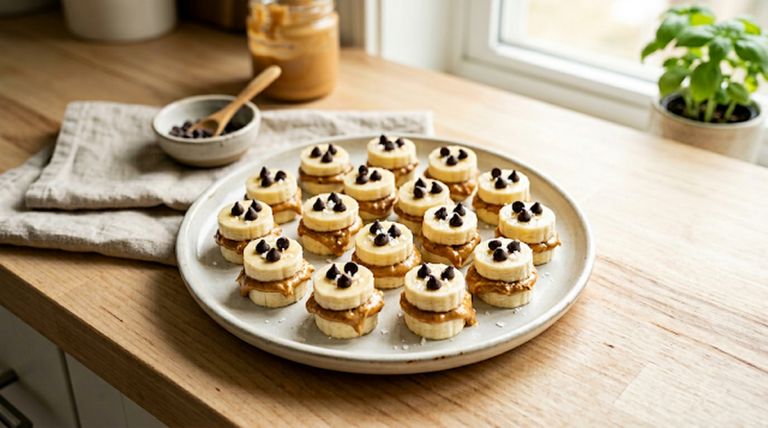
- Peanut butter flax energy bites. Peanut butter for protein, ground flax for fiber and healthy fats, rolled and chilled in under 30 minutes. Two tablespoons of peanut butter carry about 7 g protein, and two tablespoons of ground flax add roughly 4 g fiber. Tip: chill the dough for 20 minutes before rolling so it is not sticky. Storage: airtight in the fridge for two weeks. Swap: almond or sunflower butter for a new flavor, or chia in place of flax.
- Hummus with whole-grain crackers. A classic combo that pulls fiber from both the chickpeas and the whole grains. A quarter cup of hummus brings roughly 4 g protein and 4 g fiber before the crackers add more. Tip: portion the hummus into small cups so you do not graze through the whole tub. Storage: hummus keeps five days refrigerated. Swap: sliced veg instead of crackers cuts calories and adds even more fiber.
- Lentil snack cups. Batch-cooked seasoned lentils are one of the most fiber-dense plant proteins you can spoon into a container. A half cup of cooked lentils delivers about 9 g protein and 8 g fiber. Tip: cook a big pot on Sunday and season the cups differently through the week. Storage: five days in the fridge. Swap: canned lentils, rinsed, skip the cooking entirely.
- Cottage cheese on whole-grain toast. Complex-carb fiber under a high-protein layer, ready in two minutes. A half cup of cottage cheese brings around 12 g protein, and a slice of whole-wheat toast adds about 2 g fiber. Tip: broil it for a minute for a warm, melty version. Storage: best made fresh to keep the toast crisp. Swap: sprouted-grain bread bumps the fiber even higher.
- Quinoa almond-butter bites. Puffed quinoa and almond butter give crunch, plant protein, and fiber with zero baking. Two tablespoons of almond butter give about 7 g protein and 3 g fiber, and the quinoa adds more fiber on top. Tip: lightly toast the puffed quinoa first for extra crunch. Storage: two weeks in the fridge. Swap: any nut or seed butter binds them.
- Edamame and seed trail mix. Dry-roasted edamame plus pumpkin and sunflower seeds for a savory, shelf-stable protein and fiber grab bag. A half cup of edamame alone brings about 9 g protein and 4 g fiber, and the pumpkin and sunflower seeds add more of both. Tip: mix roughly two parts edamame to one part seeds so protein leads the ratio. Storage: airtight at room temperature for two weeks. Swap: add a few dark chocolate chips for a sweet-and-salty version.
Which high fiber high protein snacks are best for weight loss?
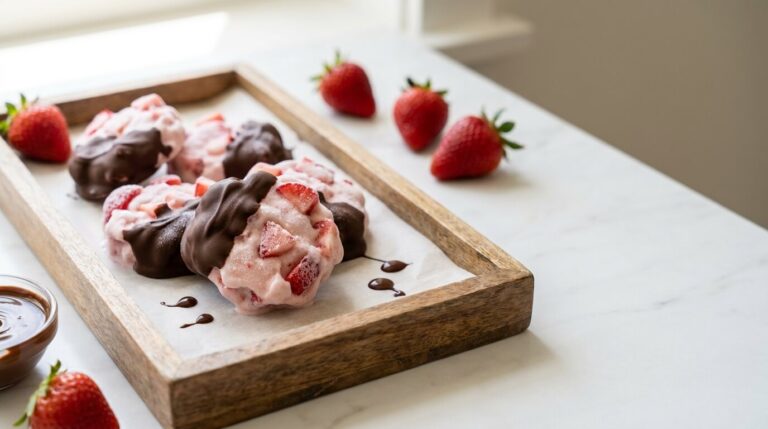
For weight loss, the winners are the ones with the most protein and fiber per calorie, because fiber lowers a food’s energy density while keeping you full. Aim for that 3 g fiber minimum per snack and let volume do the work. For another meal-prep-friendly option, try our high-protein frozen yogurt clusters. The chart below stacks protein against fiber for six of the picks above so you can see which ones punch hardest.
If you are counting calories, the standouts are roasted chickpeas and roasted edamame: both are high in fiber, respectable in protein, and easy to portion. The cottage cheese jar earns its place too, since half a cup delivers 12 g of protein for just 90 calories before you add the fiber layer.
Easy no-bake high fiber high protein snacks
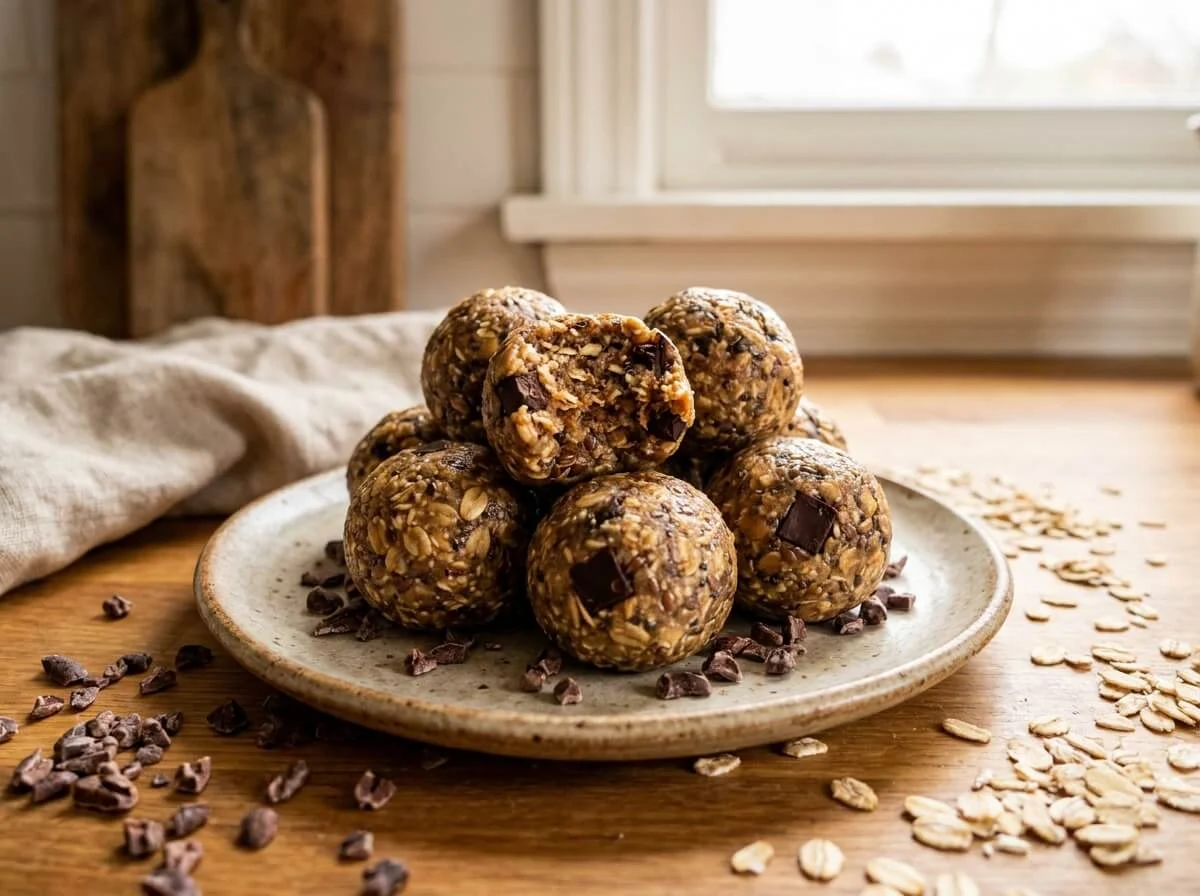
No-bake is where this list shines, and it is FlavorFlip’s home turf. Energy balls, bars, jars, and trail mixes need nothing more than a bowl, a spoon, and some fridge time. Black bean energy balls and peanut butter flax bites both come together in one bowl and chill in about 30 minutes, which makes them ideal for a Sunday batch you portion across the week.
There is a bigger reason to go homemade. As the debate over ultra-processed protein products grows, whole-food snacks you assemble yourself sidestep the emulsifiers and isolates that push many packaged protein bars into the ultra-processed category. You get the protein, you get the fiber, and you skip the ingredient list you cannot pronounce. Store your batch in single-serve containers so the healthy option is also the easy one.
Frequently asked questions
What snacks are high in both protein and fiber?
Roasted chickpeas are the standout, with about 11 g protein and 10 g fiber per serving. Roasted edamame, black bean energy balls, lentil cups, and a cottage cheese and chickpea jar all clear both bars too.
How much protein and fiber should a snack have?
Target at least 7 to 10 g of protein and 3 g or more of fiber per snack. That combination is enough to blunt hunger and hold you to your next meal.
Do protein and fiber together really keep you fuller?
Yes. They act on different satiety pathways, so together they compound. One study found 14 g protein plus 5 g fiber curbed appetite about as much as 24 g of protein alone.
Can I increase fiber quickly without bloating?
Go gradually. The standard guidance is to add no more than about 5 g of new fiber per week while drinking more water, which gives your gut time to adjust.
The bottom line
The best high fiber high protein snacks are not complicated. Clear 7 to 10 g of protein and at least 3 g of fiber, lean on whole foods like chickpeas, edamame, beans, and cottage cheese, and let the two nutrients do their fullness work together. Start with roasted chickpeas or a no-bake energy ball this week, then browse our 25 high-protein snack and breakfast ideas for more. Found a favorite? Pin it and save this list for your next batch day.
About the author: Flavor Flip develops and tests high-protein, no-bake snack recipes for a young, macro-minded audience at FlavorFlip Recipes. Every snack on this list was cross-checked against published nutrition data.
Want the same protein-and-fiber math applied to a whole meal? See these high protein lunch box ideas.