
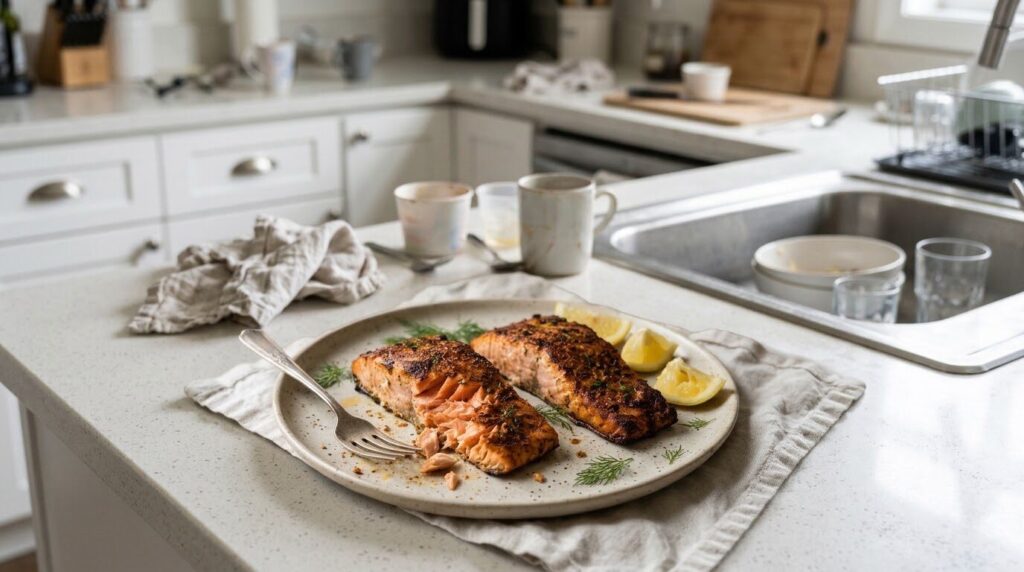

Overcooked salmon is dry, chalky and stuck to the pan, the kind of fish that makes people say they don’t like fish.
The air fryer cooks salmon evenly in about 15 minutes: flaky inside, slightly crisp outside, and with much less fishy smell in the house than pan-frying. With 0.5 g of carbs per fillet, it tops our list of high protein low carb dinner ideas.
Air fryer salmon takes just 15 minutes, needs 6 simple ingredients, and comes out juicy. Cook at 400°F for 8–10 minutes depending on thickness, no flipping, no babysitting, no dry fish.
So if you’ve been avoiding salmon because it always comes out wrong, this is the fix.
I make this salmon on nights when I have 15 minutes and no patience for a smoking skillet. It's for anyone who has been burned by dry, chalky fish and decided they don't like salmon, and for people who want a high-protein dinner without standing over the stove. It works because 400°F heat sets a crust on the outside fast, and matching the time to the thickness of the fillet keeps the center juicy.
Start With the Right Fillet
Salmon fillet thickness: This is the variable that controls everything. Thin fillets (under 1 inch) cook in 7–8 minutes. Thick fillets (1½ inches) need 10–11 minutes. I always buy center-cut fillets, they’re the most even in thickness and cook the most predictably. Tail pieces taper and overcook at the thin end before the thick part is done.
Olive oil: A light coat does two things, it helps the seasoning stick and promotes that slightly crispy exterior. Too much and the salmon steams instead of crisps. Too little and the seasoning slides right off. One teaspoon per fillet is the sweet spot.
Brown sugar: A small pinch in the seasoning blend creates a caramelized, slightly sticky crust that balances the savory spices. It’s not sweet enough to taste like dessert, it just rounds everything out in a way that plain salt and pepper can’t.
Garlic powder over fresh garlic: Fresh garlic burns fast at 400°F and turns bitter before the salmon is even close to done. Garlic powder caramelizes evenly instead. I learned this the exact same way I learned it with asparagus, the hard way.
Secret weapon, smoked paprika: It adds color, a subtle smokiness, and makes the salmon look like it came off a grill. Half a teaspoon is enough.
Tools and Ingredient Notes
- Skin-on or skinless: Skin-on is easier. The skin protects the bottom from the hot basket and lets go of the flesh after cooking, so you can slide the fillet right off it. Skinless works too, just spray the basket well.
- Fish spatula: A thin, flexible fish spatula slides under the fillet without breaking it. A thick plastic turner tends to tear cooked salmon in half.
- Liners: If you use a liner, pick a perforated parchment round. A solid sheet blocks the airflow under the fish and the bottom steams instead of setting.
- Wild vs farmed: Wild salmon is leaner and usually thinner, so it cooks 1 to 2 minutes faster than farmed. Start checking earlier.
- Previously frozen fillets: Thawed salmon releases more water. Pat it dry, wait 5 minutes, then pat it again before oiling.
- Pin bones: Run your fingers along the center of the fillet before seasoning. If you feel a small bone, pull it out with clean tweezers.
- Basket size: Two 6-ounce fillets fit easily in a 5 to 6 quart basket with space around them. Four fillets usually need two rounds.
Kitchen note: Thickness drives the timing. Check the thickest part early, don't overcook it, and let it rest briefly before serving.
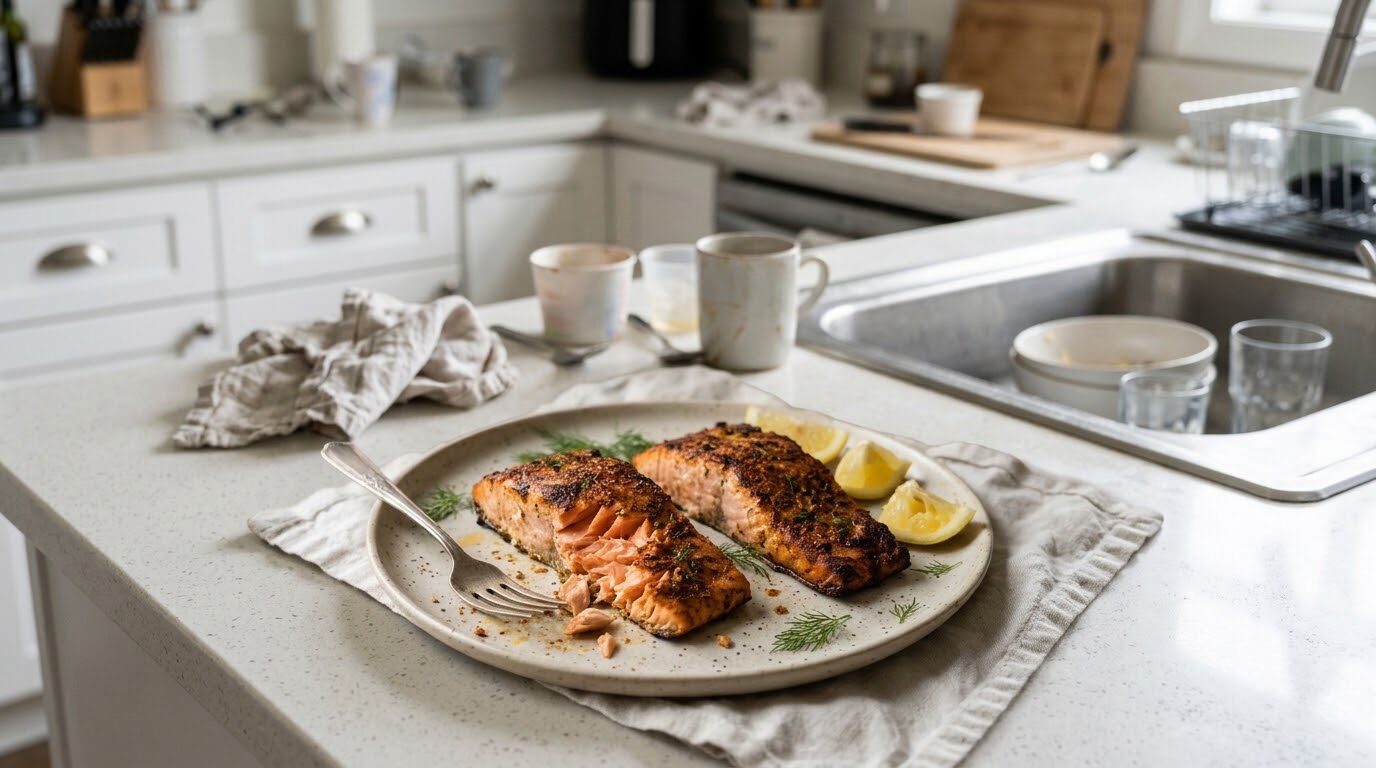
Air Fryer Salmon
Ingredients
Method
- Preheat air fryer to 400°F for 3 minutes. A preheated basket means immediate searing contact, don’t skip this.
- Pat salmon fillets completely dry with paper towels. Dry surface = crispy exterior. Wet surface = steam. You want crispy.
- Brush each fillet with 1 tsp olive oil on all sides.
- Mix smoked paprika, garlic powder, onion powder, brown sugar, salt, and pepper in a small bowl. Rub evenly over the top and sides of each fillet.
- Place salmon skin-side down in the air fryer basket. Leave space between fillets, hot air needs to circulate.
- Air fry at 400°F for 8–10 minutes depending on thickness. No flipping needed. No peeking every 2 minutes. Let it cook.
- Check doneness with a thermometer or by pressing gently, it should flake easily but still look slightly glossy in the center.
- Serve immediately with a squeeze of fresh lemon. The brightness cuts right through the richness of the fish.
Notes
- Doneness: The USDA safe temperature for fish is 145°F (63°C). Many cooks pull salmon at 125 to 130°F for a softer center; the choice is yours, but use a thermometer in the thickest part.
- Thin or tail pieces: Fillets under 1 inch thick need only 6 to 7 minutes. Check early.
- Frozen salmon: Thaw overnight in the fridge, then pat very dry. Cooking from frozen works at 390°F for 12 to 14 minutes, but the rub won’t stick as well.
- Skinless fillets: Line the basket with a perforated parchment round or oil it lightly so the fish doesn’t stick.
- Storage: Refrigerate leftovers up to 3 days. Serve cold over salad or flake into rice; reheating dries salmon out quickly.
What to Look For at Each Stage
- After patting dry: The surface of the fish should look matte, not wet and shiny. Press a paper towel on top: it should come away almost dry.
- After seasoning: The rub turns the orange flesh a brick red color with no bare patches on the top or sides.
- Around 5 minutes: The edges turn opaque and pale pink while the center of the top still looks darker and glossy.
- White beads on the surface: Small white beads squeezing out of the sides are the salmon's natural protein. A few dots mean you're close. A lot of white means it's getting overdone, so check it right away.
- Done: The crust is a darker, rusty red with slightly crisp edges. Press the thickest part with a fork: the flakes should separate easily, and the very center can still look a little glossy. Check it with a thermometer.
- Smell: Your kitchen should smell like smoked paprika and garlic, not strongly fishy. A strong fishy smell while cooking usually means the fish wasn't very fresh.
Air fryer salmon cooks at 400°F in about 8–11 minutes depending on thickness, no flipping, no babysitting, and no fishy smell, for flaky, juicy fillets every time.
| Fillet thickness | Cook time at 400°F | Result |
|---|---|---|
| Under 1 inch (thin) | 7–8 minutes | Cooks fast: watch closely |
| About 1½ inches (thick) | 10–11 minutes | Juicy, flaky center |
| Tail pieces | Less (they taper) | Thin end overcooks first |
Small Steps That Keep It Juicy
- Don’t skip the dry pat. I know it feels unnecessary. It isn’t. Moisture on the surface of the fish creates steam that prevents the crust from forming. Thirty seconds with a paper towel makes a real difference.
- In my kitchen, spraying the air fryer basket lightly with oil before placing the salmon prevents sticking far better than any non-stick coating. Even “non-stick” baskets grab salmon skin if there’s no oil barrier. Quick spray, no stuck fish.
- Use a thermometer. The USDA safe minimum internal temperature for fish is 145°F. Many cooks take salmon off at 125°F to 130°F for a softer, slightly translucent center, but that is below the USDA guideline, so skip it if you are pregnant or cooking for young children, older adults or anyone with a weakened immune system.
- Leftovers flake beautifully cold over salads or into scrambled eggs the next morning. Don’t throw away cooked salmon, it’s one of the most versatile meal prep proteins you can have in the fridge.
Why the Air Fryer Beats the Pan for Salmon
Why air fryer salmon is juicier than pan-cooked: Salmon contains a protein called albumin, that white stuff that oozes out when salmon is cooked too fast or too hot. High direct heat from a pan drives albumin out rapidly, leaving the fish dry and tight. The circulating hot air of an air fryer heats more gently and evenly, which means less albumin loss and a juicier result. It’s not magic. It’s physics.
Air fryer basket tip: Line your basket with perforated parchment paper when cooking salmon, it prevents sticking completely and makes cleanup take about 10 seconds. Just make sure the parchment doesn’t block the airflow holes or you’ll lose the crisping effect. Perforated only.
Dry Salmon? Here Is What Happened
“It came out dry and chalky” → Overcooked, or cooked straight from the fridge → Check the thickest part with a thermometer and stop at 145°F, the USDA safe minimum, and bring the fillets to room temperature for 10 minutes before cooking. Cold fish in a hot fryer = uneven cooking every time.
“The seasoning fell off during cooking” → Surface was wet when seasoned → Pat completely dry before adding oil and seasoning. Oil on dry fish helps everything adhere. Oil on wet fish slides right off.
“It stuck to the basket and the skin ripped off” → No oil on the basket surface → Spray the basket lightly with oil before placing the fillets. Even non-stick coatings benefit from a thin oil layer when cooking fish.
Seasoning Swaps
- Dairy-free and gluten-free: This recipe is naturally both, just double-check your smoked paprika blend for hidden additives
- Asian-inspired: Swap the spice rub for a mix of soy sauce, sesame oil, ginger, and a drizzle of honey, same cook time, completely different flavor profile. One of my personal favorites.
- Lemon herb version: Skip the paprika and use lemon zest, dried dill, and a pinch of red pepper flakes instead, bright, fresh, and pairs especially well with the asparagus side
- Creative twist: Spread a thin layer of Dijon mustard on top before the seasoning rub, it creates an incredible crust and adds a tangy depth that works with basically any seasoning combination you try
Next-Day Salmon
- Fridge: Airtight container for up to 3 days. Cold flaked salmon over a salad the next day is one of the better lunch moves you can make.
- Reheat: Air fryer at 350°F for 3 minutes, it warms through without drying out. The microwave works but kills the texture fast. If you must microwave, do it in 30-second intervals on medium power.
- Freezer: Cooked salmon freezes okay for up to 1 month, but honestly the texture suffers. I recommend you cook fresh when possible, 15 minutes is fast enough that freezing isn’t really worth it.
- Meal prep move: Cook 4 fillets at once, flake and refrigerate, and use throughout the week in grain bowls, wraps, salads, or scrambled eggs. One cook session, five different meals.
When you’re building the full plate, our 5-Minute Air Fryer Lemon Herb Asparagus is the side dish, and our No-Bake Cookies are dessert. Fifteen-minute dinner, whole week handled.
For more mains and sides, see all of our air fryer recipes.
For another fast, high-protein dinner, try our air fryer pork chops, with about 36g of protein per chop. This salmon is also on our list of high protein dinners, at 8.8g of protein per 100 calories.
Frequently Asked Questions
Can I make air fryer salmon without preheating the air fryer?
Technically yes, but I don't recommend it. Preheating gives you immediate high heat contact the moment the salmon goes in, that's what creates the crust. Starting cold means the fish starts steaming before it starts crisping. Takes 3 minutes. Worth it every time.
Why did my air fryer salmon turn out dry?
Overcooked, most likely. Salmon goes from perfect to dry in about 90 seconds past the ideal temp. Use a thermometer and take it out as soon as the thickest part reaches 145°F, the USDA safe minimum for fish. Also make sure you brought it to room temperature before cooking and patted it dry before seasoning.
Can I cook frozen salmon in the air fryer without thawing?
Yes, cook at 390°F for 14–16 minutes from frozen. Pat as dry as possible after the first 5 minutes (when it starts to thaw) and season then. It won't be quite as crispy as fresh, but it's a legitimate weeknight shortcut that works.
What temperature should air fryer salmon be when it's done?
The USDA safe minimum internal temperature for fish is 145°F: the flesh turns opaque and flakes easily with a fork. Some cooks prefer salmon at 125°F to 130°F for a softer center, but that is below the USDA guideline and not recommended for pregnant people, young children, older adults or anyone with a weakened immune system.
Can I marinate salmon before air frying?
Yes, but keep it short, 15–30 minutes maximum. Longer marinades, especially acidic ones with lemon or vinegar, start to break down the fish protein and give you a mushy texture before it even hits the fryer. Quick marinate, pat dry, cook.
What is the white stuff that comes out of salmon when it cooks?
It's albumin, a protein in the fish that gets pushed out as the muscle tightens with heat. It's safe to eat. A little is normal, but a lot of it means the salmon cooked too long or too hot. Pulling it on time and starting with a dry surface keeps it to a minimum.
Can I cook fillets of different thickness in the same batch?
Yes, but they won't finish together. Put the thickest fillet in first and add the thinner ones 2 to 3 minutes later, or pull the thin ones out early and let the thick one keep going. Checking each with a thermometer is easiest.
How do I take the skin off after cooking?
Slide a fish spatula between the skin and the flesh while it's still warm. Cooked salmon lets go of its skin easily, so it should lift right off. If the skin sticks to the basket, leave it there and lift the fillet off the top.
