Easy Cottage Cheese Scrambled Eggs (Fluffy, 19g Protein)
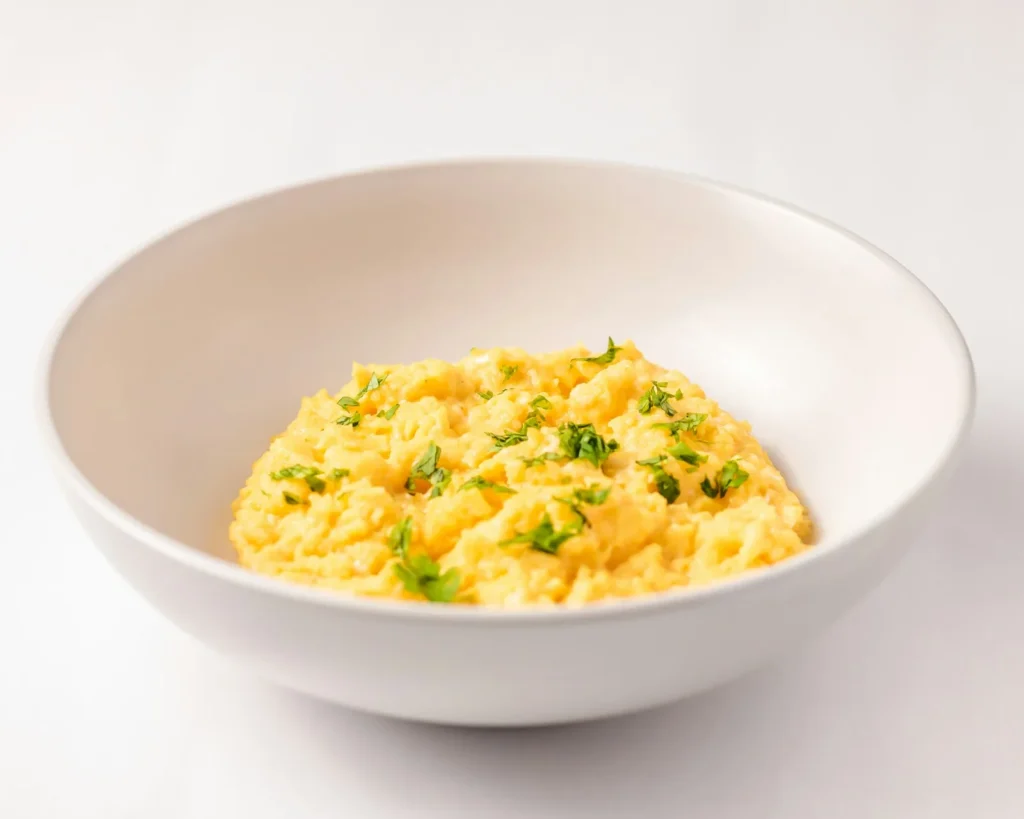
Plain scrambled eggs are fine. Cottage cheese scrambled eggs are better. I blend half a cup of full-fat cottage cheese into four eggs, cook them low and slow, and they come out fluffier than my usual plain scramble. Because it’s blended, there are no curds or cheesy lumps. You just get tender eggs with extra protein.
This post gives you the exact recipe, how much cottage cheese to use (with the protein math for each amount), why blending matters, and how to stop the eggs from turning watery. Each serving has about 19g of protein and 215 calories, and it takes less than 10 minutes.
What Do You Need for Cottage Cheese Scrambled Eggs?
Four ingredients, plus salt and pepper. Here’s what each one does.
- Large eggs. Four eggs make two servings. One large egg weighs about 50g and has roughly 6.3g of protein, according to USDA FoodData Central (FDC 171287).
- Full-fat (4%) cottage cheese. It blends into a smooth, rich base and holds its moisture better than low-fat versions. Half a cup adds about 12.5g of protein (FDC 172179).
- Butter. Just a teaspoon for flavor and a non-stick finish. Olive oil works too.
- Salt, pepper and chives. Go easy on the salt. Cottage cheese already brings about 356mg of sodium per half cup. If you watch sodium, read our guide to low-sodium cottage cheese.
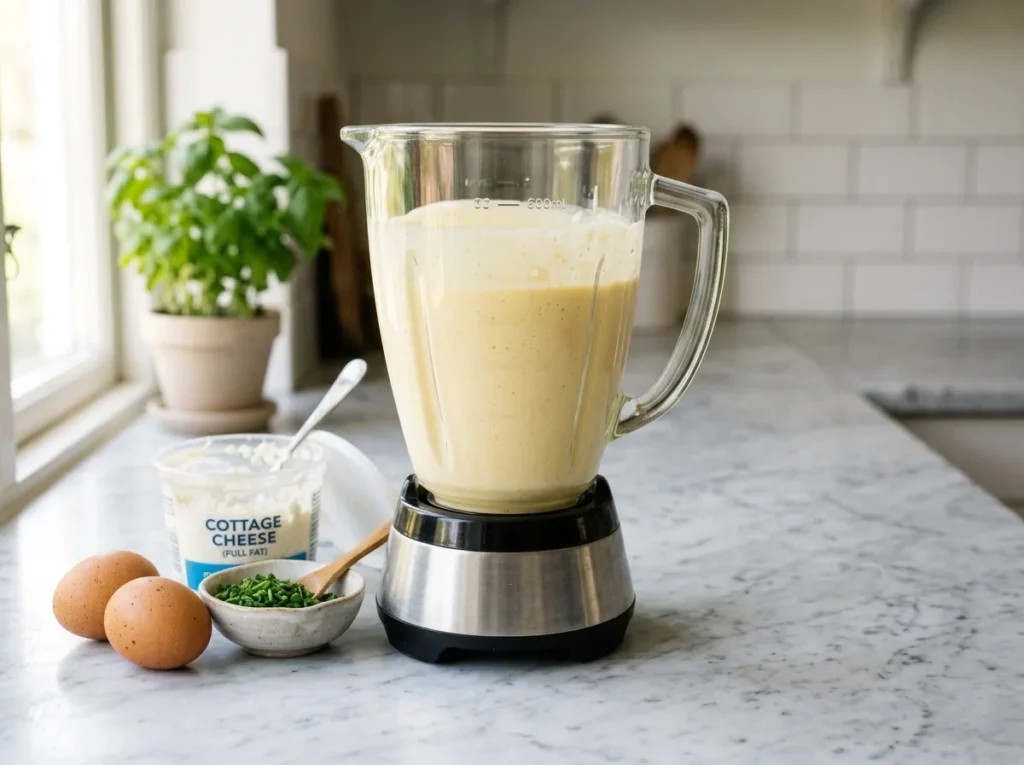
You’ll also need a blender or a stick blender. Why bother? Blending is what turns this from “eggs with cheese bits” into one smooth, custardy scramble.
How Do You Make Cottage Cheese Scrambled Eggs?
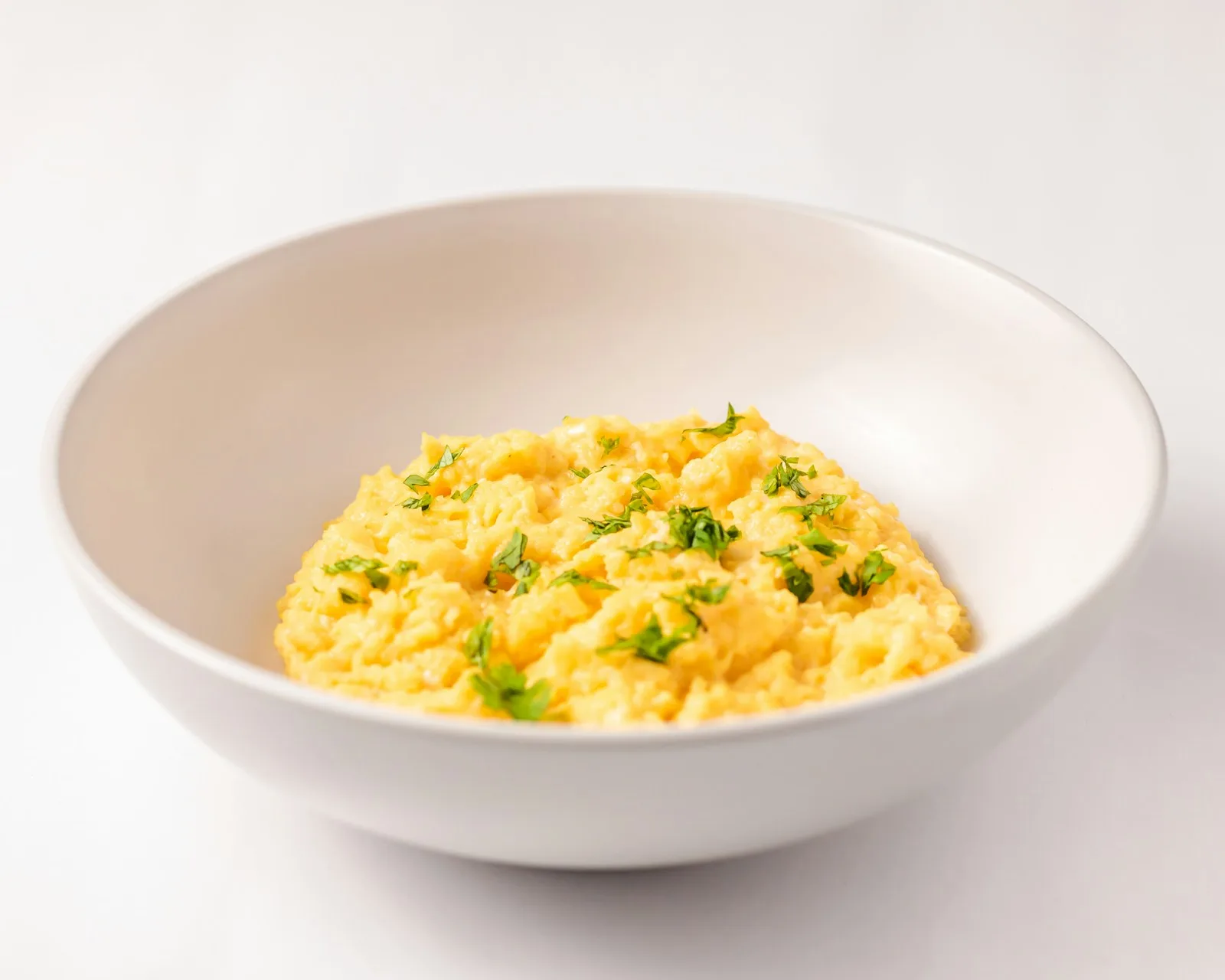
Blend the eggs and cottage cheese until completely smooth, then cook them in butter over medium-low heat, folding gently. Take the pan off the heat while the eggs still look a little glossy. They finish cooking on the plate, and that’s what keeps them soft.
Cottage Cheese Scrambled Eggs
Ingredients
Method
- Add the eggs, cottage cheese and a few grinds of pepper to a blender. Blend 20 to 30 seconds until completely smooth, with no visible curds.
- Melt the butter in a non-stick skillet over medium-low heat until it foams but does not brown.
- Pour in the egg mixture. Leave it alone for about 20 seconds, until the edges just begin to set.
- Push the eggs slowly from the edges toward the center with a silicone spatula, making large soft folds. Keep folding every few seconds for 2 to 3 minutes.
- Take the pan off the heat while the eggs still look slightly glossy. They finish cooking from the pan heat.
- Season with salt, top with chives and serve right away.
Notes
- Ratio: 1/4 cup cottage cheese per 2 eggs. For one serving, halve everything.
- No blender: whisk the cottage cheese in by hand. You will see small creamy curds in the finished eggs.
- Watery eggs: the heat was too high or they cooked too long. Stay on medium-low and pull them while glossy.
- Make ahead: refrigerate cooked eggs in an airtight container up to 3 to 4 days; reheat in short bursts, stirring.
- Nutrition is calculated per serving from USDA FoodData Central (egg FDC 171287, 4% cottage cheese FDC 172179), including butter and 1/8 tsp salt.
How Much Cottage Cheese Should You Add to Scrambled Eggs?
A quarter cup per two eggs is the sweet spot, and it’s the ratio in the recipe card (half a cup for four eggs). It adds about 6g of protein per two eggs while the eggs still taste like eggs. Less gives you creamier eggs with a small protein bump. More gives a softer, looser scramble that needs lower heat.
| Cottage cheese per 2 large eggs | Protein | Calories | What to expect |
|---|---|---|---|
| None | 12.6g | 143 | Classic scrambled eggs |
| 2 tablespoons | 15.7g | 170 | Slightly creamier, mild flavor |
| ¼ cup (our ratio) | 18.9g | 199 | Fluffy and tender, still eggy |
| ½ cup | 25.1g | 254 | Very soft and custardy, cook extra low |
Put simply: 2 large eggs with a quarter cup of 4% cottage cheese have about 18.9g of protein and 199 calories, based on USDA FoodData Central values. That’s roughly 50% more protein than the eggs alone, for about 56 extra calories.
Should You Blend the Cottage Cheese First?
 Save
SaveYes, if you want fluffy, even eggs. Blended cottage cheese disappears into the eggs, so every bite has the same soft, custardy texture. Whisked-in curds don’t melt all the way. They stay as small, creamy pockets, which some people love and others find odd.
- Blended (our method): 20 to 30 seconds in a blender, or use a stick blender right in a jug. Smooth and uniform, no visible cheese.
- Whisked in: faster and one less thing to wash, but expect visible curds. Small-curd cottage cheese works best here.
- Folded in at the end: spoon it on off the heat for warm, creamy pockets on top of regular scrambled eggs.
Already have a tub of whipped cottage cheese in the fridge? Use half a cup of it and skip the blender.
Why Are My Cottage Cheese Scrambled Eggs Watery?
Usually the heat is too high. When egg proteins cook too fast, they tighten and squeeze out liquid, and cottage cheese adds extra moisture that makes it more obvious. The fix is medium-low heat and taking the eggs off early. A few other things help too:
- Pour off the liquid on top of the tub before you measure the cottage cheese.
- Use full-fat (4%) cottage cheese. Low-fat and fat-free versions tend to release more liquid in the pan.
- Don’t cook them dry. Pull the pan when the eggs still look slightly glossy. Overcooked eggs weep on the plate.
- Add watery mix-ins carefully. Sauté spinach or tomatoes first so their juices don’t end up in the eggs.
Which Cottage Cheese Works Best?
Full-fat 4% cottage cheese gives the creamiest eggs. It has about 98 calories and 11.1g of protein per 100g (FDC 172179). Low-fat 1% has a little more protein, about 12.4g per 100g (FDC 173417), with fewer calories, but it’s looser and more likely to turn the eggs watery. Both work. Full-fat just forgives more mistakes.
Small curd or large curd doesn’t matter once you blend it. It only matters if you whisk the curds in whole.
How Can You Flavor Cottage Cheese Scrambled Eggs?
- Spinach and feta: wilt a handful of spinach in the pan first, then crumble feta on top at the end.
- Everything bagel: a big pinch of everything bagel seasoning over the finished eggs. It’s the same seasoning we use on our cottage cheese chips.
- Salsa and chives: spoon salsa on the side, not into the pan, so it doesn’t water down the eggs.
- Smoked salmon and dill: fold in torn smoked salmon off the heat. Go light on the salt.
What Should You Serve With Them?
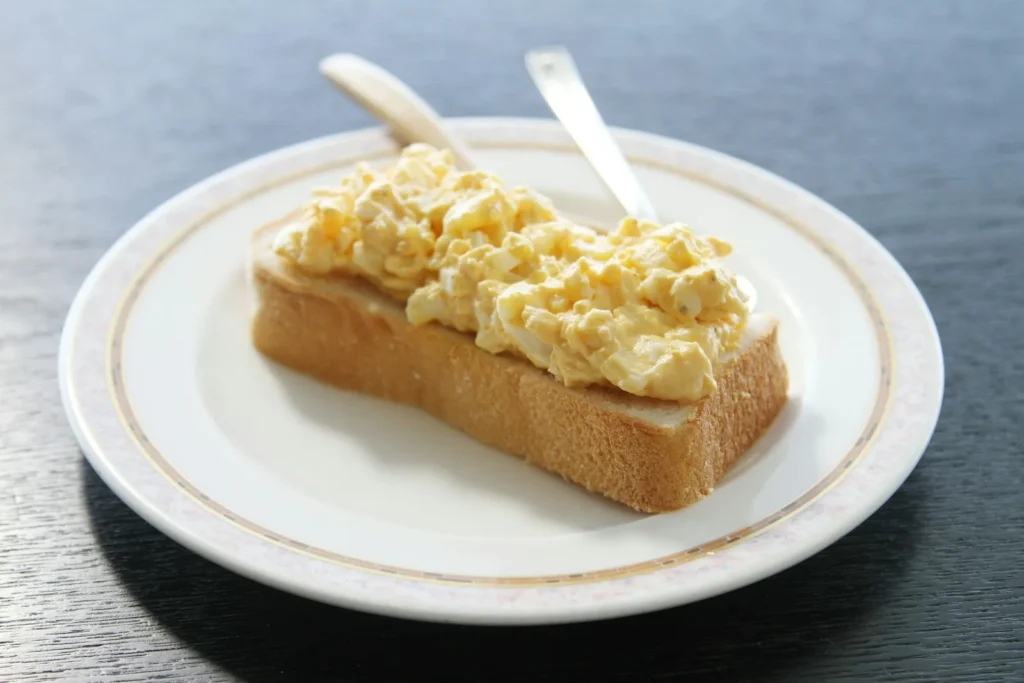
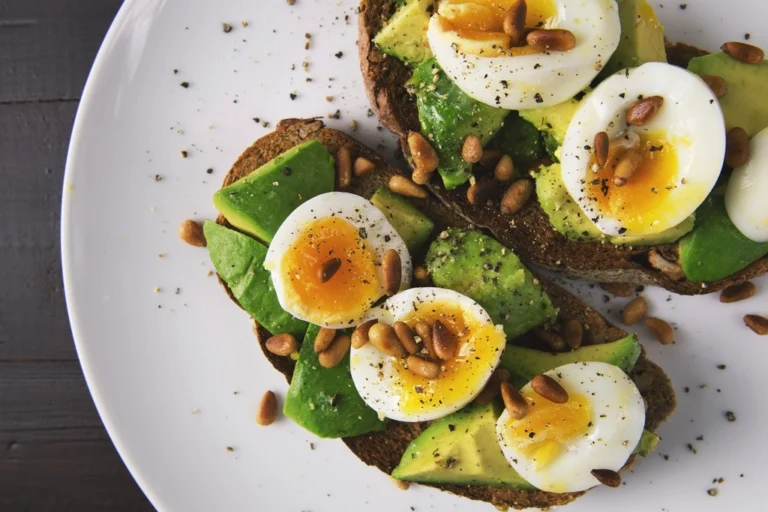
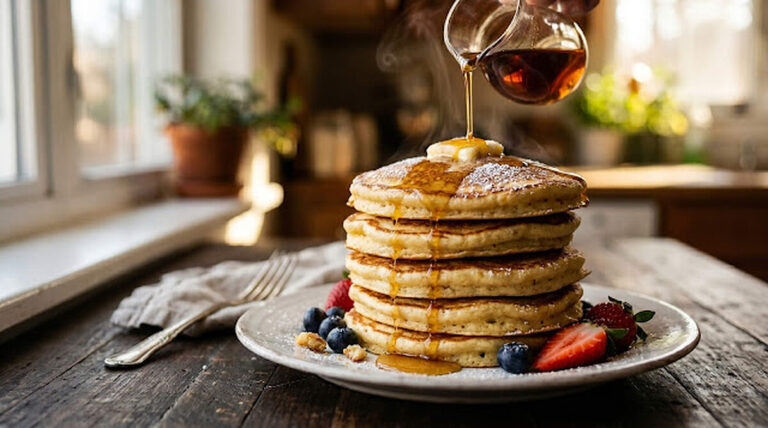
Toast is the classic, but a toasted cottage cheese bagel turns this into a proper high-protein breakfast sandwich. For a sweet-and-savory weekend plate, serve the eggs next to a short stack of fluffy protein pancakes. Fruit, sliced avocado or roasted potatoes round it out.
Can You Make Cottage Cheese Scrambled Eggs Ahead?
Yes. Cook them slightly underdone, cool them quickly and refrigerate them in an airtight container for up to 3 to 4 days. That’s the same window FoodSafety.gov gives for cooked egg casseroles. Reheat in a covered bowl in 20 to 30 second bursts, stirring in between, so they don’t dry out. They also pack well into a no-cook lunch box like our high-protein adult lunchables.
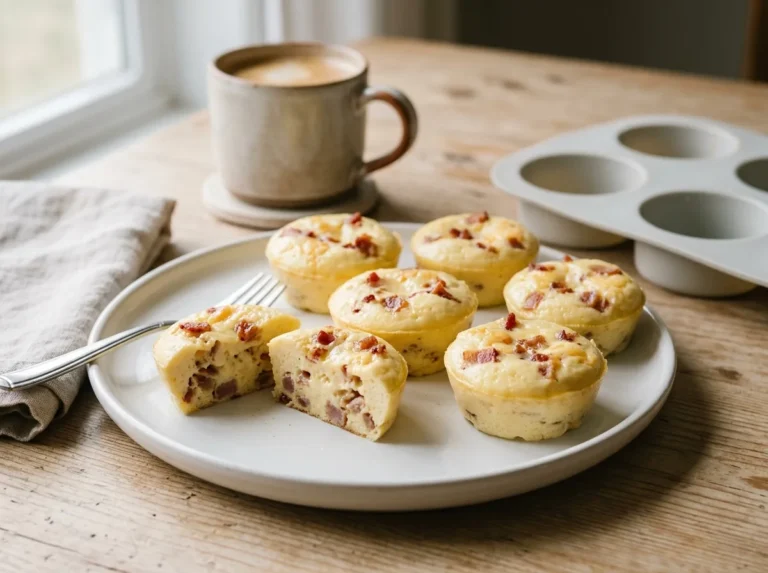
You can also blend the raw egg mixture the night before. Keep it covered in the fridge, use it within a day or two, and give it a quick stir before you pour it into the pan. Want something you can grab straight from the fridge? The same egg and cottage cheese mixture becomes our copycat Starbucks egg bites when you bake it in a water bath. FoodSafety.gov gives beaten raw eggs 2 to 4 days in the fridge.
Looking for more ways to use the tub? See all of our cottage cheese recipes, from breakfast to dessert.
Frequently Asked Questions
Does cottage cheese melt in scrambled eggs?
Not completely. Whole curds soften but keep their shape, so you’ll see creamy bits in the eggs. If you want no visible cottage cheese at all, blend it with the raw eggs for 20 to 30 seconds before cooking.
How much protein is in cottage cheese scrambled eggs?
About 19g per serving for this recipe (4 large eggs and ½ cup 4% cottage cheese, split into 2 servings). Two eggs alone have about 12.6g, so the cottage cheese adds roughly 50% more protein. These figures are based on USDA FoodData Central (FDC 171287 and 172179).
Do you add cottage cheese before or after cooking the eggs?
Before, for the fluffiest result. Blend or whisk it into the raw eggs so it cooks evenly. Adding it at the end works too, but it gives you warm, creamy pockets instead of one smooth scramble.
Can you use low-fat cottage cheese?
Yes. Low-fat 1% cottage cheese has about 12.4g protein per 100g (FDC 173417), slightly more than full-fat. It releases more liquid, though, so drain it well and keep the heat on medium-low.
Sources
- USDA FoodData Central, Egg, whole, raw, fresh, SR Legacy, FDC ID 171287, retrieved 2026-09-28. fdc.nal.usda.gov
- USDA FoodData Central, Cheese, cottage, creamed, large or small curd, SR Legacy, FDC ID 172179, retrieved 2026-09-28. fdc.nal.usda.gov
- USDA FoodData Central, Cheese, cottage, lowfat, 1% milkfat, SR Legacy, FDC ID 173417, retrieved 2026-09-28. fdc.nal.usda.gov
- USDA FoodSafety.gov, Cold Food Storage Chart (casseroles with eggs, 3 to 4 days; raw egg whites and yolks, 2 to 4 days), retrieved 2026-09-28. www.foodsafety.gov