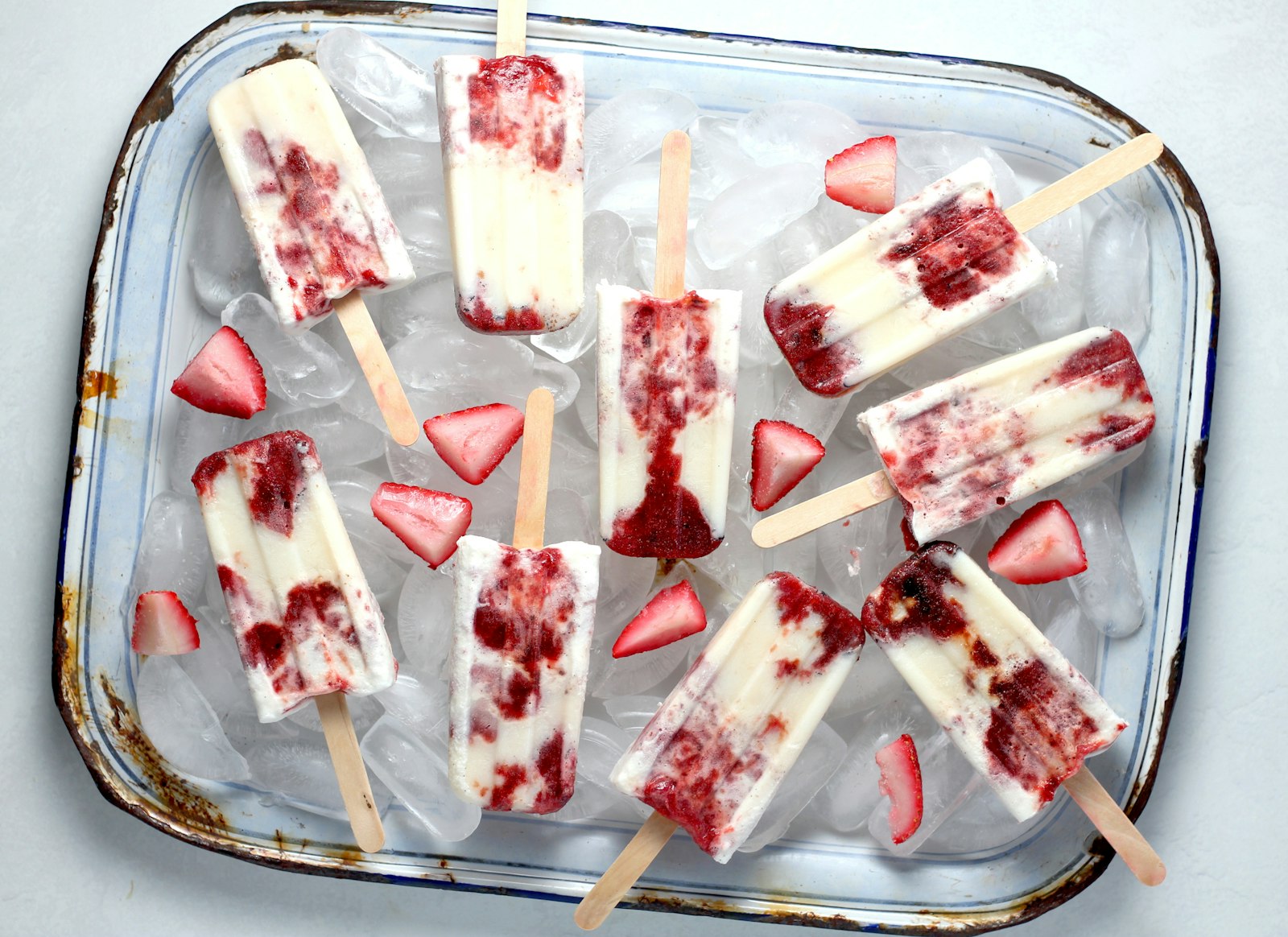
Cottage Cheese Popsicles: Creamy 4-Ingredient Protein Pops
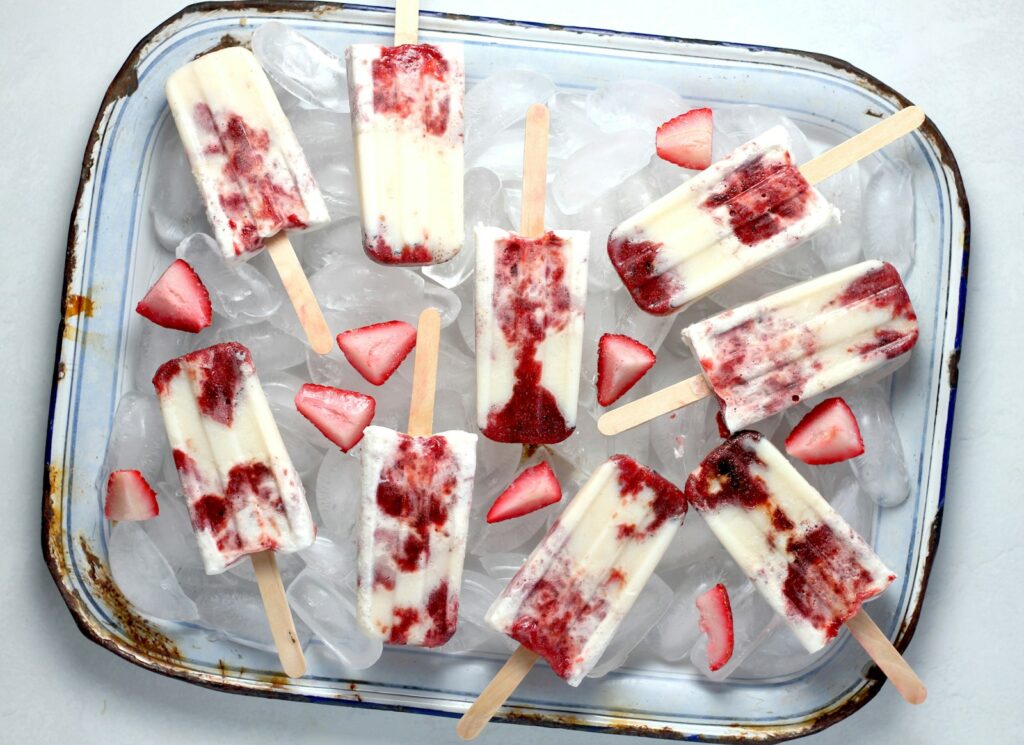
Cottage cheese popsicles are what happens when the internet’s favorite high-protein ingredient meets a heat wave. In 2025, US cottage cheese sales passed $2 billion — up 19.2% in a single year, according to Circana data reported by Dairy Foods. In fact, most of that growth came from people blending it into desserts rather than eating it from the tub.
Here’s the problem: store-bought protein pops cost $2–3 each, and most homemade versions freeze into icy, curd-flecked bricks. Luckily, this recipe fixes both. Four ingredients, one blender, and about 10 grams of protein per pop — with a texture closer to frozen cheesecake than anything labeled “diet.”
Why Do Cottage Cheese Popsicles Work So Well?
One cup of low-fat cottage cheese carries roughly 24–25 grams of protein, per USDA FoodData Central. Specifically, that protein is mostly casein — and casein is the secret. It traps water as it freezes, which keeps the texture creamy instead of crystalline. That’s why blended cottage cheese freezes better than milk or juice ever could.
You’ve probably seen the lineage: cottage cheese ice cream took over TikTok, then flatbreads, then chips. Meanwhile, popsicles are the easiest branch of that family tree. No ice cream machine, no churning, no baking. If you own a blender and a $10 mold, you’re equipped.
A $2 Billion Trend, Three Years Running
Moreover, the trend has real momentum behind it. As of 2026, cottage cheese volume sales have climbed three years straight — 9.4% in 2023, 12.5% in 2024, and 14.3% in 2025, per Circana figures reported by DairyReporter. And in 2025, the IFIC Food & Health Survey found 70% of Americans actively trying to consume more protein, the fifth straight year protein topped the list. A popsicle that sneaks 10 grams in? That’s an easy sell.
According to 2025 Circana data reported by Dairy Foods, cottage cheese became a $2 billion category with 19.2% dollar growth in a single year — the fastest-growing product in the dairy aisle. In particular, frozen desserts like popsicles and blended “ice creams” are the format driving new buyers to it.
We’ve already turned this ingredient into blueberry cottage cheese ice cream and crispy air fryer cottage cheese chips. Popsicles might be the best of the three — nothing to churn, nothing to bake.
What Goes Into Cottage Cheese Popsicles?
 Save
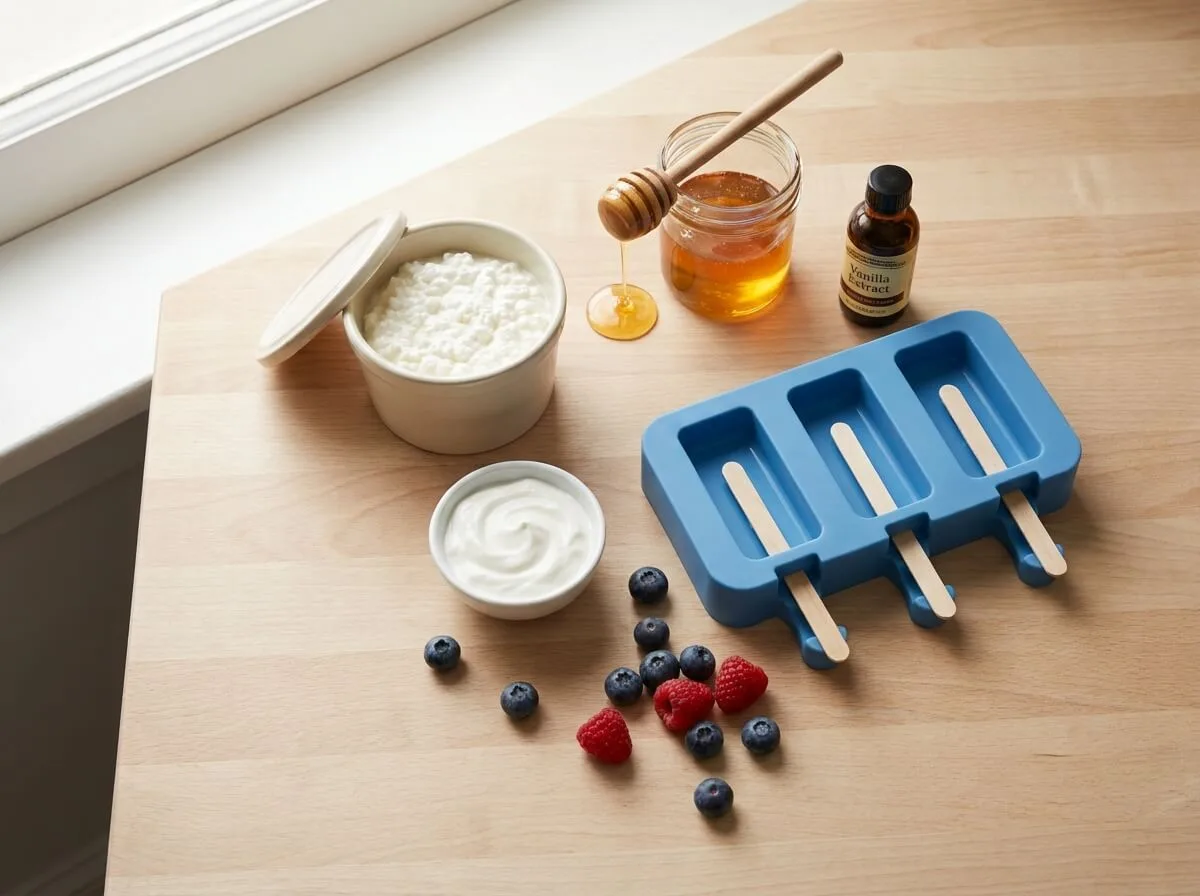
SaveThe whole recipe is four ingredients, and the ratio is what gets you to 10 grams of protein per pop:
- Cottage cheese (2 cups, 2% or full-fat) — the protein engine. Don’t use fat-free; fat is what keeps ice crystals small.
- Plain Greek yogurt (½ cup) — adds tang and another protein hit while thinning the blend just enough to pour.
- Honey or maple syrup (3 tablespoons) — sweetens, but also lowers the freezing point so pops stay soft-bite instead of rock-hard.
- Vanilla extract (1 teaspoon) — rounds out the tang into a cheesecake flavor.
Want to push past 10 grams? For example, a single scoop of unflavored whey blends in cleanly and adds ~3g per pop. Go past one scoop, though, and the texture turns chalky. Most recipes you’ll find online land at 5–6 grams per pop because they dilute the base with a cup of milk and two-plus cups of fruit. Instead, we treat fruit as a flavor swirl, not the base — and that’s the whole trick.
How to Make Cottage Cheese Popsicles
 Save
SaveStart to freezer takes 10 minutes. Per our kitchen test, the freeze itself needs 6 hours — recipes claiming 4 hours released messy, and the 12–24 hours some blogs insist on isn’t necessary.
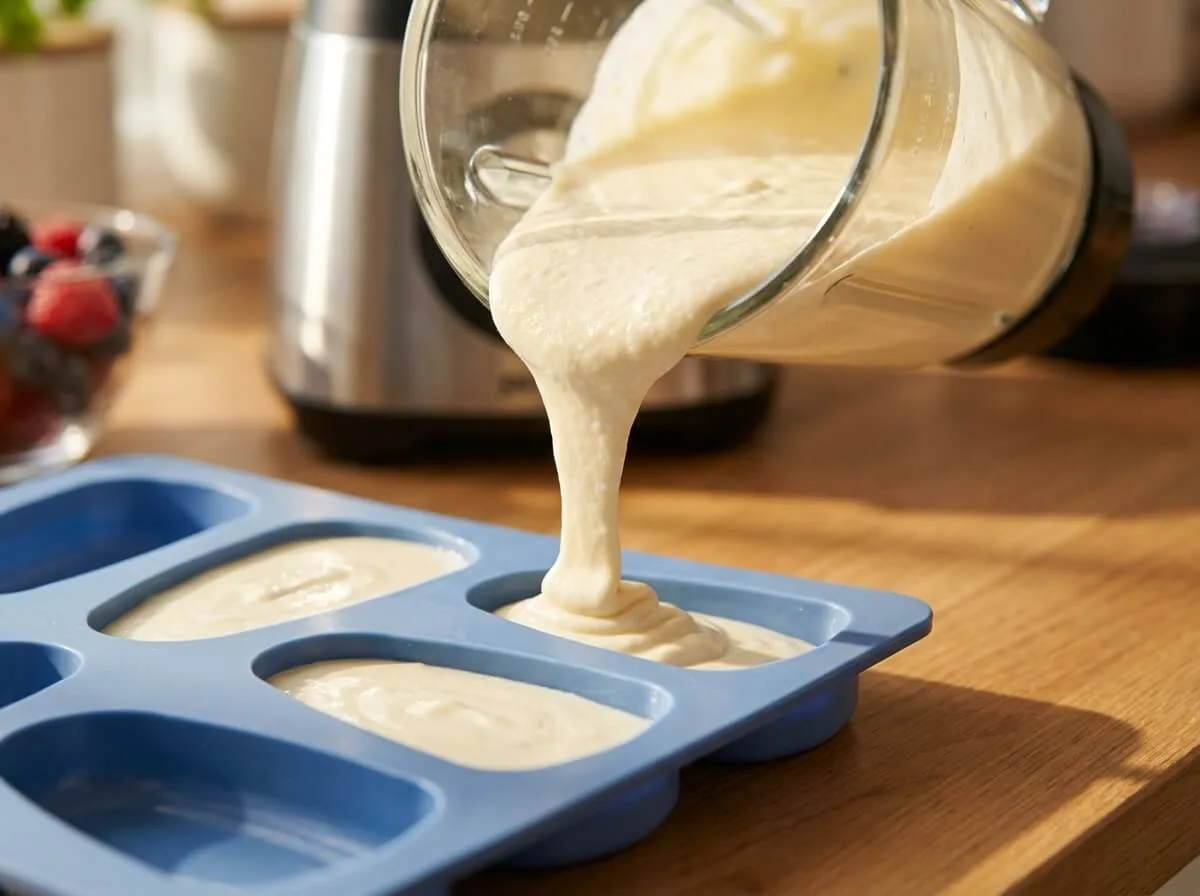
- Blend for 2 full minutes. Add cottage cheese, yogurt, honey, and vanilla to a blender. In fact, run it longer than feels reasonable. Thirty seconds leaves invisible curd bits that freeze into grainy flecks; at 2 minutes the base turns glossy, like cheesecake batter.
- Taste and adjust. Because frozen things taste less sweet once set, add one more teaspoon of honey if it tastes right at room temperature.
- Fill the molds. Pour, then tap the mold on the counter a few times to release air bubbles. Leave ¼ inch at the top — the mix expands.
- Freeze 6 hours. Insert sticks after 30 minutes if your mold doesn’t hold them straight.
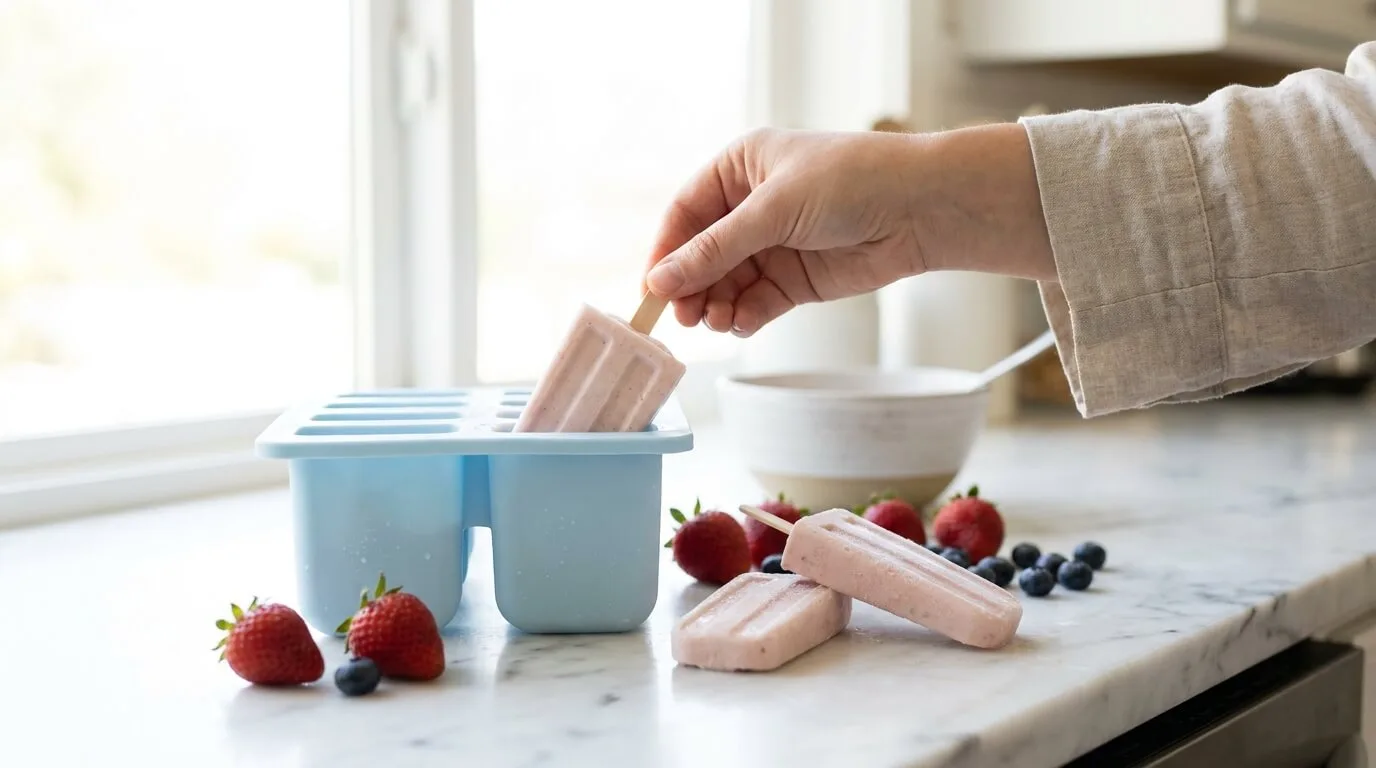
- Release with warm water. Run the mold under warm tap water for 10–15 seconds. Pops slide out clean. Yanking them cold is how sticks come out bare.
What Our Freeze-Time Test Showed
We pulled pops from the same batch at 4, 6, and 12 hours. At 4 hours, the cores were still slushy and two pops broke at the stick. By 6 hours, however, we got a clean release and a firm-but-creamy bite. After 12 hours, there was no improvement over 6 — just a longer wait. Six hours is the real minimum, whatever the mold box says.
Why Are My Popsicles Icy? (The Fix)
Icy popsicles come from two things: too much water, or too little blending. Water-heavy fruit (watermelon, citrus, more than a cup of berries) freezes into crunchy shards, and under-blended cottage cheese leaves curds that ice around themselves. So keep fruit to a swirl, blend the full 2 minutes, and the casein does the anti-ice work for you.
Beyond that, three more rules keep the texture right:
- Keep some fat. Fat-free cottage cheese makes noticeably icier pops. 2% is the floor; full-fat is the ceiling for creaminess.
- Don’t skip the sweetener. Honey isn’t just flavor — sugar physically interferes with ice crystal formation. So cutting it to nothing makes pops freeze rock-hard.
- Let them sit 2–3 minutes before eating. Straight from the freezer, any pop is solid. However, a short sit brings back the creamy bite.
When we blended a test batch for only 30 seconds, the pops froze with visible white flecks and a faintly grainy chew. By contrast, the 2-minute batch from the same tub froze completely smooth. Same ingredients, same mold, same freezer — the blender time was the whole difference.
5 Flavor Variations
The base above is vanilla cheesecake. From there:
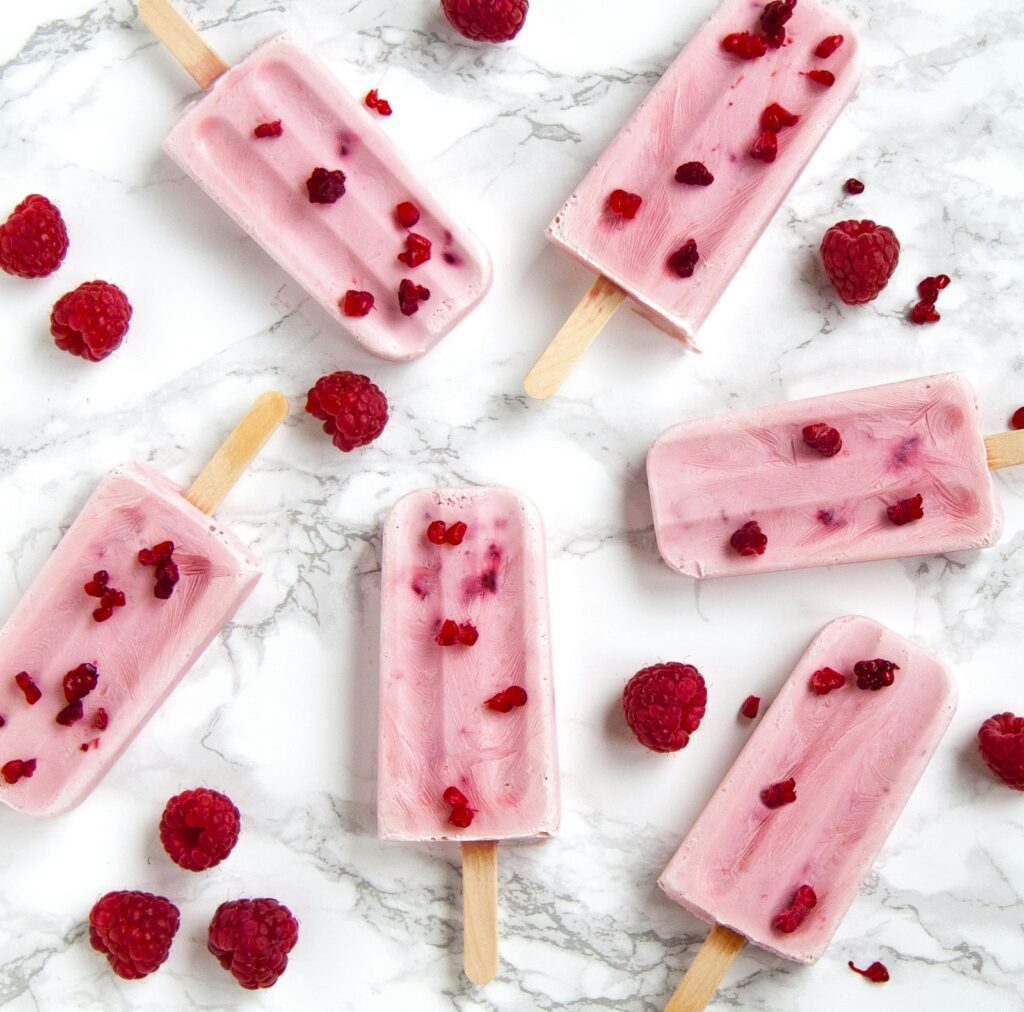
- Chocolate fudge pop: add 3 tbsp cocoa powder + 1 extra tbsp honey. Tastes like the fudgesicles of your childhood, with five times the protein.
- Strawberry cheesecake: swirl in ⅓ cup strawberry jam and a crushed graham cracker before freezing — the no-bake cousin of our strawberry cheesecake dip.
- Peanut butter banana: blend in half a banana + 2 tbsp peanut butter.
- Blueberry: swirl ⅓ cup mashed blueberries through the base — or go full frozen dessert with our blueberry cottage cheese ice cream.
- Orange creamsicle: 2 tbsp orange juice concentrate + extra vanilla. Concentrate, not juice — remember the water rule.
How do these stack up against what you’d buy or find elsewhere?
| Popsicle | Protein per pop | Calories | Cost per pop |
|---|---|---|---|
| This recipe | 10g | 70 | ~$0.40 |
| Typical blog recipe | 5–6g | 58–63 | ~$0.50 |
| Store-bought fudgesicle | ~2g | ~100 | $0.75–1.00 |
| Protein bar (for scale) | ~10g | ~200 | $2–3 |
Are Cottage Cheese Popsicles Healthy?
In total, each pop runs about 70 calories, 10 grams of protein, and 5 grams of sugar — numbers that beat most protein bars on a per-calorie basis. In 2025, the IFIC Spotlight Survey on protein found 46% of Americans buy dedicated high-protein products like shakes and bars. At roughly $0.40 per pop, these do the same job for a fraction of the price, with four ingredients you can pronounce.
Here’s the framing most recipes miss: protein per pop is a design decision, not luck. Every add-in either concentrates the base (yogurt, whey, nut butter) or dilutes it (milk, juice, watery fruit). Once you see the recipe as a macro budget, you can build any flavor you want and still land at 10 grams.
They fit almost any eating pattern, too. A high-protein diet was the most-followed eating approach in America in 2025, at 23% of respondents (IFIC Food & Health Survey) — and in the same year, 35% of Americans said they’d increased their protein intake. These pops are also gluten-free, vegetarian, and — unlike most frozen treats — genuinely filling. Finally, pair one with a handful of our high-protein frozen yogurt clusters and you’ve got a real snack, not a sugar break.
Cottage Cheese Popsicles
Ingredients
Method
- Add cottage cheese, Greek yogurt, honey, and vanilla to a blender. Blend a full 2 minutes, until completely glossy and smooth — under-blending leaves grainy flecks in the frozen pops.
- Taste the mixture. Frozen desserts taste less sweet, so if it tastes just right now, add 1 more teaspoon of honey.
- Pour into an 8-cavity popsicle mold. Tap the mold on the counter to release air bubbles and leave 1/4 inch of headroom for expansion.
- Freeze at least 6 hours. Insert sticks after 30 minutes if your mold does not hold them upright.
- Run the mold under warm tap water for 10-15 seconds and pull the pops straight out.
Notes
Looking for more ways to use the tub? See all of our cottage cheese recipes, from breakfast to dessert.
Frequently Asked Questions
Can you taste the cottage cheese?
Not if you blend long enough. After 2 full minutes, the curds disappear completely and the tang reads as cheesecake, not cottage cheese. In our 30-second test batch the flavor was fine but the texture gave it away — blend time matters more than any masking ingredient.
How long do cottage cheese popsicles take to freeze?
Six hours, based on our same-batch test at 4, 6, and 12 hours. Four hours left slushy cores that broke on release; 12 hours added nothing over 6. Of course, overnight works fine if that’s easier — there’s no such thing as over-freezing them.
How long do they keep in the freezer?
Up to 2 months in an airtight bag, though flavor and texture are best in the first 2 weeks. After that, freezer air slowly dries the surface. Release all the pops at once, bag them with parchment between layers, and skip the mold-storage problem entirely.
Can I use fat-free cottage cheese?
It works, but expect an icier bite — fat is what keeps ice crystals small as the pops freeze. Stick with 2% or full-fat for the cheesecake texture. If fat-free is what you have, add an extra tablespoon of Greek yogurt and don’t cut the honey.
The Short Version
- Four ingredients: cottage cheese, Greek yogurt, honey, vanilla
- Blend 2 full minutes — that’s the texture secret
- Freeze 6 hours; release with warm water
- ~70 calories and 10g protein per pop
This is the third member of our cottage cheese family, after the ice cream and the savory chips — and the one we keep restocking the freezer with. Craving more no-freeze options? Our easy no-bake frozen treats roundup has seven more, and the high-protein snack ideas list covers the rest of your day. Pin this one before the mold’s even out of the freezer.
Sources
- Dairy Foods, “Cottage cheese sales top $2 Billion,” retrieved 2026-07-20, https://www.dairyfoods.com/articles/99101-cottage-cheese-sales-top-2-billion
- DairyReporter, “How cottage cheese reinvented itself — and found new growth,” retrieved 2026-07-20, https://www.dairyreporter.com/Article/2026/05/09/how-cottage-cheese-reinvented-itself-and-found-new-growth/
- IFIC, 2025 Food & Health Survey (“Protein-Dazed and Still Confused” release), retrieved 2026-07-20, https://ific.org/media/protein-dazed-and-still-confused-new-ific-research-reveals-americas-high-protein-hype-doesnt-match-knowledge/
- IFIC, Spotlight Survey: Americans’ Perceptions of Protein (July 2025), retrieved 2026-07-20, https://ific.org/wp-content/uploads/2025/07/IFIC-Spotlight-Survey-Protein-Perceptions.pdf
- USDA FoodData Central, cottage cheese (low-fat, 2% milkfat), retrieved 2026-07-20, https://fdc.nal.usda.gov/
Watching sodium as well as protein? Compare the best low-sodium cottage cheese brands.