Adult Lunchables: 15 Easy High-Protein Boxes (30g+ Each)
Adult lunchables are no-cook lunch boxes you pack yourself: a protein, something crunchy, something fresh and a dip. The 15 below each land at 30g of protein or more, and none of them needs a microwave.
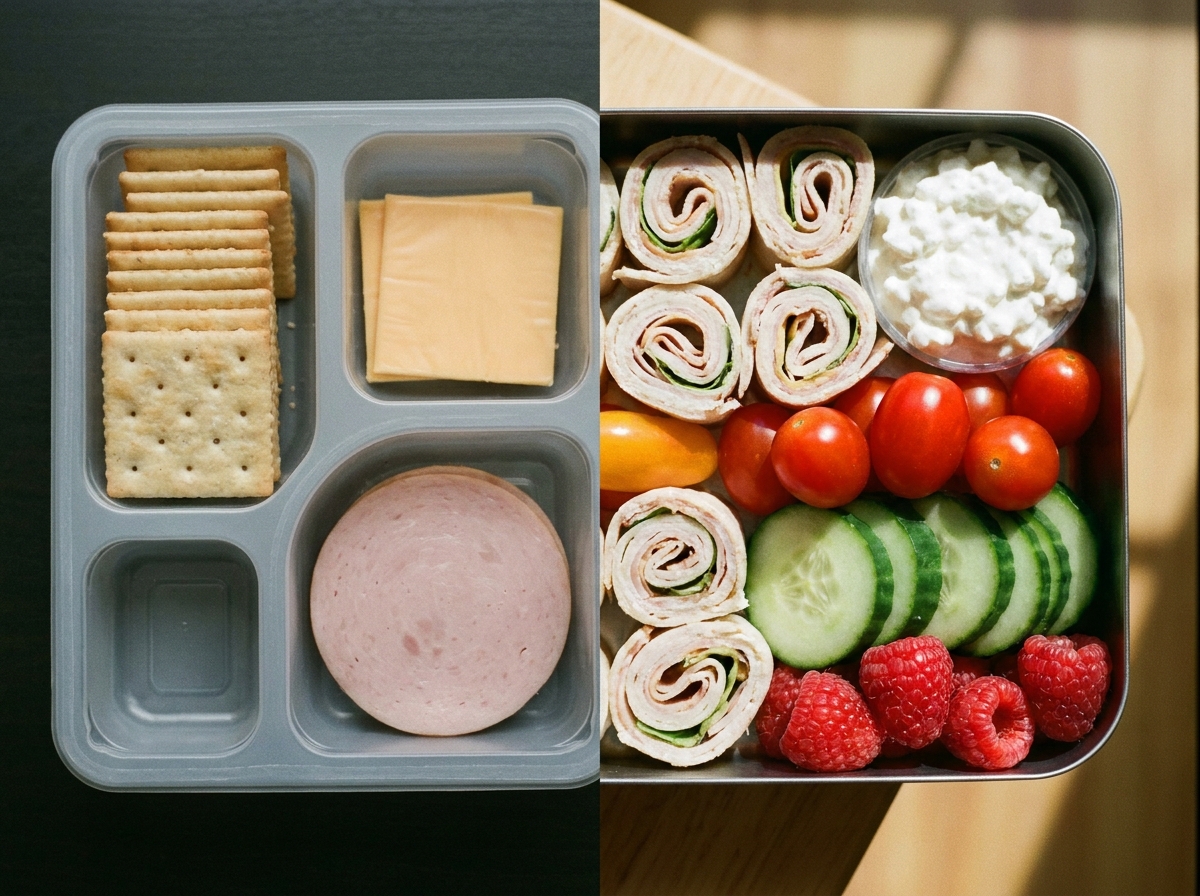
In 2024, Consumer Reports tested 12 packaged lunch and snack kits and found lead, cadmium, or both in every single one (CBS News, “Lunchables have concerning levels of lead and sodium, Consumer Reports finds,” June 2024). One Turkey and Cheddar kit carried 74% of California’s allowable daily lead level and nearly half a young child’s sodium budget.
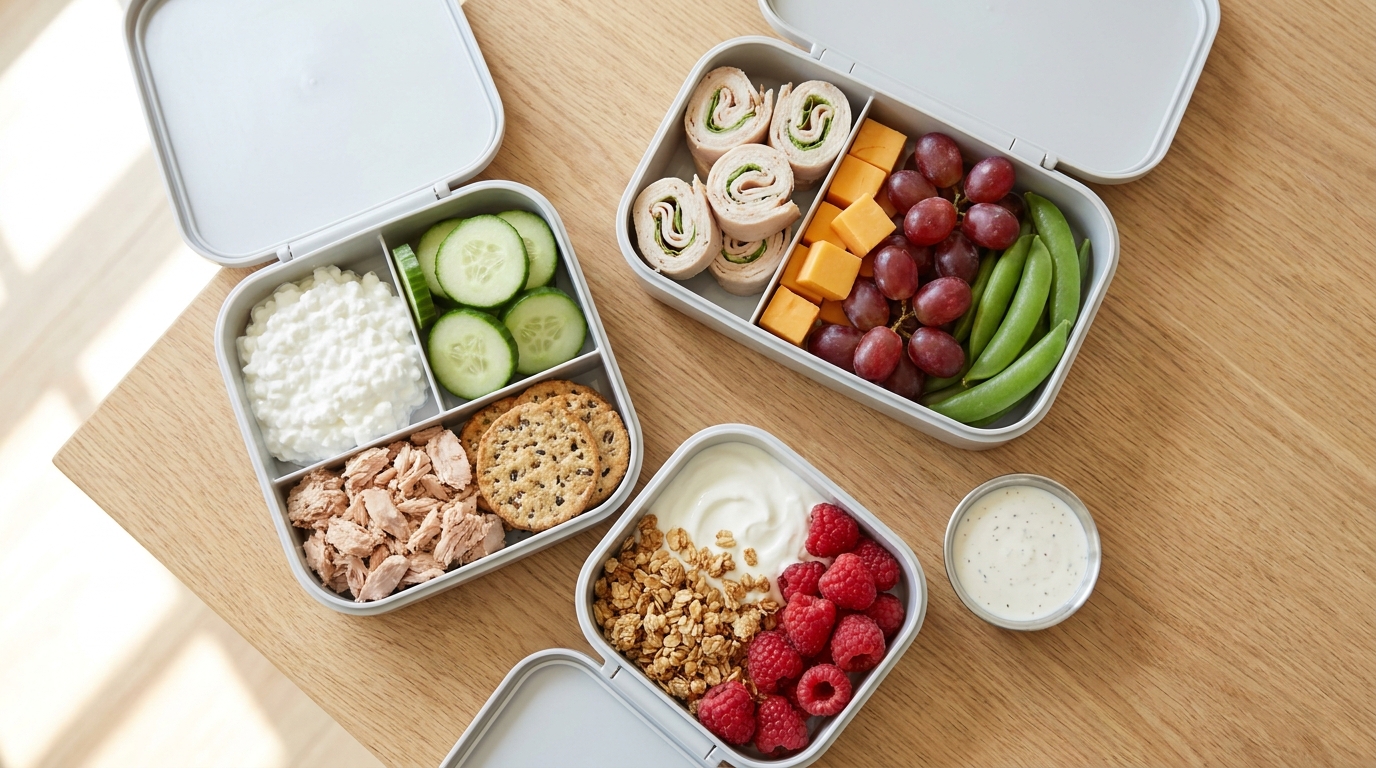
None of that means you should give up the format. An adult lunchable is simply a no-cook compartment lunch box built from four parts: a protein, a crunch, something fresh, and a dip. It’s genuinely the best lunch container ever invented, especially if your office has no microwave and your patience for Sunday meal prep runs about ten minutes.
So I rebuilt it. Below are 15 boxes you can assemble cold, each one built on the same four-slot formula, most landing north of 30 grams of protein.
Key Takeaways
- Aim for 25 to 35g of protein at lunch, plus 8g or more of fiber. In 2025, 70% of consumers said they were actively eating more protein but only 64% said the same about fiber (Forbes Health).
- Every box follows one formula: Protein + Crunch + Fresh + Dip.
- Homemade is not automatically lower in sodium. Deli meat plus regular cottage cheese can beat a store kit. The swaps matter more than the label.
 Save
SaveWhat Is an Adult Lunchable?
An adult lunchable is a no-cook meal box built from four parts: a protein, something crunchy, something fresh, and a dip. Most land between 300 and 500 calories with 25 to 45 grams of protein, and they take under ten minutes to put together.
The format solves a problem sandwiches can’t. Nothing sits against anything else, so nothing goes soggy. Your crackers stay crisp because they’re in their own compartment, not pressed between a tomato and a slice of turkey for six hours.
It also works when you have no heat source. That’s the actual constraint most people are searching around: not “healthy lunch” but “lunch I can eat cold at my desk without it being sad.”
Kids are driving the same shift. In 2026, school dining reporting showed demand moving toward high-protein egg bites, grain bowls, and protein overnight oats rather than the beige tray of a decade ago (AOL, “This 2026 Food Trend For Kids Is a Very Grown-Up, High-Protein Meal,” 2026).
How Much Protein Should a Lunch Actually Have?
Target 25 to 35 grams of protein at lunch. That’s roughly a third of a typical daily target, and it’s the meal where most people undershoot. In 2025, 70% of consumers said they were actively trying to eat more protein, up from 62% in 2021, while fiber interest rose to 64% from 56% (Forbes Health, protein and fiber intake gap report, 2025).
Here’s the part almost every lunch box roundup skips. Protein alone doesn’t get you to 4 p.m. Fiber does a lot of the work, and as of 2025, Americans are badly short on it: only about 5% meet the daily recommendation of 25g for women and 38g for men (American Society for Nutrition, “Most Americans are not getting enough fiber in our diets,” 2025). Nearly one in three of us eats under 20g a day.
So the number to hit isn’t one number. It’s two: 25 to 35g protein and 8g or more of fiber in the same box. Once you look at lunch that way, a turkey-and-cracker kit stops looking like a meal and starts looking like a snack with a marketing budget.
Want the underlying math on the fiber side? I broke it down in how much fiber you actually need per day and per snack, and the snacks that hit both protein and fiber list doubles as a shopping list for these boxes.
Are Store-Bought Lunchables Actually Bad for You?
Not illegal-bad, but not nothing. Consumer Reports tested 12 lunch and snack kits and found lead, cadmium, or both in all 12. None exceeded a legal limit. Five of the 12, though, delivered 50% or more of California’s maximum allowable daily amount, and the Turkey and Cheddar Cracker Stackers hit 74% of that lead threshold on its own (CBS News, June 2024).
Sodium is the more everyday concern. The tested kits ran 460 to 740 mg per package, which is a quarter to half of a child’s daily limit from one small tray (Food Dive, “Kraft Heinz’s Lunchables have high amounts of sodium and lead, Consumer Reports finds,” 2024). CR’s chemist made the point that stuck with me: when that much of a child’s daily lead allowance arrives in so few calories, there’s very little room left for everything else they eat that day.
To be fair about it, these are legal products sold in every grocery store in America, and a kit in a lunch bag on a chaotic Tuesday is not a crisis. Convenience has real value. I’m not interested in scaring anyone out of a $3 tray.
Is a Homemade Lunch Box Always Lower in Sodium?
No, and this is where most swap-it-for-homemade advice falls apart. A box built from 2 oz of deli turkey (about 550 mg), half a cup of regular cottage cheese (about 460 mg), and salted crackers lands near 1,100 mg of sodium, roughly double the 620 mg in a Lunchables Turkey and Cheddar Fun Pack (USDA FoodData Central and package labels, 2026).
The thing nobody tells you: homemade is not automatically lower in sodium. Build a box with 2 oz of deli turkey, half a cup of regular cottage cheese, and a handful of salted crackers and you’ll clear 1,100 mg, roughly double the store kit you were trying to avoid. The container didn’t fix anything. The ingredients do.
Swap three things and the whole picture inverts: home-roasted chicken instead of deli meat, no-salt-added cottage cheese instead of regular, and low-sodium seeded crackers. Same box, same assembly time, under 200 mg. A batch of cottage cheese bagels slots into the same box and lets you control the salt from the start.
This is exactly why I keep a tub of low-sodium cottage cheese in the fridge instead of the regular stuff. One swap, roughly 400 mg saved, zero change to how the box tastes.
The Master Formula: Build Any Box in Four Slots
Every adult lunchable fits four slots: protein, crunch, fresh, and dip. A 3 oz portion of canned tuna delivers 20g of protein and a half cup of no-salt-added cottage cheese adds 14g, so a single box clears 34g before the crunch slot is even filled (USDA FoodData Central, 2026).
Fill all four and the box works. Skip the dip and it feels like a plate of ingredients rather than a meal, which is the single most common reason people abandon this format after two weeks.
Slot 1: Protein — pick one or two
| Option | Portion | Protein | Sodium |
|---|---|---|---|
| Canned tuna, drained | 3 oz | 20g | ~250 mg |
| Cottage cheese (no salt added) | 1/2 cup | 14g | ~30 mg |
| Home-roasted chicken breast | 3 oz | 26g | ~65 mg |
| Greek yogurt, nonfat | 3/4 cup | 17g | ~65 mg |
| Hard-boiled eggs | 2 | 12g | ~125 mg |
| Shelled edamame | 1 cup | 18g | ~10 mg |
| Deli turkey | 2 oz | 11g | ~550 mg |
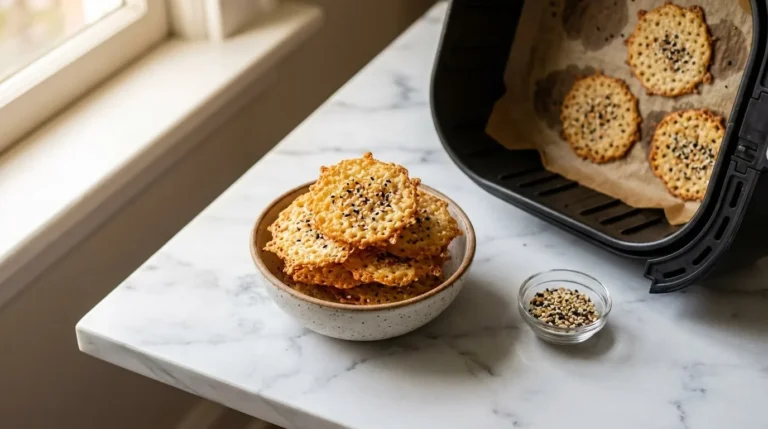
Slot 2: Crunch — seeded whole-grain crackers, air-fried chickpeas, almonds, pita chips, or crispy cottage cheese chips if you want the crunch to also count as protein.
Slot 3: Fresh — cucumber coins, cherry tomatoes, snap peas, carrot sticks, grapes, apple slices, raspberries.
Slot 4: Dip — hummus, tzatziki, Greek yogurt ranch, guacamole, marinara, or nut butter for the sweet boxes.
The fiber usually comes from slots 2 and 3, and some add-ins carry far more weight than others. A cup of canned chickpeas does more for your fiber total than every vegetable in the box combined.
For make-ahead breakfasts, try High-Protein Pumpkin Spice Blender Muffins or Cottage Cheese Bagels.
High Protein Adult Lunchable (Master Formula)
Ingredients
Method
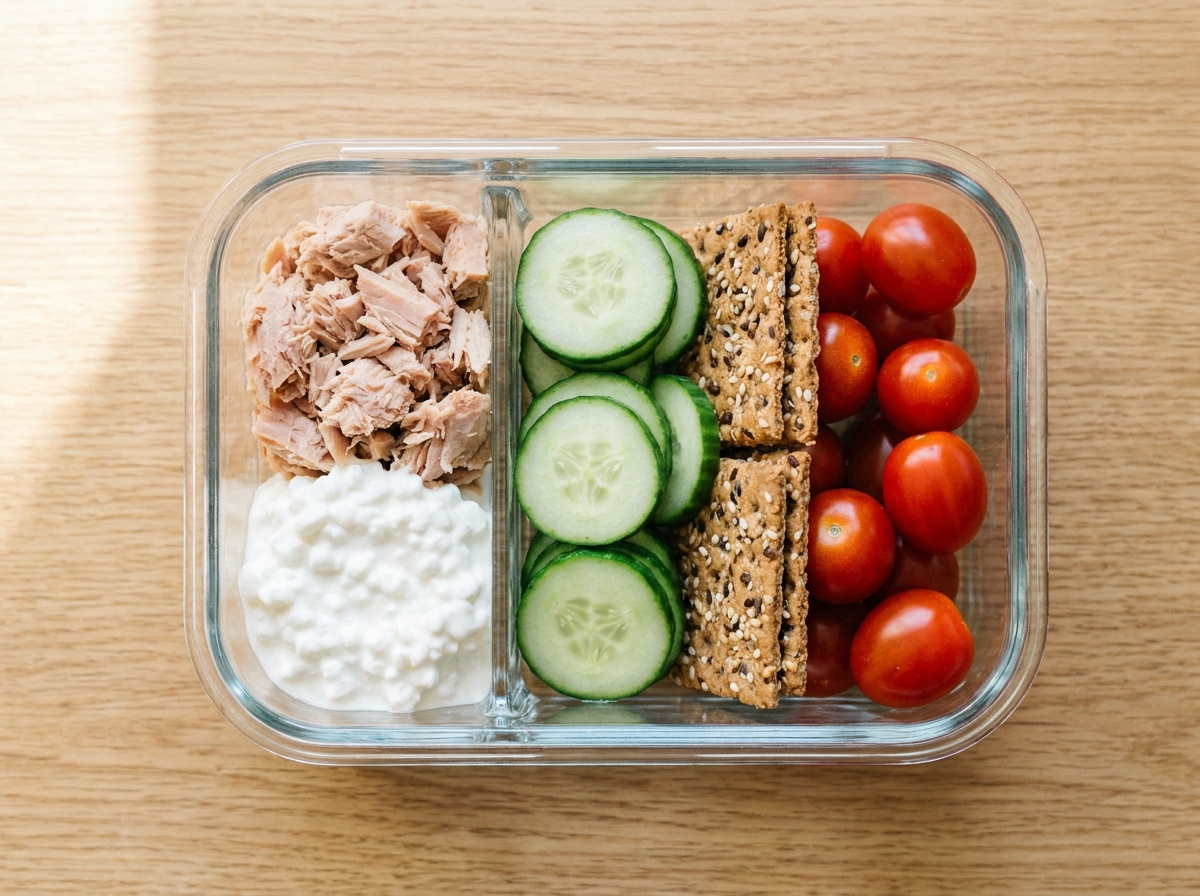
- Fill the protein slot. Drain the tuna well and spoon it into the largest compartment alongside the cottage cheese. Together they carry about 34g of protein.
- Fill the crunch slot. Put the crackers in their own sealed compartment or a small bag inside the box. This is the step that decides whether the box survives to day four.
- Fill the fresh slot with cucumber coins and cherry tomatoes.
- Add the dip in a lidded cup. Refrigerate up to 4 days. Mash the tuna into the cottage cheese right before eating.
Notes
15 High Protein Adult Lunchables
Homemade lunch boxes range from 20g to 44g of protein per box, compared with 10g in a store-bought Turkey and Cheddar kit. The highest-protein combination pairs one cup of shelled edamame (18g) with 3 oz of cold teriyaki chicken (26g) for 44g total (USDA FoodData Central, 2026).
Protein and fiber figures below are calculated from USDA standard portions. Adjust for your brands.
- Tuna, Cottage Cheese and Cucumber — 37g protein, 5g fiber. Drained tuna, half a cup of no-salt-added cottage cheese, cucumber coins, seeded crackers. The tuna and cottage cheese get mashed together at the desk. Sounds odd, tastes like a very good tuna salad. Related: 5-minute tuna avocado salad.
- Turkey Pinwheel, Cheddar and Grapes — 26g protein, 5g fiber. Turkey and cream cheese rolled in a whole-wheat tortilla, sliced into six. Cheddar cubes, red grapes, a few almonds.
- Buffalo Chicken and Celery — 34g protein, 4g fiber. Shredded chicken tossed in buffalo sauce, celery sticks, carrot sticks, Greek yogurt ranch. Borrowed straight from my healthy buffalo chicken tacos.
- Deviled Egg and Snap Pea — 20g protein, 5g fiber. Two make-ahead deviled eggs, snap peas, seeded crackers, cherry tomatoes. Pack the eggs in their own cup or the whole box smells like eggs by Wednesday.
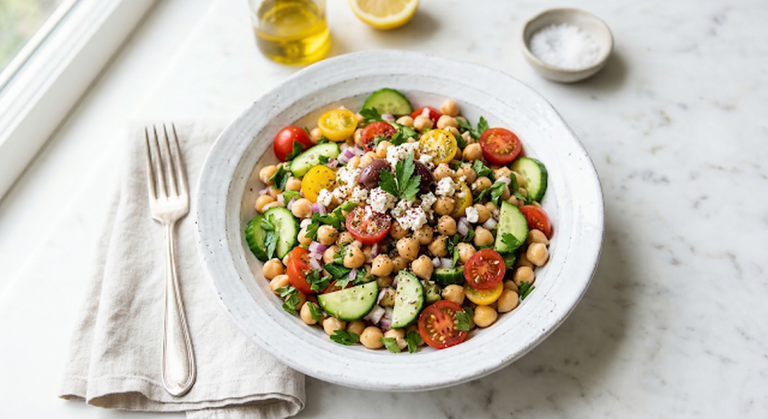
- Chickpea Salad, Pita and Feta — 22g protein, 17g fiber. The highest-fiber box on this list. Five-minute chickpea salad, half a whole-wheat pita cut into wedges, feta, cucumber.
- Cottage Cheese Chips, Salami and Olives — 28g protein, 3g fiber. Crispy cottage cheese chips, a few slices of salami, castelvetrano olives, sun-dried tomatoes. The most “cheese board” box here, and the one guests ask about.
- Smoked Salmon and Cucumber — 24g protein, 3g fiber. Smoked salmon, whipped cream cheese, cucumber rounds, capers, rye crisps. Assemble the bites at lunch, not in the morning.
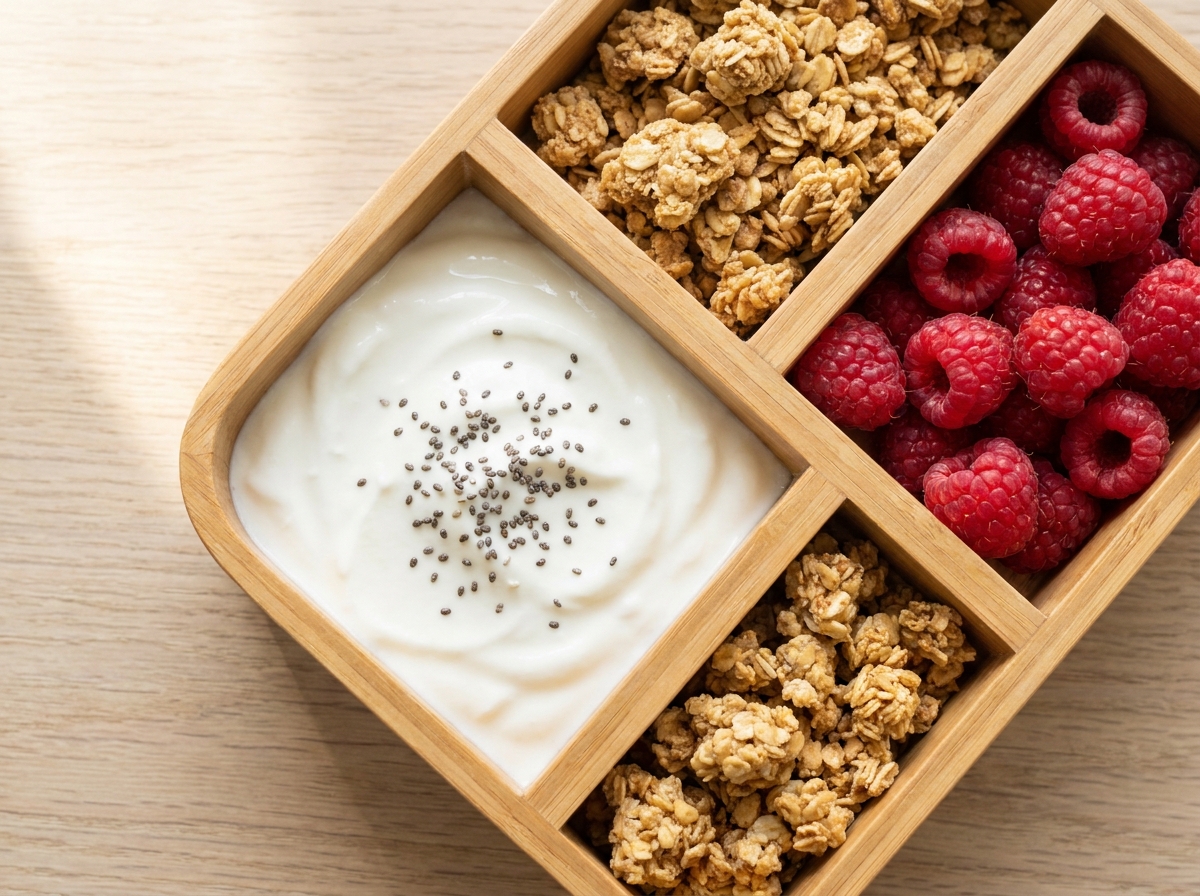
- Greek Yogurt, Granola and Raspberry — 22g protein, 14g fiber. Nonfat Greek yogurt, a quarter cup of granola in a separate cup, a full cup of raspberries, a tablespoon of chia stirred in the night before.
- Edamame, Teriyaki Chicken and Carrot — 44g protein, 10g fiber. The protein champion. Shelled edamame, cold teriyaki chicken, shredded carrot, sesame seeds.
- Pizza Box — 29g protein, 4g fiber. Turkey pepperoni, mozzarella pearls, marinara in a dip cup, whole-grain crackers, basil leaves. Every kid I’ve handed this to has eaten the whole thing.
- Peanut Butter Banana Bites and Skyr — 25g protein, 6g fiber. My 3-ingredient peanut butter banana bites plus a cup of skyr and a handful of walnuts. The dessert box that still counts as lunch.
- Air Fryer Chickpeas and Hummus — 21g protein, 15g fiber. Crispy air-fried chickpeas, hummus, pita wedges, cucumber, radish. Fully plant-based and the crunchiest box on the list.
- Shrimp Cocktail and Avocado — 30g protein, 7g fiber. Cooked chilled shrimp, cocktail sauce, half an avocado with lemon, crackers. Cost more than the others; worth it once a week.
- Cottage Cheese, Everything Seasoning and Tomato — 23g protein, 4g fiber. Cottage cheese dusted with everything bagel seasoning, cherry tomatoes, cucumber, a toasted bagel thin cut into strips.
- Jerky, Cheese, Apple and Almond — 27g protein, 6g fiber. The zero-prep emergency box. Beef jerky, cheddar, sliced apple with lemon, almonds. Nothing in it needs refrigeration for the first few hours.
How Long Do Homemade Lunchables Keep?
Three to four days refrigerated in a sealed compartment box, for most builds. That number hides the more useful detail, though: a packed box doesn’t fail all at once, it fails one slot at a time, and the crunch slot always goes first.
Crackers soften within about two days if they sit against anything wet. Cut apple browns within hours without acid. Cottage cheese releases liquid by roughly day three. Deli meat and hard cheese are the durable parts and comfortably hold the full four days.
Four fixes handle almost all of it:
- Pack the crunch slot in its own small bag inside the box, not in an open compartment.
- Toss cut apple in lemon juice. Ten seconds, four days of no browning.
- Drain cottage cheese in a fine sieve for a minute before it goes in.
- Freeze the yogurt cup overnight and it doubles as the ice pack.
If you’re building a full week at once, my monthly meal planning system covers how to stage the shopping so nothing spoils mid-week.
Packing Tips That Actually Matter
Compartment boxes prevent moisture migration, the single reason crackers fail in packed lunches. Storing the crunch slot in a sealed inner bag keeps whole-grain crackers crisp for four refrigerated days, versus roughly two days when they sit adjacent to cucumber or an open dip cup.
So: use a compartment box, not a single container with a divider you bought hoping for the best. Wet things never touch dry things. That’s the whole rule, and it’s the difference between a lunch you look forward to and a container of damp crackers.
For school boxes, check the nut policy before you pack the almonds. Sunflower seed butter and roasted chickpeas both swap in cleanly.
Five boxes take about 20 minutes if you batch by slot instead of by box. Line up all five containers, fill every protein slot, then every crunch slot, and so on down the line. Assembling one complete box at a time is how a 20-minute job turns into 45.
Need refills for the crunch and dip slots? The 25 high-protein snacks with 15g+ protein each list and my fibermaxxing snack ideas are both built for exactly this.
Prefer a fork-and-go lunch? A container of dense bean salad packs well next to crackers and fruit, with about 12g of protein and 7.9g of fiber per serving.
Frequently Asked Questions
How much protein should be in a work lunch?
Aim for 25 to 35 grams. That’s about a third of a common daily target, and lunch is where most people fall short because they back-load protein to dinner. In 2025, 70% of consumers said they were actively increasing protein intake (Forbes Health), but distribution across meals matters as much as the daily total.
Are Lunchables bad for you?
They’re legal, tested products, and an occasional tray is not a problem. That said, Consumer Reports found lead, cadmium, or both in all 12 kits it tested in 2024, with five delivering 50% or more of California’s maximum allowable daily amount and sodium running 460 to 740 mg per package (CBS News, 2024).
How long do homemade lunchables last in the fridge?
Three to four days in a sealed compartment box for most builds. Anything with crackers touching a wet ingredient softens by day two, so pack the crunch slot separately. Cut apple browns without lemon juice, and cottage cheese releases liquid by day three unless you drain it first.
What high-protein lunch needs no microwave?
All 15 boxes here are cold-assembly. The highest-protein options are the edamame and teriyaki chicken box at 44 grams, the tuna and cottage cheese box at 37 grams, and the buffalo chicken and celery box at 34 grams. None needs heat, and all three keep three to four days refrigerated.
How do I stop crackers going soggy?
Put them in their own compartment or a small sealed bag inside the box, never loose next to tomatoes, cucumber, or a dip cup with a loose lid. Moisture migration is the only reason crackers fail. In a compartment box with a real gasket, they hold four days.
The Bottom Line
- One formula covers all 15 boxes: Protein + Crunch + Fresh + Dip.
- Target 25 to 35g protein and 8g+ fiber in the same box. Protein alone won’t hold you to 4 p.m.
- Homemade isn’t automatically better. Deli meat plus regular cottage cheese can double a store kit’s sodium. The swaps do the work.
- Batch by slot, not by box, and five lunches take 20 minutes.
Start with box 1 or box 9 this week; they’re the two that convert people. Then work through the complete guide to high fiber snacks to keep the crunch and fresh slots stocked, and you’ll never have to think about lunch on a Sunday night again.
Which box are you packing first? Tell me in the comments.
Sources
- CBS News, Lunchables have concerning levels of lead and sodium, Consumer Reports finds, retrieved 2026-07-31, https://www.cbsnews.com/news/lunchables-lead-sodium-consumer-reports-kraft-heinz/
- Food Dive, Kraft Heinz’s Lunchables have high amounts of sodium and lead, Consumer Reports finds, retrieved 2026-07-31, https://www.fooddive.com/news/kraft-heinz-lunchables-consumer-reports-lead-sodium/712774/
- Forbes Health, Americans Are Focused On Protein But May Be Missing Fiber, retrieved 2026-07-31, https://www.forbes.com/health/weight-loss/protein-priority-fiber-intake-gap-expert-recommendations-lmandp5/
- American Society for Nutrition, Most Americans are not getting enough fiber in our diets, retrieved 2026-07-31, https://nutrition.org/most-americans-are-not-getting-enough-fiber-in-our-diets/
- Parade, 22 High-Fiber Lunch Ideas: Nutrition, RD Insights, retrieved 2026-07-31, https://parade.com/health/high-fiber-lunch
- USDA FoodData Central, standard reference portions, retrieved 2026-07-31, https://fdc.nal.usda.gov/
- AOL/Food trend reporting, This 2026 Food Trend For Kids Is a Very Grown-Up, High-Protein Meal, retrieved 2026-07-31, https://www.aol.com/articles/2026-food-trend-kids-very-155819212.html